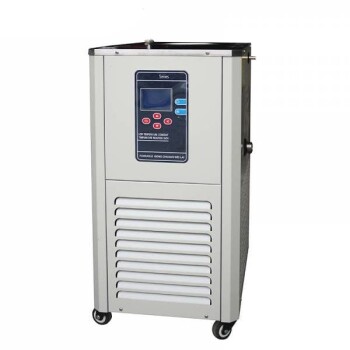
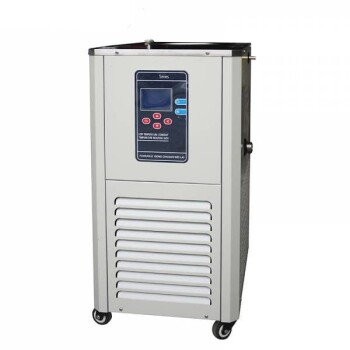
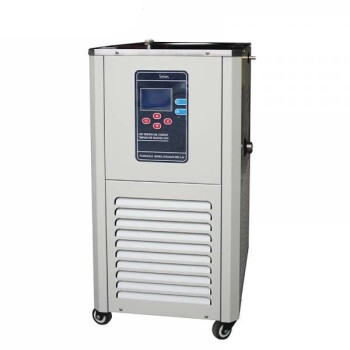
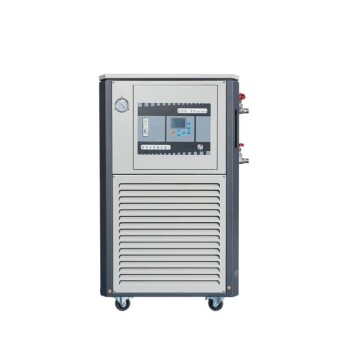
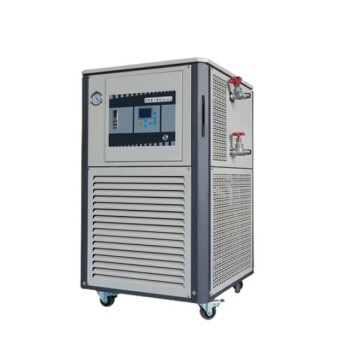
The primary function of the constant temperature water bath is to maintain the Methyltrichlorosilane (MTS) precursor at a precise temperature of 35 ± 1 °C. By locking the precursor at this specific temperature, the system ensures a stable saturated vapor pressure, which is required to deliver a constant flow of raw material into the reaction furnace.
Core Insight: In Chemical Vapor Deposition, temperature dictates vapor pressure. The water bath acts as a thermal anchor, eliminating fluctuations in the precursor supply that would otherwise compromise the deposition rate and the chemical composition of the final silicon carbide coating.
The Physics of Precursor Delivery
Controlling Vapor Pressure
The MTS precursor is a liquid that must be vaporized to enter the reaction zone. The rate at which this liquid turns into vapor—its saturated vapor pressure—is physically dependent on temperature.
Even minor fluctuations in the storage tank’s temperature can cause significant spikes or drops in the amount of vapor generated. The water bath provides a high thermal mass environment that absorbs ambient changes, keeping the liquid at a steady 35 °C.
The Role of the Bubbling Method
To transport the precursor, a carrier gas is bubbled through the MTS tank. This gas picks up the precursor vapor and carries it into the furnace.
Because the water bath maintains a constant vapor pressure, the carrier gas becomes saturated with the exact same amount of precursor at every moment. This transforms a variable liquid source into a precise, metered gas stream.
Impact on Coating Quality
Stabilizing Deposition Rates
Consistency in the supply line translates directly to consistency on the substrate. A steady flow rate of raw material ensures the deposition rate remains constant throughout the process.
Without this thermal control, the coating thickness would vary unpredictably, leading to structural weaknesses or out-of-spec dimensions in the final product.
Ensuring Correct Stoichiometry
For nanocrystalline silicon carbide, the ratio of silicon to carbon (stoichiometry) determines the material's properties. The chemical reaction relies on a specific balance of reactants.
The water bath ensures the MTS is delivered at the rate required to maintain this chemical balance. This prevents the formation of unwanted phases or impurities that occur when the reactant mixture becomes too rich or too lean.
Risks of Inadequate Thermal Control
The "Ambient Temperature" Trap
A common pitfall in CVD setups is relying on ambient room temperature for precursor storage. Room temperature can drift significantly during a long deposition cycle.
This drift causes the vapor pressure to wander, leading to a "gradient" coating where the chemical properties at the bottom differ from those at the top. The constant temperature bath is the only way to guarantee the process is repeatable and uniform.
Making the Right Choice for Your Goal
To ensure high-quality nanocrystalline silicon carbide, apply these principles to your setup:
- If your primary focus is Dimensional Accuracy: Ensure your water bath circulation is robust enough to stay strictly within the ± 1 °C range to prevent thickness variations.
- If your primary focus is Material Purity: Monitor the bath temperature to guarantee the precise stoichiometry required for a pure nanocrystalline structure.
Strict thermal regulation of the precursor is not just a storage requirement; it is a critical process variable for high-performance coatings.
Summary Table:
| Feature | Role of Constant Temperature Water Bath | Impact on SiC Quality |
|---|---|---|
| Temperature Control | Maintains MTS at exactly 35 ± 1 °C | Prevents vapor pressure fluctuations |
| Vapor Pressure | Ensures a stable saturated vapor pressure | Guarantees constant raw material flow |
| Delivery Method | Stabilizes carrier gas saturation during bubbling | Maintains uniform deposition rates |
| Chemical Balance | Regulates reactant delivery speed | Ensures correct stoichiometry & material purity |
Optimize Your CVD Process with KINTEK Precision Solutions
Achieving the perfect nanocrystalline silicon carbide coating requires more than just a reaction furnace; it demands rigorous thermal control and precise material delivery. KINTEK specializes in high-performance laboratory equipment designed to meet the exacting standards of advanced material research.
Whether you are refining your CVD or PECVD setup, exploring high-temperature high-pressure reactors, or seeking reliable cooling solutions and freeze dryers, our comprehensive portfolio has you covered. From muffle and tube furnaces to essential PTFE and ceramic consumables, KINTEK provides the tools you need for repeatable, high-purity results.
Ready to elevate your lab's efficiency and material quality? Contact our experts today to find the ideal thermal regulation and laboratory solutions tailored to your specific research goals.
References
- Guiliang Liu, Guang Ran. Investigation of Microstructure and Nanoindentation Hardness of C+ & He+ Irradiated Nanocrystal SiC Coatings during Annealing and Corrosion. DOI: 10.3390/ma13235567
This article is also based on technical information from Kintek Solution Knowledge Base .
Related Products
- High Temperature Constant Temperature Heating Circulator Water Bath Chiller Circulator for Reaction Bath
- 50L Chiller Water Bath Cooling Circulator Low Temperature Constant Temperature Reaction Bath
- 10L Chilling Circulator Cooling Water Bath Low Temperature Constant Temperature Reaction Bath
- 30L Chiller Water Bath Cooling Circulator Low Temperature Constant Temperature Reaction Bath
- 5L Chilling Circulator Cooling Water Bath Circulator for Low Temperature Constant Temperature Reaction Bath
People Also Ask
- What is the necessity of a circulating water bath in chlorate production? Optimize Yield & Purity with Precision
- How do constant temperature circulators impact weight-loss immersion tests? Ensure Precision in Corrosion Analysis
- How does a constant temperature circulator support the leaching reaction of gold scrap? Optimize Gold Recovery Results
- Why is a high-precision constant temperature water bath necessary for anaerobic digestion? Ensure Success at 37±0.02°C
- Why are constant temperature water baths critical in thiourea leaching? Master Gold Recovery with Precision Heat