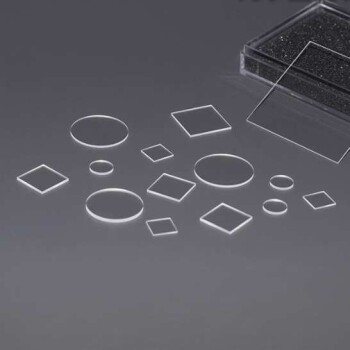
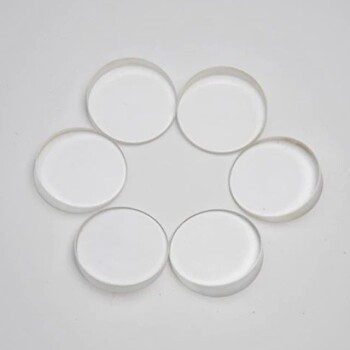
High ultraviolet (UV) transmittance is the definitive reason for selecting quartz glass as the light window in a photoelectrochemical (PEC) reactor. While standard glass acts as a filter that absorbs high-energy UV radiation, quartz glass allows these photons to pass through unimpeded, ensuring they reach the photoanode surface to drive critical chemical reactions.
Core Takeaway Standard glass significantly reduces system efficiency by absorbing the specific wavelengths required to activate many photocatalysts. Quartz glass eliminates this optical bottleneck, ensuring that the full spectrum of solar or simulated radiation reaches the catalyst to maximize electron-hole pair generation.
The Critical Role of Spectral Transmission
Overcoming the UV Barrier
The primary limitation of ordinary glass in electrochemical applications is its tendency to absorb light in the ultraviolet range. This creates a physical barrier that prevents high-energy photons from entering the reactor.
Quartz glass possesses exceptionally high transmittance in both the ultraviolet and visible wavebands. This transparency is non-negotiable for systems relying on solar radiation or simulated light sources like Xenon lamps.
Activating the Photocatalyst
For a PEC reactor to function, light must excite the photocatalyst material—such as titanium dioxide (TiO2) or nanostructured copper oxide. This excitation generates the electron-hole pairs necessary to drive reactions like chlorine evolution or hydrogen production.
If the light window absorbs the UV component of the spectrum, the catalyst remains under-active. Quartz ensures that the photon energy required to bridge the material's bandgap is delivered directly to the electrode surface without significant loss.
Data Integrity and Experimental Accuracy
Ensuring True Photoelectric Conversion
In characterization experiments, the goal is often to measure photocurrent density, bandgap energy, and overall conversion efficiency.
Using a window that blocks specific wavelengths introduces a variable that skews these measurements. Quartz ensures that the current-voltage curves and photocurrent responses reflect the true performance of the material (e.g., N/TiO2-x), rather than the limitations of the reactor hardware.
Supporting Full-Spectrum Analysis
Beyond UV, quartz enables the transmission of the full visible spectrum. This allows researchers to utilize broad-spectrum light sources to illuminate the working electrode.
This capability is essential for simulating real-world solar conditions, ensuring that the experimental environment accurately mimics the conditions under which the photocatalyst is designed to operate.
Common Pitfalls: Material Selection
The Consequence of Standard Glass
It is a common error to assume that if a material is transparent to the human eye, it is suitable for photochemistry. Ordinary glass absorbs specific wavelengths characteristic of high-energy light.
Using standard glass results in "spectral clipping," where the most potent photons are lost before they ever reach the reaction site. This leads to artificially low efficiency data and can cause a reaction to fail completely even if the catalyst is chemically sound.
The Role of Sealed Environments
While optical transmission is the primary function of the window, the reactor design often pairs the quartz window with a completely sealed gas-liquid-solid environment.
This closed system prevents the leakage of trace gaseous products (such as carbon monoxide or methane during CO2 reduction). The quartz window allows the light in, while the sealed reactor keeps the reaction products contained for quantitative analysis via gas chromatography.
Making the Right Choice for Your Goal
When designing or selecting a PEC reactor, your choice of window material dictates the validity of your results.
- If your primary focus is UV-driven Catalysis (e.g., TiO2): You must use quartz to prevent the absorption of high-energy photons required to excite electron-hole pairs.
- If your primary focus is Solar Simulation: You need quartz to ensure the full spectrum (UV plus visible) reaches the sample for accurate efficiency benchmarking.
- If your primary focus is Product Analysis: You should ensure the quartz window is integrated into a sealed reactor to allow for precise gas chromatography of evolved products.
Ultimately, quartz is not just a transparent barrier; it is an active component that ensures the energy input of your system matches the chemical requirements of your catalyst.
Summary Table:
| Feature | Quartz Glass Window | Standard Glass Window |
|---|---|---|
| UV Transmittance | Exceptionally High (>90%) | Low (Absorbs UV radiation) |
| Spectral Range | UV to Visible Spectrum | Primarily Visible only |
| Catalyst Activation | Maximizes electron-hole generation | Significantly reduces efficiency |
| Data Accuracy | Reflects true material performance | Skews results due to spectral clipping |
| Application | Solar simulation & UV catalysis | Limited non-UV applications |
Elevate Your Photoelectrochemical Research with KINTEK
Don't let inferior optics bottleneck your laboratory breakthroughs. KINTEK specializes in high-performance laboratory equipment, providing PEC reactors equipped with premium quartz windows to ensure maximum spectral integrity. From high-temperature furnaces and vacuum systems to specialized electrolytic cells, electrodes, and high-pressure reactors, we offer the precision tools needed for accurate data and superior material characterization.
Ready to optimize your experimental setup? Contact our technical experts today to find the perfect solution for your research needs!
References
- Ghassan Chehade, İbrahim Dinçer. A photoelectrochemical system for hydrogen and chlorine production from industrial waste acids. DOI: 10.1016/j.scitotenv.2019.136358
This article is also based on technical information from Kintek Solution Knowledge Base .
Related Products
- Side Window Optical Electrolytic Electrochemical Cell
- CVD Diamond Optical Windows for Lab Applications
- CF Ultra-High Vacuum Observation Window Window Flange High Borosilicate Glass Sight Glass
- KF Ultra-High Vacuum Observation Window 304 Stainless Steel Flange High Borosilicate Glass Sight Glass
- CF Ultra-High Vacuum Observation Window Stainless Steel Flange Sapphire Glass Sight Glass
People Also Ask
- What are the critical safety and operational precautions when using a side-window optical electrolytic cell? Ensure Safe and Accurate Experiments
- What is the correct procedure for post-experiment shutdown and cleaning of a side-window optical electrolytic cell? Ensure Safety and Data Accuracy
- What maintenance procedures are recommended for a side-window optical electrolytic cell? Ensure Data Accuracy & Extend Cell Lifespan
- What are the ideal storage conditions for a side-window optical electrolytic cell? Ensure Long-Term Accuracy and Performance
- What is a side-window optical electrolytic cell? See Your Electrochemical Reactions in Action