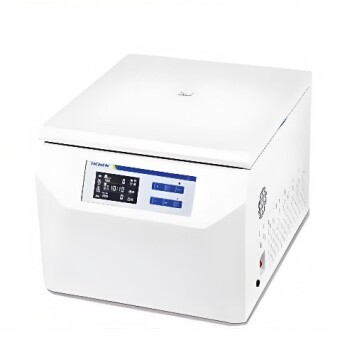
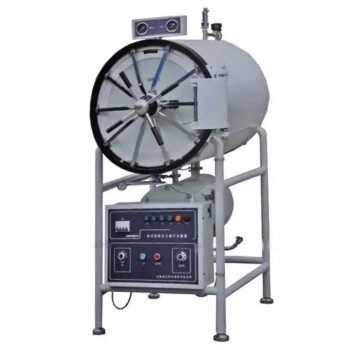
Industrial-grade high-pressure gas separation reactors are strictly required because they are the only reliable means to simulate the extreme operating conditions of real-world applications, specifically pressures up to 3.0 MPa. These specialized test cells feature robust pressure-resistant designs and advanced sealing mechanisms that prevent gas leakage, ensuring accurate evaluation of the SAPO-34 mixed matrix membrane's pressure tolerance and permeation flux.
Standard laboratory equipment cannot withstand the mechanical stress required to mimic natural gas sweetening or flue gas capture processes. Industrial-grade reactors provide the necessary structural integrity to validate how these membranes perform under significant stress without compromising experimental safety or data validity.
Replicating Operational Reality
Achieving Authentic Pressure Levels
To determine if a SAPO-34 membrane is viable for industry, it must be tested against the pressures it will face in the field. Industrial-grade reactors create a controlled environment capable of reaching 3.0 MPa.
Simulating Application Scenarios
This pressure capability is not arbitrary; it directly simulates the conditions found in natural gas sweetening and flue gas capture operations. Testing below these thresholds fails to reveal how the membrane behaves under the actual stress of separation processes.
Validating Structural Integrity
High-pressure environments reveal mechanical weaknesses that ambient testing hides. Using industrial-grade test cells allows researchers to confirm the membrane's pressure tolerance before it is deployed in a costly facility.
Ensuring Precision and Data Reliability
Preventing Leakage and Error
The primary reference highlights that these reactors utilize robust sealing mechanisms designed specifically for high-stress environments. This is critical because even microscopic leaks at high pressure can catastrophically skew permeation flux data.
Controlling Thermodynamic Variables
While pressure is the primary driver, precise temperature control is equally vital for accurate modeling. These systems maintain a stable environment across specific ranges, such as 267 K to 394 K.
Stabilizing Solubility and Diffusion
Gas permeation is highly sensitive to thermal fluctuations. By eliminating temperature deviations, the reactor ensures that changes in solubility and diffusion coefficients are genuine material properties, not artifacts of an unstable test environment.
Understanding the Trade-offs
Complexity vs. Data Validity
The move to industrial-grade high-pressure reactors introduces significant complexity regarding operation and safety protocols compared to standard low-pressure setups. The equipment is heavier, requires stricter maintenance of seals, and demands higher energy inputs for temperature regulation.
The Cost of Accuracy
However, the trade-off is non-negotiable for industrial viability. While low-pressure testing is cheaper and easier, it produces data that is fundamentally theoretical and often inapplicable to the harsh realities of gas separation plants.
Making the Right Choice for Your Goal
To maximize the value of your testing protocol, align your equipment use with your specific objectives:
- If your primary focus is Industrial Deployment: Prioritize the reactor's ability to hold steady at 3.0 MPa to prove mechanical stability for natural gas applications.
- If your primary focus is Performance Modeling: Rely on the system's temperature precision to gather repeatable data on solubility and diffusion coefficients without thermal noise.
Using industrial-grade reactors is the only way to transition SAPO-34 membranes from a theoretical concept to a reliable industrial solution.
Summary Table:
| Feature | Standard Lab Equipment | Industrial-Grade High-Pressure Reactors |
|---|---|---|
| Pressure Capacity | Low (Ambient to < 1.0 MPa) | High (Up to 3.0 MPa and above) |
| Sealing Mechanism | Standard O-rings | Advanced High-Pressure Sealing Systems |
| Structural Integrity | Prone to mechanical failure | Robust, Pressure-Resistant Design |
| Application Scope | Preliminary theoretical testing | Natural Gas Sweetening & Flue Gas Capture |
| Data Accuracy | High risk of leakage/drift | High Precision & Repeatable Flux Data |
Transition Your Membrane Research from Lab to Industry with KINTEK
To bridge the gap between theoretical research and industrial viability, you need equipment that can handle the stress of real-world applications. KINTEK specializes in laboratory equipment and consumables, offering precision-engineered high-temperature high-pressure reactors and autoclaves designed specifically for membrane testing and material synthesis.
Our industrial-grade systems provide the structural integrity and advanced sealing required to test SAPO-34 membranes at pressures up to 3.0 MPa, ensuring your data on permeation flux and pressure tolerance is both accurate and safe. Whether you are focusing on natural gas sweetening or carbon capture, our comprehensive portfolio—including high-temperature furnaces, cooling solutions, and specialized reactors—is built to meet the rigorous demands of your laboratory.
Ready to elevate your research reliability? Contact our technical experts today to find the perfect high-pressure solution for your specific gas separation goals.
References
- Ali Hosin Alibak, Babak Aghel. Developing a Hybrid Neuro-Fuzzy Method to Predict Carbon Dioxide (CO2) Permeability in Mixed Matrix Membranes Containing SAPO-34 Zeolite. DOI: 10.3390/membranes12111147
This article is also based on technical information from Kintek Solution Knowledge Base .
Related Products
- Customizable High Pressure Reactors for Advanced Scientific and Industrial Applications
- Stainless High Pressure Autoclave Reactor Laboratory Pressure Reactor
- Customizable Laboratory High Temperature High Pressure Reactors for Diverse Scientific Applications
- Mini SS High Pressure Autoclave Reactor for Laboratory Use
- Visual High-Pressure Reactor for In-Situ Observation
People Also Ask
- What is the function of high-pressure reactors in the synthesis of MFI-type zeolites? Master Dry Gel Conversion.
- Graphene Fiber Synthesis: Key High-Pressure Reactor Processing Conditions Explained
- What reactor is used for high pressure reactions? Select the Right Autoclave for Your Lab
- What is the primary function of a high-pressure reactor in NiMoO4 preparation? Optimize Hydrothermal Catalyst Synthesis
- What are the hazards of high pressure reactors? A Guide to Managing Explosive Risks