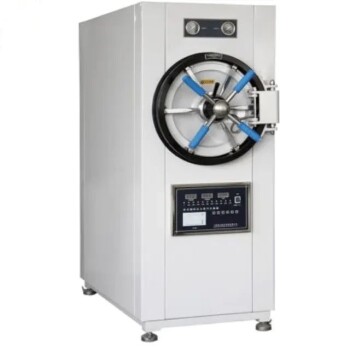
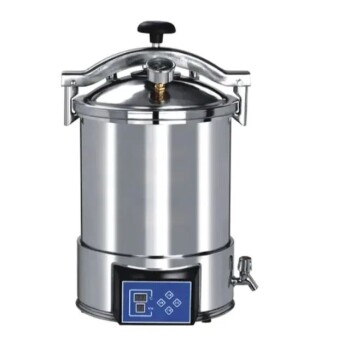
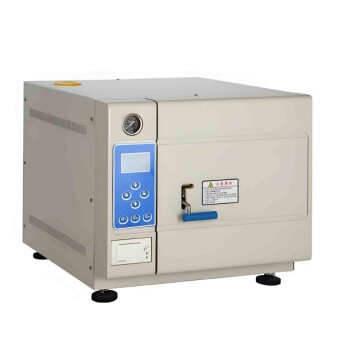
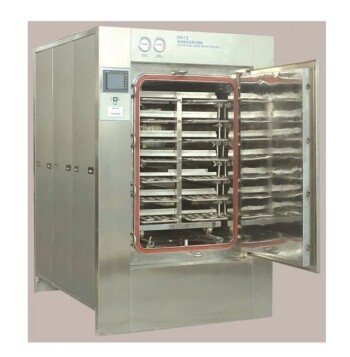
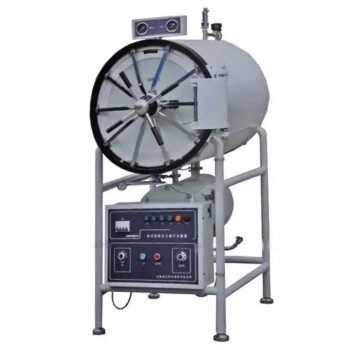
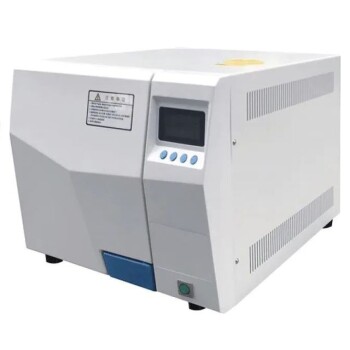
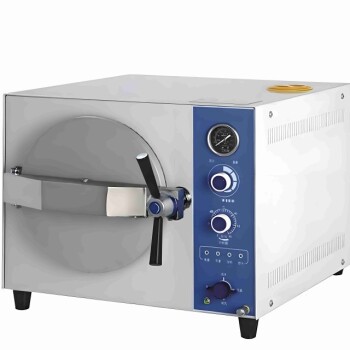
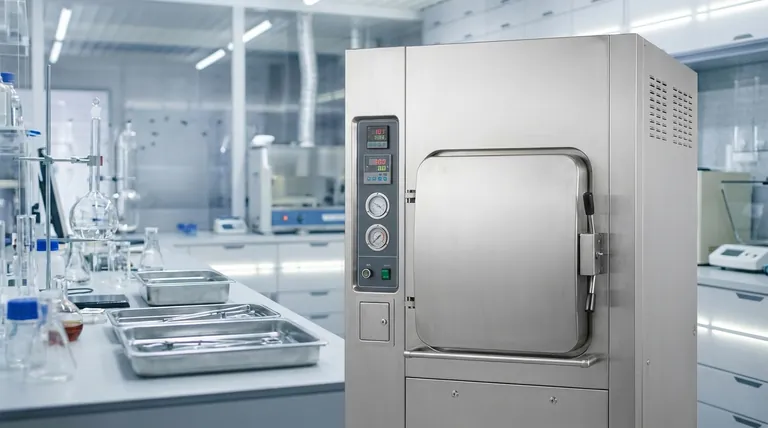
At its core, autoclaving is a high-pressure sterilization process that uses steam to kill microorganisms. By increasing the pressure within a sealed chamber, an autoclave raises the boiling point of water, creating superheated steam that can effectively sterilize laboratory instruments, medical equipment, and other materials by destroying bacteria, viruses, and even heat-resistant spores.
The fundamental insight is that autoclaving's effectiveness comes not just from heat, but from pressurized, saturated steam. This combination allows for rapid heat transfer and deep penetration, achieving temperatures that are impossible for boiling water at normal atmospheric pressure and ensuring the complete destruction of microbial life.
The Core Principle: Why Pressurized Steam is the Gold Standard
The entire process is built on a simple law of physics: the boiling point of water increases as pressure increases. An autoclave manipulates this relationship to create an environment far more hostile to microorganisms than simple boiling water could ever be.
Harnessing the Physics of Water
At sea level, water boils at 212°F (100°C). Inside a sealed autoclave, the pressure is increased to approximately 15 pounds per square inch (psi) above atmospheric pressure. This forces the boiling point of water up to 250°F (121°C), the standard temperature for sterilization.
The Killing Mechanism: Denaturing Proteins
The true power of autoclaving lies in its use of moist heat. This superheated steam transfers thermal energy far more efficiently than dry air. When it makes contact with microorganisms, it rapidly coagulates and denatures essential proteins and enzymes, effectively destroying the microbes from the inside out.
Superiority Over Dry Heat
While dry heat can also sterilize, it requires much higher temperatures and significantly longer exposure times. Moist heat penetrates materials more effectively and kills microorganisms much faster, making it the preferred method for most applications.
The Autoclave Cycle, Step by Step
A typical autoclave cycle is an automated, multi-phase process designed for safety and reliability. While settings can be customized, the fundamental stages remain the same.
Phase 1: Purge (Air Removal)
After the door is sealed, the autoclave begins to boil water to generate steam. The initial steam release is used to purge all air from the chamber. This step is critical because trapped air pockets can prevent steam from reaching all surfaces, leading to incomplete sterilization.
Phase 2: Sterilization (Heat-Up and Hold)
With the air removed, the chamber is now filled with pure, saturated steam. The pressure and temperature rise to the target set points, typically 121°C and 15 psi. The cycle then enters the "hold" time, maintaining these conditions for a specified duration, usually 15-20 minutes.
Phase 3: Exhaust and Cooling
Once the hold time is complete, a valve opens and the steam is slowly released, causing the pressure to drop back to ambient levels. For liquid loads, this depressurization must be slow to prevent the liquids from boiling over violently.
Phase 4: Drying (Optional)
For non-liquid loads like glassware or instruments, a drying phase often follows. The autoclave may create a slight vacuum to boil away any residual moisture, leaving the items completely dry and ready for use.
Understanding the Trade-offs and Critical Parameters
Effective autoclaving is more than just pressing a start button. Understanding the key variables is crucial for ensuring that every cycle achieves true sterility.
It's Not Just Temperature, It's Time
The standard 15-20 minute cycle is based on a moderately sized load. A larger or denser load requires a longer sterilization time because it takes more time for the steam to penetrate to the very center of the materials.
The Risk of Incorrect Cycle Selection
Using the wrong program can have significant consequences. Choosing a solid/gravity cycle for liquids can cause dangerous boil-over during the rapid exhaust phase, creating a mess and a safety hazard. Conversely, using a liquid cycle for dry goods is inefficient and leaves them wet.
The Importance of Calibration
An autoclave's temperature display must be accurate. Regular calibration is essential to verify that the temperature set on the machine is the actual temperature being achieved inside the chamber. Without this verification, you cannot be certain that sterilization conditions have been met.
Making the Right Choice for Your Goal
To ensure safety and effectiveness, always tailor the autoclave cycle to the specific materials being sterilized.
- If your primary focus is sterilizing liquids (media, buffers): Always use a dedicated liquid cycle with a slow exhaust to prevent boil-over and potential loss of volume.
- If your primary focus is sterilizing solid instruments or glassware: Select a gravity or vacuum cycle that includes a post-sterilization drying phase to ensure items are ready for immediate use.
- If your primary focus is sterilizing porous materials (gowns, waste bags): A cycle with a pre-vacuum phase is superior, as it actively removes air from deep within the load for guaranteed steam penetration.
- If your primary focus is ensuring regulatory compliance: Implement a routine validation schedule using biological indicators (vials containing heat-resistant spores) to prove the autoclave is effectively killing the most resilient organisms.
Mastering the principles of autoclaving transforms it from a routine task into a cornerstone of scientific integrity and safety.
Summary Table:
| Key Autoclave Cycle Phases | Primary Function | Typical Conditions |
|---|---|---|
| Purge | Removes air from the chamber | N/A |
| Sterilization | Holds temperature to kill microbes | 121°C (250°F), 15 psi, 15-20 min |
| Exhaust & Cooling | Releases pressure safely | Slow release for liquids |
| Drying (Optional) | Removes residual moisture | Vacuum for dry goods |
Ensure your laboratory's sterility and safety with KINTEK.
Autoclaving is a cornerstone of lab safety, and using the right equipment is critical for effective sterilization. KINTEK specializes in providing reliable lab autoclaves and consumables tailored to your specific needs—whether you're processing liquids, glassware, or porous materials.
We understand that every lab has unique requirements. Our experts can help you select the perfect autoclave and ensure it is properly calibrated and validated for compliance.
Ready to achieve flawless sterilization? Contact our team today to discuss your laboratory's equipment needs and discover how KINTEK can support your research with precision and reliability.
Visual Guide

Related Products
- Portable High Pressure Laboratory Autoclave Steam Sterilizer for Lab Use
- Laboratory Horizontal Autoclave Steam Sterilizer Lab Microcomputer Sterilizer
- Desktop Fast High Pressure Laboratory Autoclave Sterilizer 16L 24L for Lab Use
- Portable Digital Display Automatic Laboratory Sterilizer Lab Autoclave for Sterilization Pressure
- Desktop Fast Laboratory Autoclave Sterilizer 35L 50L 90L for Lab Use
People Also Ask
- What is a laboratory autoclave? A Guide to Sterilization with Pressurized Steam
- What is an autoclave laboratory equipment? The Ultimate Guide to Steam Sterilization
- What is the importance of using a laboratory autoclave in ZSM-5 synthesis? Achieve Perfect Zeolite Crystallization
- What extreme conditions does a laboratory autoclave simulate? Testing Wear Resistance of Nuclear Fuel Cladding
- What are the two types of autoclave used in the laboratory? Gravity vs. Pre-Vacuum Explained