The mechanical pretreatment of biomass is a critical prerequisite for high-performance carbon production. By grinding and sieving raw materials like sweet potato vines, producers create a uniform powder—typically 0.25 mm or less—that maximizes the contact surface area between the biomass and chemical activation agents. This ensures that subsequent carbonization and activation occur evenly throughout the material, which is essential for developing a precise and optimized pore structure in the final porous carbon product.
Grinding and sieving transform heterogeneous biomass into a standardized physical foundation, ensuring uniform chemical impregnation and consistent heat transfer. This precise control over particle size is the primary factor in achieving predictable pore distribution and superior material performance.
Maximizing Chemical and Thermal Efficiency
Increasing Surface Area for Activation
Grinding dried biomass into a fine powder significantly increases the active surface area available for chemical interaction. When the particle size is reduced to a consistent 60-mesh standard, activation agents can penetrate the material more deeply and quickly. This leads to a more efficient and thorough activation process, which is the foundation of high-quality Sweet Potato Vine-based Porous Carbon (SPVPC).
Ensuring Uniform Heat Transfer
Consistent particle size distribution is essential for maintaining even heat transfer during the high-temperature carbonization stage. Without this uniformity, smaller particles may over-carbonize while larger chunks remain under-processed, leading to an irregular and low-quality pore structure. Precision sieving ensures that every particle experiences the same thermal environment, resulting in a homogeneous final product.
Optimizing Pore Structure Formation
The primary goal of pretreatment is to facilitate the formation of a desired pore network that can hold charges or molecules. By standardizing the raw material, the activation agents can create pores of predictable sizes across the entire batch. This uniformity is what allows the final material to achieve high performance in applications like supercapacitors or catalysts.
Standardizing Material Properties
Improving Dispersion and Impregnation
For processes involving metal loading or chemical impregnation, such as iron-loaded biochar, a small particle size is vital. Uniform powders facilitate optimal contact between solutions (like ferric chloride) and the biomass fibers. This results in higher dispersion stability and ensures that the functional additives are distributed evenly throughout the carbon matrix.
Eliminating Diffusion Limitations
In technical applications, such as fixed-bed reactors or dynamic column elution, inconsistent particle sizes can create "dead zones." Precise sieving eliminates the impact of internal diffusion limitations, ensuring that kinetic data and reaction results are accurate. This standardized physical foundation is necessary for both laboratory accuracy and industrial repeatability.
Enhancing Mechanical and Electrochemical Consistency
When the final porous carbon is used in electrode coatings, uniform particle size reduces internal contact resistance. This leads to better conductivity and more reliable electrochemical testing results. Furthermore, in molded carbon devices, uniform particles ensure higher mechanical strength and structural integrity within the polymer matrix.
Understanding the Trade-offs
Energy Consumption vs. Particle Size
While finer grinding increases surface area, it also significantly increases energy consumption and processing time. Producers must find the "sweet spot" where the performance gains of a finer powder justify the higher operational costs of the grinding equipment.
Handling and Material Loss
Extremely fine powders (such as those passing through a 300-mesh sieve) are prone to dusting and material loss during transport and mixing. Furthermore, if particles are too small, they can cause an excessive pressure drop in filtration or reactor applications, potentially clogging systems or hindering flow rates.
Complexity of Scalability
Maintaining a tight particle size distribution becomes increasingly difficult as production scales from a laboratory grinding mill to industrial-grade systems. Large-scale sieving requires robust equipment to prevent screen blinding and to ensure that the physical specifications remain consistent across multi-ton batches.
Making the Right Choice for Your Goal
To achieve the best results with your porous carbon production, align your grinding and sieving strategy with your primary objective:
- If your primary focus is electrochemical performance: Use a 60-mesh or finer sieve to maximize surface area and reduce internal resistance for better charge storage.
- If your primary focus is industrial scalability: Target a moderate particle range (350–500 µm) to balance high reactivity with manageable energy costs and lower pressure drops.
- If your primary focus is catalyst stability: Prioritize precision sieving to ensure a uniform foundation for metal impregnation, which prevents the leaching of active components.
Careful control of the physical dimensions of your raw material is the most effective way to ensure the quality and reliability of your final porous carbon product.
Summary Table:
| Pretreatment Step | Key Function | Impact on Final Carbon Material |
|---|---|---|
| Grinding & Milling | Increases active surface area | Enhances chemical impregnation & activation efficiency |
| Precision Sieving | Ensures uniform particle size | Creates a predictable & optimized pore network |
| Powder Standardization | Facilitates even heat transfer | Prevents over-carbonization & ensures homogeneity |
| Particle Size Control | Reduces internal resistance | Improves conductivity for supercapacitors & electrodes |
Elevate Your Material Synthesis with KINTEK
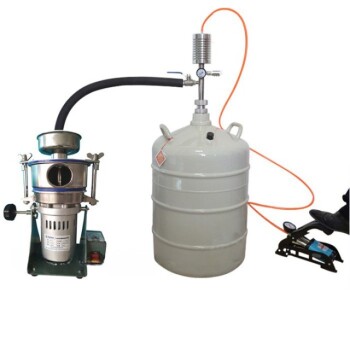
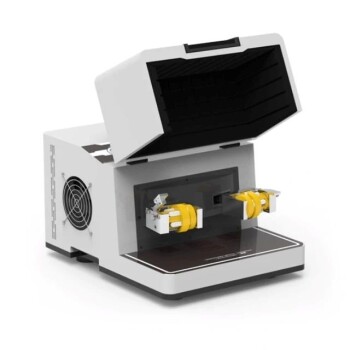
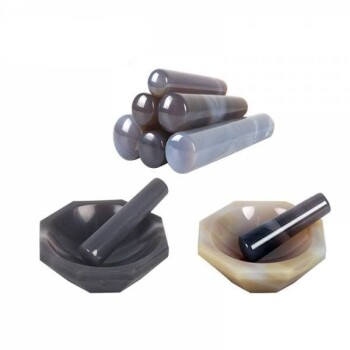
Achieving the perfect pore structure starts with precision pretreatment. KINTEK specializes in high-performance crushing and milling systems and sieving equipment designed to provide the standardized physical foundation your biomass research requires.
Our extensive portfolio supports your entire production workflow, from high-temperature furnaces (tube, vacuum, and muffle) for uniform carbonization to high-temperature high-pressure reactors and autoclaves for advanced chemical activation. Whether you are developing high-capacity supercapacitors or specialized catalysts, KINTEK provides the reliability and precision needed for superior results.
Ready to optimize your production efficiency and material performance? Contact our experts today to find the perfect equipment solution for your laboratory or industrial application!
References
- Wenlin Zhang, Jianmin Tang. Sweet-Potato-Vine-Based High-Performance Porous Carbon for Methylene Blue Adsorption. DOI: 10.3390/molecules28020819
This article is also based on technical information from Kintek Solution Knowledge Base .
Related Products
- Three-dimensional electromagnetic sieving instrument
- Laboratory Test Sieves and Sieving Machines
- Small Cryogenic Grinder Cryomill Cryogrinder with Liquid Nitrogen for Laboratory Use
- Electric Rotary Kiln Small Rotary Furnace Biomass Pyrolysis Plant
- Laboratory Vibratory Sieve Shaker Machine for Dry and Wet Three-Dimensional Sieving
People Also Ask
- Why is sieving equipment essential for the classification of processed bio-activated carbon? Optimize Performance
- What are the limitations of sieving? Understanding the Constraints of Particle Size Analysis
- What are advantages and disadvantages of sieving method? A Guide to Reliable & Cost-Effective Particle Sizing
- How is sieving important? The Critical Role of Particle Size Analysis in Quality Control
- What is sieving and how does it work? A Guide to Accurate Particle Size Analysis