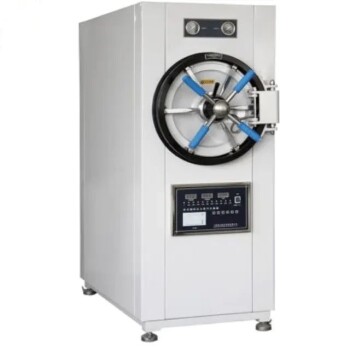
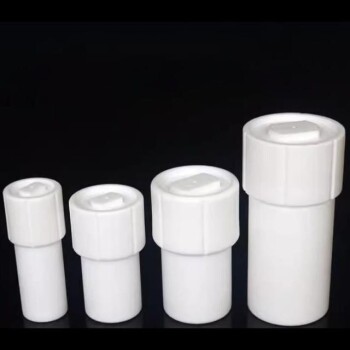
The high-pressure Teflon-lined stainless steel autoclave acts as the primary reactor for the hydrothermal synthesis of NiLa-X@CC precursors. Specifically, it creates a sealed, high-temperature environment that generates autogenous pressure, enabling the deep chemical reaction and in-situ crystallization of lanthanum and nickel nitrates into high-crystallinity hydroxide nanosheet arrays on carbon cloth.
The autoclave is essential for maintaining the stability of the methanol solvent at temperatures far exceeding its boiling point, providing the necessary pressure to drive uniform nucleation and prevent contamination during the crystallization process.
The Mechanism of In-Situ Crystallization
Facilitating Deep Chemical Reactions
The autoclave creates a sealed environment that allows the reaction to occur at a constant temperature of 160 °C. At this temperature, the autogenous pressure generated within the vessel promotes the "deep reaction" of nickel nitrate, lanthanum nitrate, and hexamethylenetetramine (HMTA).
Promoting High-Crystallinity Growth
The high-pressure environment is critical for the formation of hydroxide nanosheet arrays. This pressure ensures that the components crystallize directly onto the carbon cloth (CC) substrate with high structural integrity and uniform morphology.
Overcoming Solvent Boiling Points
In a standard open vessel, the methanol-based solution would evaporate before reaching the required reaction temperature. The autoclave keeps the solvent in a liquid state under super-atmospheric pressure, allowing for hydrothermal processes that are otherwise impossible.
Material Protection and System Integrity
The Role of the Teflon Liner
The Teflon (PTFE) liner provides excellent chemical inertness, which is vital when handling corrosive precursors like nitrates. It prevents the reaction liquid from attacking the metal walls of the vessel and ensures that no metallic ions contaminate the NiLa-X@CC precursor.
Structural Safety via Stainless Steel
The outer stainless steel shell provides the mechanical strength necessary to withstand the internal pressure generated at 160 °C. This shell ensures experimental safety, preventing vessel failure while the internal reaction proceeds under high stress.
Ensuring Chemical Purity
By isolating the reaction within a non-reactive liner, the autoclave ensures the high purity of the resulting nanostructures. This isolation prevents side reactions with the container walls that could alter the specific crystal phases of the nickel-lanthanum hydroxide.
Understanding the Trade-offs
Pressure and Temperature Limits
While highly effective, these autoclaves have strict thermal and pressure limits that must be monitored. Exceeding the recommended temperature of the Teflon liner (typically 200-250 °C) can cause the liner to deform, leading to leaks or the release of toxic fumes.
Thermal Lag and Cooling Rates
The thick stainless steel walls create a thermal lag, meaning the internal solution takes time to reach the set oven temperature. Additionally, the rate of cooling must be controlled carefully to prevent structural damage to the nanosheet arrays or the Teflon liner itself.
Filling Degree Constraints
The "fill factor" is a critical safety consideration; the autoclave should typically be filled to 60-80% of its capacity. Under-filling can lead to insufficient pressure, while over-filling risks a dangerous pressure spike that could breach the safety seal.
How to Apply This to Your Synthesis
Recommendations Based on Project Goals
- If your primary focus is high-crystallinity nanosheets: Ensure the reaction temperature remains constant at 160 °C to maintain the specific autogenous pressure required for in-situ growth on the carbon cloth.
- If your primary focus is material purity: Always inspect the Teflon liner for scratches or discoloration before use to prevent metal ion leaching from the stainless steel shell.
- If your primary focus is experimental safety: Never exceed the maximum pressure rating of the autoclave and allow the vessel to cool completely to room temperature before attempting to open it.
The autoclave is not merely a container, but a pressurized environment that dictates the morphology, purity, and structural success of the NiLa-X@CC precursor.
Summary Table:
| Feature | Function in Hydrothermal Reaction | Impact on NiLa-X@CC Precursors |
|---|---|---|
| Teflon (PTFE) Liner | Chemical inertness & corrosion resistance | Prevents metal ion contamination; ensures high purity. |
| Stainless Steel Shell | Mechanical strength & pressure containment | Safely maintains autogenous pressure at 160 °C. |
| Sealed Design | Prevents solvent (methanol) evaporation | Enables reactions above boiling points; drives nucleation. |
| In-Situ Crystallization | Controlled pressure/temp environment | Uniform growth of hydroxide nanosheets on carbon cloth. |
Elevate Your Material Synthesis with KINTEK Precision
Achieving high-crystallinity nanosheets and uniform NiLa-X@CC precursors requires equipment that can handle extreme hydrothermal conditions without compromising purity. KINTEK specializes in high-performance laboratory solutions, offering a robust range of high-temperature high-pressure reactors and autoclaves designed for precise chemical synthesis.
Whether you are working with corrosive nitrates or delicate carbon cloth substrates, our PTFE-lined vessels and advanced thermal systems ensure experimental safety and material integrity. Beyond reactors, KINTEK provides a complete ecosystem for researchers, including crushing and milling systems, high-temperature furnaces, and essential ceramic crucibles.
Ready to optimize your hydrothermal process? Contact our technical experts today to discover how KINTEK’s advanced equipment can deliver the consistency and purity your research demands.
References
- Kai Yu, Ziliang Chen. Immobilization of Oxyanions on the Reconstructed Heterostructure Evolved from a Bimetallic Oxysulfide for the Promotion of Oxygen Evolution Reaction. DOI: 10.1007/s40820-023-01164-9
This article is also based on technical information from Kintek Solution Knowledge Base .
Related Products
- Stainless High Pressure Autoclave Reactor Laboratory Pressure Reactor
- Mini SS High Pressure Autoclave Reactor for Laboratory Use
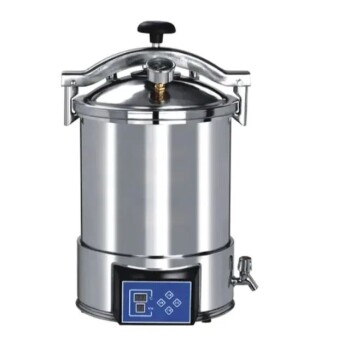
- Portable High Pressure Laboratory Autoclave Steam Sterilizer for Lab Use
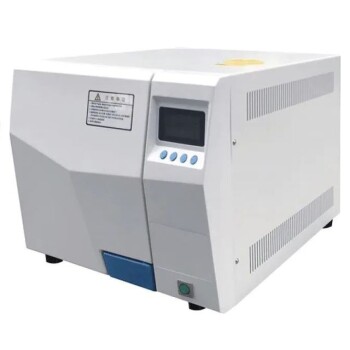
- Desktop Fast High Pressure Laboratory Autoclave Sterilizer 16L 24L for Lab Use
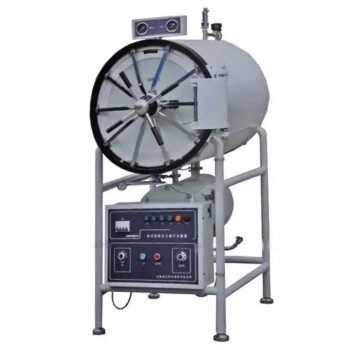
- Laboratory High Pressure Horizontal Autoclave Steam Sterilizer for Lab Use
People Also Ask
- Why is a laboratory high-pressure reactor necessary for synthesizing fly ash-based zeolite? Achieve Pure Crystallization
- Why is a laboratory high-pressure reactor used in the hydrothermal synthesis of hydroxyapatite catalysts?
- What role does a laboratory high-pressure reactor play in the leaching process of spent cathode materials? Optimize Recovery
- What conditions do laboratory high-pressure reactors provide for HTC? Optimize Your Biochar Production Processes
- How are high-pressure reactors used to prepare metaphosphate electrocatalysts? Master In-Situ Precursor Growth