The Teflon-lined solvothermal reactor is the critical vessel that enables the precise chemical coordination required for ZnEu-MOF synthesis. It provides a sealed, corrosion-resistant environment that allows reactants to reach high temperatures and autogenous pressures. These specific conditions facilitate the orderly growth of crystal nuclei, ensuring the resulting metal-organic framework (MOF) achieves high purity and a clearly defined microporous structure.
The reactor serves as a high-pressure pressure cooker that forces zinc and europium ions to bond with organic ligands in a controlled subcritical environment, while the Teflon liner ensures the chemical purity of the catalyst by preventing contact with the reactor's metal shell.
The Role of Controlled Thermochemical Environments
Facilitating Coordination and Nucleation
The synthesis of ZnEu-MOF requires the full coordination of metal ions (Zinc and Europium) with the organic ligand 5-(1H-imidazol-1-yl)-1,3-benzenedicarboxylic acid.
The reactor maintains a sealed environment where autogenous pressure builds as the temperature rises. This energy is necessary to overcome the activation barriers for the metal ions and ligands to assemble into an orderly, crystalline framework.
Achieving Subcritical Solvent States
Within the sealed reactor, solvents reach a subcritical state, which significantly enhances their penetration and dissolution capabilities.
This state allows for the thorough reaction of precursors that might remain insoluble at atmospheric pressure. Enhanced dissolution ensures that the precursors are distributed uniformly, leading to the formation of high-purity crystals with specific, functional morphologies.
The Importance of Chemical Inertness and Integrity
Preventing Metallic Contamination
The Teflon (PTFE) liner provides essential chemical inertness during the long-duration heating process.
Without this liner, the reaction solution—often containing acidic components—would directly contact the stainless steel shell of the autoclave. This contact would lead to metal ion contamination from the reactor itself, compromising the catalytic properties and purity of the ZnEu-MOF.
Corrosion Resistance Against Acidic Solvents
Many MOF syntheses utilize acidic solvents, such as glacial acetic acid, to regulate the rate of crystal growth.
The Teflon liner is highly resistant to these strong acids, protecting the structural integrity of the outer pressure vessel. This resistance allows the synthesis to proceed safely at high temperatures (often 120°C to 150°C) for several days without risking equipment failure or product degradation.
Understanding the Trade-offs
Temperature and Pressure Limitations
While Teflon is highly inert, it has a physical limit, typically around 220°C to 250°C, after which it may begin to soften or release toxic fumes.
Researchers must carefully balance the need for high-temperature synthesis with the mechanical limits of the PTFE material. Exceeding these limits can lead to liner deformation, which may cause the seal to fail and result in a loss of pressure.
Heat Transfer and Cooling Rates
The thickness of the Teflon liner can act as an insulator, slightly slowing the rate of heat transfer from the oven to the reaction solution.
Precise control over the cooling rate is also vital, as cooling too quickly can lead to small, poorly formed crystals. Conversely, controlled slow cooling within the insulated environment of the reactor often promotes the growth of larger, more perfect crystal structures.
Optimizing Your Solvothermal Synthesis
To achieve the best results when synthesizing ZnEu-MOF catalysts or similar frameworks, consider your specific experimental goals.
- If your primary focus is High Crystal Purity: Ensure the Teflon liner is thoroughly cleaned with dilute acid between uses to prevent cross-contamination from previous batches.
- If your primary focus is Specific Microporous Structure: Closely monitor the filling ratio of the reactor (typically 60-80%); the amount of "headspace" significantly impacts the autogenous pressure and nucleation rate.
- If your primary focus is Scale-up Potential: Document the exact heating and cooling ramps, as the thermal mass of larger Teflon-lined reactors will differ from smaller benchtop versions.
By mastering the high-pressure environment of the solvothermal reactor, you can reliably produce the sophisticated porous architectures required for modern MOF catalysis.
Summary Table:
| Feature | Function in ZnEu-MOF Synthesis | Key Benefit |
|---|---|---|
| Teflon (PTFE) Liner | Prevents metal ion leaching from the shell | Ensures chemical purity of the catalyst |
| Sealed Environment | Generates autogenous pressure at high temp | Overcomes activation barriers for nucleation |
| Subcritical Solvent State | Increases solubility and penetration of precursors | Facilitates uniform, orderly crystal growth |
| Corrosion Resistance | Withstands acidic ligands (e.g., glacial acetic acid) | Protects equipment and maintains reaction integrity |
| Thermal Insulation | Regulates heat transfer and cooling rates | Promotes the growth of large, perfect crystals |
Elevate Your MOF Synthesis with KINTEK Precision
Achieving the perfect crystalline structure for ZnEu-MOF catalysts requires equipment that offers both absolute chemical inertness and reliable pressure control. KINTEK specializes in high-performance high-temperature high-pressure reactors and autoclaves designed specifically to meet the rigorous demands of solvothermal synthesis.
Our comprehensive portfolio supports your entire lab workflow:
- Synthesis & Reaction: Advanced hydrothermal/solvothermal reactors and electrolytic cells.
- Material Processing: Precision crushing and milling systems, hydraulic presses, and sieving equipment.
- Essential Consumables: High-quality PTFE products, ceramics, and crucibles to prevent contamination.
Don't let equipment limitations compromise your research purity. Contact KINTEK today to discover how our laboratory solutions can enhance your catalytic yields and ensure repeatable, high-purity results.
References
- Jinying Pang, Penghu Guo. Wood Cellulose Nanofibers Grafted with Poly(ε-caprolactone) Catalyzed by ZnEu-MOF for Functionalization and Surface Modification of PCL Films. DOI: 10.3390/nano13131904
This article is also based on technical information from Kintek Solution Knowledge Base .
Related Products
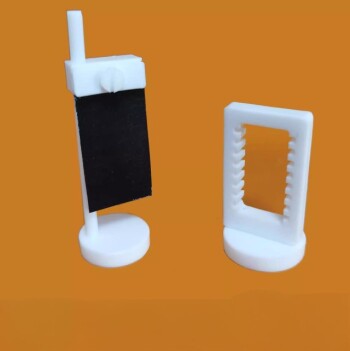
- Custom PTFE Teflon Parts Manufacturer for Hydrothermal Synthesis Reactor Polytetrafluoroethylene Carbon Paper and Carbon Cloth Nano-growth
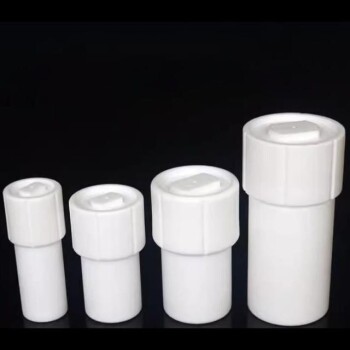
- Custom PTFE Teflon Parts Manufacturer for Microwave Digestion Tank
- Custom PTFE Teflon Parts Manufacturer F4 Conical Flask Triangular Flask 50 100 250ml
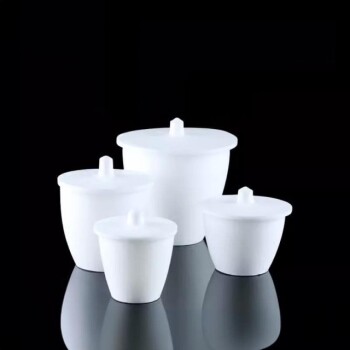
- Custom Machined and Molded PTFE Teflon Parts Manufacturer with PTFE Crucible and Lid
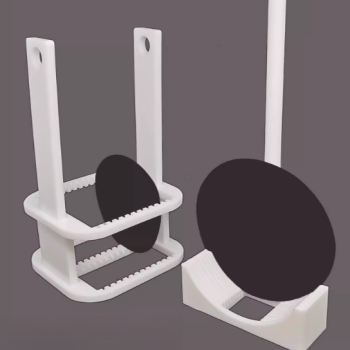
- Customizable PTFE Wafer Carriers for Semiconductor and Lab Applications
People Also Ask
- What is the function of a PTFE reactor in MXene etching? Ensure Safe, High-Purity MAX Phase Conversion
- Why is a PTFE reactor required for titanium-based nano-ceramic coating solutions? Ensure Chemical Inertness & Purity
- Why must a Polytetrafluoroethylene (PTFE) reactor be used for Ti3C2TX MXene etching? Ensure Safety and Purity
- Why are PTFE reactors preferred for silver phosphate glass testing? Ensure Purity and Kinetic Accuracy
- What are the advantages of using polytetrafluoroethylene (PTFE) liners in hydrothermal synthesis reactors? High Purity