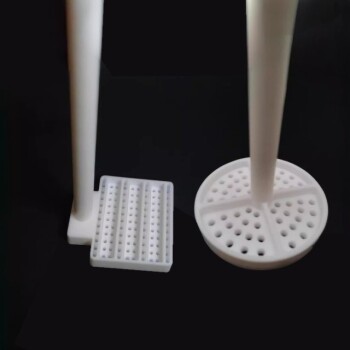
The primary function of a PTFE-lined hydrothermal synthesis reactor is to create a controlled, contaminant-free environment specifically engineered for the high-pressure crystallization of Silicalite-1. This device facilitates the hydrothermal process by maintaining a sealed, high-temperature atmosphere while isolating the reaction mixture. The inner lining, made of Polytetrafluoroethylene (PTFE), serves as a critical chemical barrier that protects the vessel from corrosion and prevents impurities from compromising the crystal structure.
By combining a pressure-capable outer shell with a chemically inert inner lining, this reactor enables the stable nucleation and directional growth of Silicalite-1 while neutralizing the corrosive effects of highly alkaline synthesis gels.
Establishing the Hydrothermal Environment
Creating High-Pressure Conditions
The synthesis of Silicalite-1 requires specific thermodynamic conditions that cannot be achieved in open containers.
The reactor is designed to be hermetically sealed, allowing the system to reach high pressures as the temperature rises.
This pressurized environment is essential for the hydrothermal reactions to proceed efficiently at temperatures such as 100 degrees Celsius.
Maintaining Thermal Stability
Consistency in temperature is vital for uniform crystal growth.
The reactor provides a stable thermal environment, ensuring that the entire synthesis gel is subjected to the same heat distribution.
This stability is a prerequisite for the reproducible formation of zeolite molecular sieves.
The Critical Role of the PTFE Lining
Resisting Chemical Corrosion
The synthesis gels used to create Silicalite-1 are highly alkaline.
Standard metal reactor walls would rapidly corrode if exposed directly to these harsh chemical agents.
The PTFE lining possesses excellent chemical corrosion resistance, acting as a shield that prevents the alkaline solution from damaging the structural integrity of the reactor.
Preventing Ionic Contamination
Purity is paramount in the synthesis of molecular sieves like Silicalite-1.
If the reaction mixture were to touch the metal vessel, metal ions could leach into the solution.
The PTFE barrier effectively prevents the introduction of these metal ion impurities, ensuring the final crystals remain pure and chemically accurate.
Impact on Crystal Formation
Ensuring Stable Nucleation
For crystals to form correctly, the initial nucleation phase must occur without interference from contaminants or temperature fluctuations.
The inert and stable environment provided by the PTFE-lined reactor ensures that Silicalite-1 can nucleate stably.
Facilitating Directional Growth
Once nucleation occurs, the crystals need to grow in a specific structural pattern.
The controlled conditions within the reactor foster directional growth of the crystals.
This results in a well-defined molecular sieve structure rather than a disorganized aggregate of material.
Operational Considerations and Limitations
Temperature Constraints of PTFE
While PTFE is highly resistant to chemicals, it has thermal limitations compared to metals.
It is crucial to operate within the specific temperature rating of the PTFE liner, as extreme heat can cause the lining to deform or degrade.
Liner Maintenance
The integrity of the synthesis depends entirely on the condition of the lining.
Scratches or deformation in the PTFE can compromise the seal or create pockets for contamination.
Regular inspection of the liner is necessary to ensure the "sealed" environment remains true.
Ensuring Success in Silicalite-1 Synthesis
To maximize the effectiveness of your synthesis process, consider the following regarding your reactor choice and usage:
- If your primary focus is Crystal Purity: Ensure the PTFE liner is free of defects and thoroughly cleaned to prevent cross-contamination or metal ion leaching.
- If your primary focus is Structural Integrity: Verify that the reactor seal is perfectly tight to maintain the pressure required for directional growth at 100°C.
The PTFE-lined reactor is not just a container; it is an active component in ensuring the chemical purity and structural stability of your Silicalite-1 production.
Summary Table:
| Feature | Function in Silicalite-1 Synthesis | Benefit |
|---|---|---|
| PTFE Lining | Acts as a chemical barrier against alkaline gels | Prevents metal ion contamination and corrosion |
| Sealed Design | Maintains high-pressure environment at 100°C | Facilitates efficient hydrothermal reaction and nucleation |
| Thermal Stability | Ensures uniform heat distribution | Promotes consistent and directional crystal growth |
| Chemical Inertness | Neutralizes corrosive effects of synthesis gels | Maintains structural integrity and high product purity |
Elevate Your Crystal Synthesis with KINTEK Precision
Achieving the perfect molecular sieve structure requires uncompromising purity and pressure control. KINTEK specializes in high-performance laboratory equipment, offering premium high-temperature high-pressure reactors and autoclaves equipped with high-grade PTFE liners to protect your Silicalite-1 synthesis from contamination and corrosion.
Our comprehensive range of hydrothermal solutions ensures stable nucleation and repeatable results for researchers and industrial labs alike. Beyond reactors, we provide essential PTFE consumables, ceramics, and crucibles to support your most demanding chemical processes.
Ready to optimize your lab’s efficiency and product purity? Contact KINTEK today for expert guidance and custom solutions.
References
- Montree Thongkam, Pesak Rungrojchaipon. A Facile Method to Synthesize b-Oriented Silicalite-1 Thin Film. DOI: 10.3390/membranes12050520
This article is also based on technical information from Kintek Solution Knowledge Base .
Related Products
- Custom PTFE Teflon Parts Manufacturer for Hydrothermal Synthesis Reactor Polytetrafluoroethylene Carbon Paper and Carbon Cloth Nano-growth
- High Pressure Laboratory Autoclave Reactor for Hydrothermal Synthesis
- Customizable Laboratory High Temperature High Pressure Reactors for Diverse Scientific Applications
- Custom PTFE Teflon Parts Manufacturer for Microwave Digestion Tank
- Custom PTFE Teflon Parts Manufacturer PTFE Beaker and Lids
People Also Ask
- What is the function of a PTFE reactor in MXene etching? Ensure Safe, High-Purity MAX Phase Conversion
- Why is a PTFE reactor required for titanium-based nano-ceramic coating solutions? Ensure Chemical Inertness & Purity
- Why must a Polytetrafluoroethylene (PTFE) reactor be used for Ti3C2TX MXene etching? Ensure Safety and Purity
- Why are PTFE reactors preferred for silver phosphate glass testing? Ensure Purity and Kinetic Accuracy
- What are the advantages of using polytetrafluoroethylene (PTFE) liners in hydrothermal synthesis reactors? High Purity