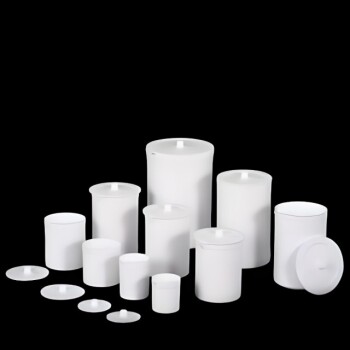
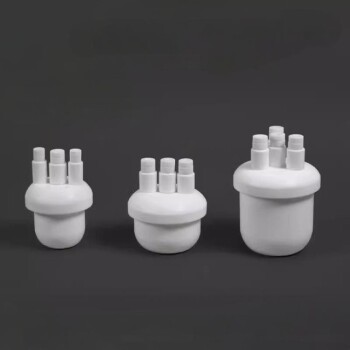
The Teflon-lined stainless steel high-pressure reactor acts as a controlled hydrothermal "incubator" for the synthesis of NiS@L-cysteine nanosheets. By maintaining a sealed environment at elevated temperatures, the reactor generates the autogenous pressure required for Ni2+ ions to effectively bond with L-cysteine through metal-thiol bonds. The Teflon liner is essential for maintaining chemical purity, as it prevents the reaction mixture from interacting with the stainless steel body, ensuring the structural integrity of the precursor nanosheets.
The reactor serves two primary functions: providing the high-energy hydrothermal environment necessary for complex chemical bonding and acting as a chemically inert vessel that prevents metallic contamination of the synthesized nanosheets.
Creating the Hydrothermal Environment
Facilitating Metal-Thiol Bonding
In the synthesis of NiS@L-cysteine, the reactor provides the specific temperature and pressure conditions needed to overcome energy barriers for coordination. This environment allows Ni2+ ions to bond precisely with L-cysteine molecules, creating the metal-thiol bonds that form the foundation of the nanosheet structure.
Enabling Subcritical Water Conditions
The sealed nature of the reactor allows water to reach subcritical states, where its properties change to facilitate rapid chemical reactions. Under these high-pressure conditions, reactants can interact more fully and uniformly than they would at standard atmospheric pressure.
Promoting Nucleation and Growth
The stable, high-pressure environment is critical for the uniform nucleation and growth of the nanosheets. By maintaining constant thermal conditions, the reactor ensures that the NiS@L-cysteine precursors develop with consistent morphology and high surface area.
The Role of the Teflon Liner
Ensuring Chemical Inertness
The Teflon (PTFE) liner provides an essential barrier between the reactive solution and the stainless steel shell. This inertness is vital to prevent metal ions from the reactor walls from leaching into the solution and introducing impurities into the nanosheet structure.
Corrosion Resistance
Hydrothermal reactions often involve precursors or solvents that can be corrosive to metal at high temperatures. The Teflon liner protects the structural integrity of the stainless steel reactor, extending its lifespan and preventing hazardous leaks during high-pressure cycles.
Enhancing Structural Purity
Because the liner prevents unwanted side reactions with the reactor body, the resulting NiS@L-cysteine nanosheets maintain high structural purity. This is critical for downstream applications, such as electrochemical sensing or catalysis, where impurities can significantly degrade performance.
Understanding the Trade-offs
Temperature Limitations
While Teflon is highly inert, it has a maximum operating temperature (typically around 220°C to 250°C). Exceeding these limits can lead to the deformation of the liner or the release of toxic fumes, which limits the thermal range of the synthesis.
Pressure Sensitivity and Cooling
The reactor must be cooled slowly to maintain the integrity of both the liner and the synthesized nanosheets. Rapid cooling can cause mechanical stress, potentially cracking the Teflon liner or altering the morphology of the NiS@L-cysteine crystals.
Scaling Constraints
High-pressure reactors are generally designed for batch processing, which can limit the volume of nanosheets produced at one time. Transitioning from laboratory-scale reactors to industrial production requires significant engineering to maintain the same pressure-temperature profiles.
Optimizing the Synthesis for Your Objectives
How to Apply This to Your Project
To achieve the best results with a Teflon-lined high-pressure reactor, you should align your operational parameters with your specific material goals.
- If your primary focus is high structural purity: Ensure the Teflon liner is meticulously cleaned between runs to prevent cross-contamination from previous synthesis batches.
- If your primary focus is uniform nanosheet morphology: Focus on precise temperature control and a slow, controlled cooling phase to allow for stable crystal growth.
- If your primary focus is maximizing bond density: Utilize the maximum safe pressure rating of the reactor to promote the thorough coordination of Ni2+ and L-cysteine.
The successful synthesis of NiS@L-cysteine nanosheets depends entirely on the reactor's ability to balance extreme physical conditions with absolute chemical isolation.
Summary Table:
| Feature | Role in Synthesis | Key Benefit |
|---|---|---|
| Hydrothermal Environment | Facilitates metal-thiol bonding & subcritical water conditions | Enables complex coordination of Ni2+ and L-cysteine |
| Teflon (PTFE) Liner | Provides chemical inertness and corrosion resistance | Prevents metallic contamination and ensures structural purity |
| Sealed Stainless Steel Shell | Maintains autogenous pressure at high temperatures | Promotes uniform nucleation and stable crystal growth |
| Temperature Control | Manages energy levels for reaction kinetics | Ensures consistent morphology and prevents liner deformation |
Elevate your nanomaterial synthesis with KINTEK’s precision laboratory solutions. We specialize in high-performance high-temperature high-pressure reactors and autoclaves, featuring premium Teflon liners to ensure the chemical purity and structural integrity of your precursors. Whether you are developing NiS@L-cysteine nanosheets or advanced catalysts, KINTEK provides the reliable equipment you need—from muffle furnaces and hydraulic presses to specialized electrolytic cells. Contact our experts today to optimize your lab’s workflow!
References
- Xiaoqing Yan, Guidong Yang. An electron-hole rich dual-site nickel catalyst for efficient photocatalytic overall water splitting. DOI: 10.1038/s41467-023-37358-3
This article is also based on technical information from Kintek Solution Knowledge Base .
Related Products
- Stainless High Pressure Autoclave Reactor Laboratory Pressure Reactor
- Custom PTFE Teflon Parts Manufacturer for Reagent Wide Mouth Fine Mouth Sample High Temperature Bottles
- Custom PTFE Teflon Parts Manufacturer for Hydrothermal Synthesis Reactor Polytetrafluoroethylene Carbon Paper and Carbon Cloth Nano-growth
- Mini SS High Pressure Autoclave Reactor for Laboratory Use
- Custom PTFE Teflon Parts Manufacturer for Microwave Digestion Tank
People Also Ask
- Why is a laboratory high-pressure reactor necessary for synthesizing fly ash-based zeolite? Achieve Pure Crystallization
- Why is a laboratory high-pressure reactor used in the hydrothermal synthesis of hydroxyapatite catalysts?
- What role does a laboratory high-pressure reactor play in the leaching process of spent cathode materials? Optimize Recovery
- What conditions do laboratory high-pressure reactors provide for HTC? Optimize Your Biochar Production Processes
- How are high-pressure reactors used to prepare metaphosphate electrocatalysts? Master In-Situ Precursor Growth