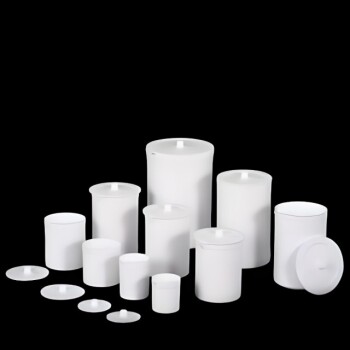
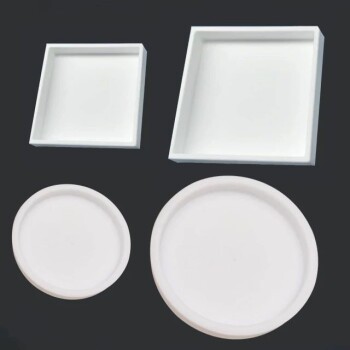
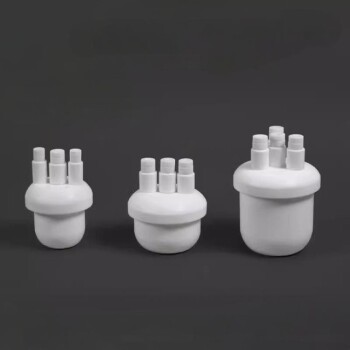
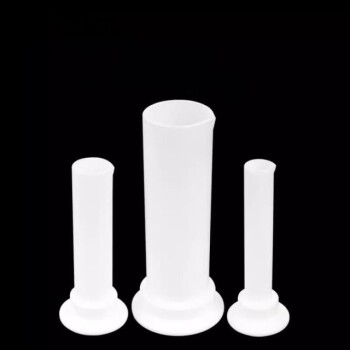
A Teflon-lined stainless steel high-pressure reactor serves as the essential hydrothermal vessel that facilitates the transformation of biomass precursors, such as pear and urea, into water-soluble nitrogen-doped graphene nanosheets (ws-NGNSs). By creating a sealed, subcritical water environment at temperatures of 220 °C, the reactor enables the rapid hydrolysis, dehydration, polymerization, and carbonization necessary to synthesize these nanostructures with high precision and purity.
The reactor provides a dual-function environment: the stainless steel shell withstands the extreme pressures required for hydrothermal carbonization, while the internal Teflon liner ensures chemical inertness, preventing metal contamination and protecting the vessel from corrosive reaction products.
The Mechanics of Hydrothermal Carbonization
The synthesis of ws-NGNSs requires a specific physical environment that standard laboratory glassware cannot provide.
Achieving the Subcritical Water State
At 220 °C within a sealed vessel, water enters a subcritical state, where its physical and chemical properties change significantly. This environment increases the reactivity of the biomass precursors, allowing the mixture of pear and urea to break down and reform into carbon frameworks that would otherwise be impossible at atmospheric pressure.
Facilitating Multi-Stage Chemical Transformations
The high-pressure environment drives a complex sequence of rapid hydrolysis, dehydration, and polymerization. These stages are the precursors to the final carbonization process, where nitrogen atoms from the urea are effectively doped into the emerging graphene lattice to create the water-soluble properties of the nanosheets.
Uniform Nucleation and Growth
The sealed nature of the reactor ensures uniform thermal distribution, which is critical for consistent nanosheet morphology. This controlled heat transfer allows for stable nucleation, ensuring that the graphene nanosheets grow with consistent structural characteristics across the entire batch.
The Critical Role of the Teflon Liner
While the stainless steel provides the structural strength to contain high pressure, the Teflon (PTFE) lining is the component that guarantees the chemical integrity of the synthesis.
Preventing Metal Contamination
During the synthesis of carbon nanomaterials, even trace amounts of iron, chromium, or nickel from a stainless steel shell can act as unintended catalysts or impurities. The Teflon liner acts as an absolute barrier, ensuring that the resulting ws-NGNSs remain high-purity and free from metallic artifacts that could alter their electronic or chemical properties.
Corrosion Resistance and Structural Integrity
Hydrothermal reactions, especially those involving nitrogen-rich precursors like urea, can create corrosive intermediate environments. The exceptional chemical stability of Teflon protects the outer stainless steel shell from "pitting" or stress corrosion, extending the life of the reactor and maintaining a safe operational environment under high-pressure conditions.
Understanding the Trade-offs
While these reactors are indispensable for hydrothermal synthesis, they come with specific technical limitations that must be managed.
Temperature Limitations of PTFE
The primary constraint of a Teflon-lined reactor is its maximum operating temperature, typically capped at 220 °C to 250 °C. Exceeding these limits can cause the Teflon liner to soften, deform, or release toxic vapors, potentially compromising both the experiment and the safety of the laboratory.
Cooling and Pressure Regulation
Because the system is sealed, pressure is a direct function of temperature and the "fill degree" of the liner. Users must carefully calculate the solvent expansion to avoid over-pressurization, and cooling must be conducted slowly to prevent the liner from contracting at a different rate than the steel shell, which can cause leaks.
Making the Right Choice for Your Goal
When utilizing a Teflon-lined high-pressure reactor for carbon nanosheet synthesis, your approach should vary based on your specific requirements.
- If your primary focus is High Material Purity: Ensure the Teflon liner is rigorously cleaned with acid between runs to remove any residual carbonized material that could seed the next reaction.
- If your primary focus is Structural Consistency: Maintain a consistent "fill ratio" (typically 60-80% of the liner volume) to ensure the pressure dynamics remain identical across different batches.
- If your primary focus is Safety and Longevity: Never exceed the 220 °C threshold and perform regular visual inspections of the Teflon "lip" for signs of thinning or deformation.
The Teflon-lined reactor is the cornerstone of hydrothermal synthesis, providing the extreme physical conditions necessary for chemical innovation while maintaining the pristine environment required for advanced nanotechnology.
Summary Table:
| Component/Feature | Primary Function | Benefit for ws-NGNS Synthesis |
|---|---|---|
| Stainless Steel Shell | High-pressure containment | Withstands subcritical water conditions at 220°C |
| Teflon (PTFE) Liner | Chemical inertness | Prevents metal contamination; ensures material purity |
| Hydrothermal Environment | Subcritical water state | Drives rapid hydrolysis, polymerization, and N-doping |
| Sealed System | Uniform thermal distribution | Ensures consistent nanosheet morphology and nucleation |
Elevate Your Nanomaterial Synthesis with KINTEK Precision
High-purity carbon nanostructures like ws-NGNSs demand precise hydrothermal conditions and absolute chemical integrity. KINTEK specializes in advanced laboratory solutions, offering a robust range of high-temperature high-pressure reactors and autoclaves designed to meet the rigorous demands of material science.
Whether you are focusing on battery research, graphene synthesis, or complex chemical transformations, our reactors—alongside our premium PTFE products, ceramics, and cooling solutions—ensure safety, reliability, and contamination-free results.
Ready to optimize your hydrothermal processes? Contact our specialists today to find the perfect reactor configuration for your laboratory’s unique requirements.
References
- Vijayendra Kumar Tripathi, Kumud Malika Tripathi. N-doped graphene nanosheets-based optical nano switch for the selective detection of guanine and Pb<sup>2+</sup>. DOI: 10.1039/d3su00328k
This article is also based on technical information from Kintek Solution Knowledge Base .
Related Products
- Stainless High Pressure Autoclave Reactor Laboratory Pressure Reactor
- Custom PTFE Teflon Parts Manufacturer for Reagent Wide Mouth Fine Mouth Sample High Temperature Bottles
- Custom PTFE Teflon Parts Manufacturer for Hydrothermal Synthesis Reactor Polytetrafluoroethylene Carbon Paper and Carbon Cloth Nano-growth
- Mini SS High Pressure Autoclave Reactor for Laboratory Use
- Custom PTFE Teflon Parts Manufacturer for Microwave Digestion Tank
People Also Ask
- Why is a laboratory high-pressure reactor necessary for synthesizing fly ash-based zeolite? Achieve Pure Crystallization
- Why is a laboratory high-pressure reactor used in the hydrothermal synthesis of hydroxyapatite catalysts?
- What role does a laboratory high-pressure reactor play in the leaching process of spent cathode materials? Optimize Recovery
- What conditions do laboratory high-pressure reactors provide for HTC? Optimize Your Biochar Production Processes
- How are high-pressure reactors used to prepare metaphosphate electrocatalysts? Master In-Situ Precursor Growth