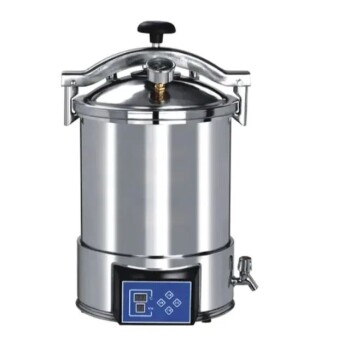
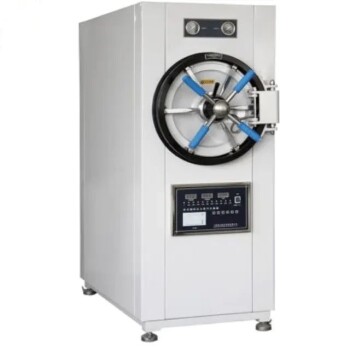
The stainless steel shell and the Polytetrafluoroethylene (PTFE) liner perform distinct, yet complementary roles in a high-pressure autoclave. The stainless steel shell acts as the structural backbone, providing the mechanical strength required to contain high internal pressures generated by heat. Inside, the PTFE liner serves as a chemical barrier, protecting the steel from corrosion and ensuring the synthesized carbon nanomaterials remain pure and free from metal contamination.
The stainless steel shell provides the physical safety required to withstand high pressure, while the PTFE liner safeguards the chemical integrity of the reaction. Together, they allow for the safe use of aggressive solvents and high temperatures essential for synthesizing waste-derived carbon nanomaterials.
The Role of the Stainless Steel Shell
Providing Mechanical Integrity
The primary function of the stainless steel shell is to contain extreme pressure. During solvothermal or hydrothermal synthesis, temperatures are elevated to levels that generate significant internal pressure.
High-strength stainless steel is capable of withstanding these forces without deforming or rupturing. It acts as the pressure vessel that prevents physical failure during the reaction.
Facilitating a Sealed Environment
The shell enables the creation of a tightly sealed environment. By mechanically securing the closure, it ensures that volatile solvents and reaction gases remain trapped within the reactor.
This containment is necessary to reach the specific pressure conditions required for the decomposition of precursors and the subsequent nucleation of the nanomaterials.
The Role of the PTFE Liner
Ensuring Chemical Inertness
The PTFE liner is the component that makes contact with the reaction mixture. Its exceptional chemical inertness allows it to resist attack from strong acids, alkalis, and organic solvents.
Without this liner, aggressive reactants used to break down waste materials would rapidly corrode the metal walls of the autoclave.
Preventing Product Contamination
In the synthesis of carbon nanomaterials, purity is often paramount. The PTFE liner acts as an isolation barrier that prevents metal ion contamination.
If the reaction mixture touched the steel directly, dissolved metal ions could integrate into the carbon structure, altering its properties and degrading the quality of the final product.
The Synergy for Material Synthesis
Enabling Controlled Crystal Growth
The combination of the steel’s pressure containment and the liner’s inertness creates a stable hydrothermal environment. This stability allows for the controlled nucleation and growth of materials.
As noted in similar synthesis processes, such as with MnS or Aurivillius oxides, this stable environment is critical for achieving defined crystal planes and specific nanostructures.
Withstanding Thermal Stress
While the steel manages the pressure, the PTFE liner must withstand the operating temperatures (e.g., around 433 K or 160°C).
The liner is designed to maintain its structural integrity at these temperatures, ensuring it does not melt or degrade while holding the corrosive solvents.
Understanding the Trade-offs
Temperature Limitations of PTFE
While PTFE is chemically robust, it has a lower thermal limit compared to stainless steel. If the synthesis requires temperatures exceeding the melting point or deformation limit of PTFE (typically above 250°C), this liner configuration may fail.
Corrosion Risks to the Shell
The stainless steel shell is not immune to chemical attack; it relies entirely on the liner for protection. If the liner is damaged, scratched, or improperly sealed, corrosive vapors can leak and attack the steel shell, compromising the safety of the entire reactor.
Making the Right Choice for Your Goal
To ensure the success of your synthesis, consider the following regarding your autoclave setup:
- If your primary focus is Safety: Inspect the stainless steel shell regularly for deformation or stress fractures, as it is the only barrier preventing a pressure explosion.
- If your primary focus is Purity: Replace the PTFE liner immediately if it shows signs of staining, scratching, or deformation to prevent metal leaching into your carbon nanomaterials.
The dual-layer autoclave design is a critical engineering solution that balances the physical need for pressure containment with the chemical need for high-purity isolation.
Summary Table:
| Component | Primary Function | Material Property | Role in Carbon Synthesis |
|---|---|---|---|
| Stainless Steel Shell | Pressure Containment | High Tensile Strength | Provides structural safety for high-pressure hydrothermal reactions. |
| PTFE Liner | Chemical Barrier | Inert & Corrosion-Resistant | Prevents metal contamination and resists aggressive solvents/acids. |
| The Synergy | Process Stability | Thermal/Mechanical Balance | Enables controlled nucleation and growth of pure carbon nanostructures. |
Elevate Your Material Research with KINTEK
Precision synthesis requires equipment that balances safety with purity. KINTEK specializes in advanced laboratory solutions, offering a robust selection of high-temperature high-pressure reactors and autoclaves designed specifically for hydrothermal and solvothermal synthesis. Whether you are developing waste-derived carbon nanomaterials or exploring complex crystal growth, our PTFE-lined reactors ensure your samples remain free from contamination while providing industry-leading pressure containment.
From high-performance crushing and milling systems to precision hydraulic presses and thermal processing furnaces, KINTEK provides the tools global researchers trust for consistency and durability.
Ready to optimize your lab’s synthesis capabilities? Contact our technical experts today to find the perfect reactor configuration for your research goals.
References
- Gaurav Tatrari, Nanda Gopal Sahoo. Solid waste-derived carbon nanomaterials for supercapacitor applications: a recent overview. DOI: 10.1039/d0ma00871k
This article is also based on technical information from Kintek Solution Knowledge Base .
Related Products
- Stainless High Pressure Autoclave Reactor Laboratory Pressure Reactor
- Mini SS High Pressure Autoclave Reactor for Laboratory Use
- High Pressure Laboratory Autoclave Reactor for Hydrothermal Synthesis
- Customizable High Pressure Reactors for Advanced Scientific and Industrial Applications
- Desktop Fast High Pressure Laboratory Autoclave Sterilizer 16L 24L for Lab Use
People Also Ask
- Why is a laboratory high-pressure reactor used in the hydrothermal synthesis of hydroxyapatite catalysts?
- Why is a laboratory high-pressure reactor necessary for synthesizing fly ash-based zeolite? Achieve Pure Crystallization
- What role does a laboratory high-pressure reactor play in the leaching process of spent cathode materials? Optimize Recovery
- What conditions do laboratory high-pressure reactors provide for HTC? Optimize Your Biochar Production Processes
- How are high-pressure reactors used to prepare metaphosphate electrocatalysts? Master In-Situ Precursor Growth