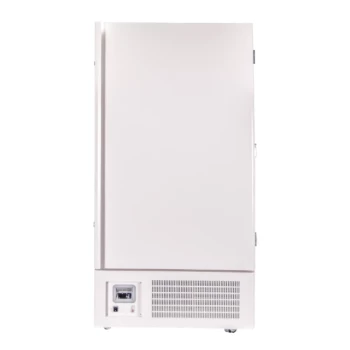
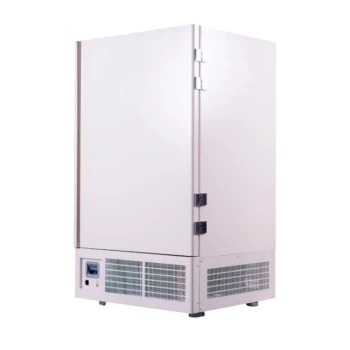
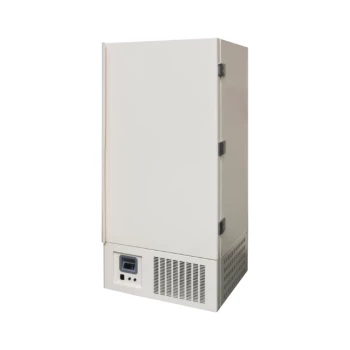
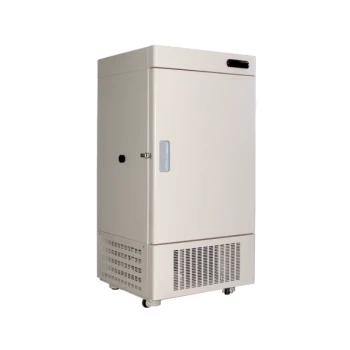
The significance of a high-efficiency laboratory cooling system lies in its ability to maximize the recovery rate of Organic Liquid Products (OLP). By utilizing low-temperature circulators with specific cooling fluids, these systems instantly condense high-temperature vapors produced during cracking processes, ensuring that valuable hydrocarbon chains are captured rather than lost.
By facilitating an instantaneous phase change from vapor to liquid, high-efficiency cooling serves two critical functions: it drastically minimizes the loss of volatile light components and provides a representative sample essential for accurate quantitative analysis.
The Mechanics of Efficient Recovery
Instantaneous Phase Change
The primary function of a high-efficiency system is to induce a rapid thermal shock to the vapors. As high-temperature vapors emerge from the cracking process, they must be converted to liquid immediately to prevent escape.
Specialized Circulators
These systems typically employ a low-temperature circulator. By pumping cooling liquids—such as water or antifreeze—through the system, the apparatus maintains the low temperatures required to force condensation instantly.
Maximizing Hydrocarbon Capture
Capturing the Full Spectrum
A standard cooling setup may only capture heavier, less volatile compounds. In contrast, a high-efficiency system is designed to capture a broad spectrum of hydrocarbons, specifically ranging from C3 to C20.
Preserving Light Components
The "light" components (lower carbon numbers like C3 and C4) are highly volatile and difficult to trap. High-efficiency cooling prevents these specific components from remaining in a gaseous state and venting out of the system.
Enabling Accurate Analysis
Foundation for GC-MS
The quality of your data is only as good as the sample you collect. By ensuring the collection of the full C3–C20 range, the cooling system provides a solid physical basis for subsequent GC-MS (Gas Chromatography-Mass Spectrometry) analysis.
Precise Yield Calculations
If light components are lost during collection, mass balance calculations will be incorrect. A high-efficiency system ensures that the collected liquid volume represents the true output of the reaction, allowing for accurate yield calculations.
Understanding the Trade-offs
The Risk of Standard Cooling
Using a low-efficiency or standard ambient cooling method often results in "fractional loss." You may successfully collect heavy oils, but the lighter fractions will escape as gas.
Data Skewing
This partial loss creates a skewed profile of your product. Your analysis will erroneously suggest a heavier product distribution than what was actually produced, rendering your research data unreliable.
Making the Right Choice for Your Goal
To maximize the value of your setup, consider your specific analytical needs:
- If your primary focus is Mass Balance: Prioritize a system with extremely low-temperature circulation to ensure even the most volatile C3 components are liquefied and weighed.
- If your primary focus is Qualitative Analysis: Ensure the cooling capacity is stable enough to prevent selective evaporation, which ensures your GC-MS peaks accurately reflect the reaction's true byproduct profile.
Ultimately, the cooling system is not just an accessory; it is the gatekeeper of your data integrity.
Summary Table:
| Feature | Standard Cooling | High-Efficiency Cooling |
|---|---|---|
| Hydrocarbon Range | Primarily Heavy Oils | Broad Spectrum (C3 - C20) |
| Phase Change Speed | Slow / Incomplete | Instantaneous Thermal Shock |
| Light Component Loss | High (C3, C4 escape as gas) | Minimal (Liquefied and trapped) |
| Data Accuracy | Skewed (Heavier profile) | Representative & Precise |
| Primary Goal | Basic Liquid Collection | Mass Balance & Qualitative Analysis |
Elevate Your Research with Precision Cooling Solutions
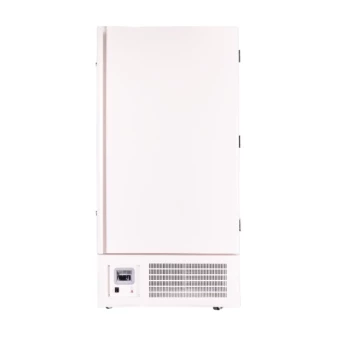
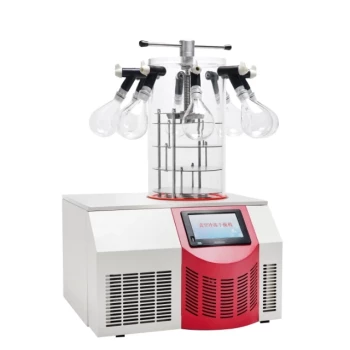
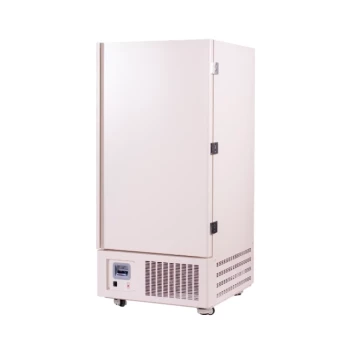
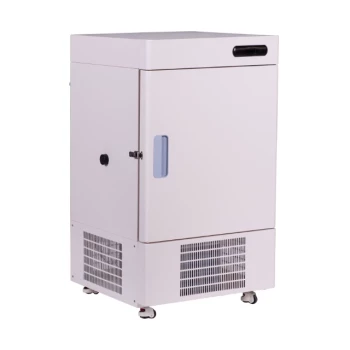
Don't let volatile light components compromise your data integrity. KINTEK specializes in high-performance laboratory equipment designed for the most demanding research environments. Whether you are conducting advanced cracking experiments or complex chemical syntheses, our cooling solutions (ULT freezers, cold traps, freeze dryers) and low-temperature circulators ensure maximum recovery of Organic Liquid Products.
From high-temperature high-pressure reactors to crushing systems and PTFE consumables, KINTEK provides the comprehensive tools you need for accurate mass balance and reliable GC-MS analysis. Maximize your lab's efficiency and secure the full spectrum of your results today.
Contact a KINTEK Specialist Now
References
- Rosyad Adrian Febriansyar, Bunjerd Jongsomjit. Bifunctional CaCO3/HY Catalyst in the Simultaneous Cracking-Deoxygenation of Palm Oil to Diesel-Range Hydrocarbons. DOI: 10.17509/ijost.v8i2.55494
This article is also based on technical information from Kintek Solution Knowledge Base .
Related Products
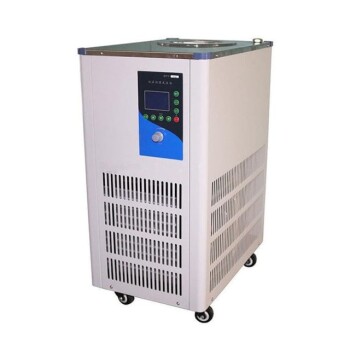
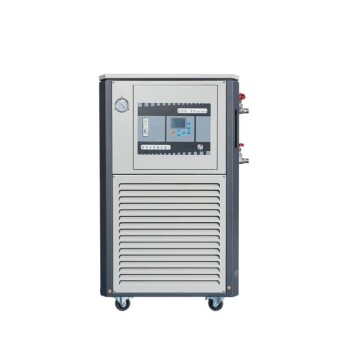
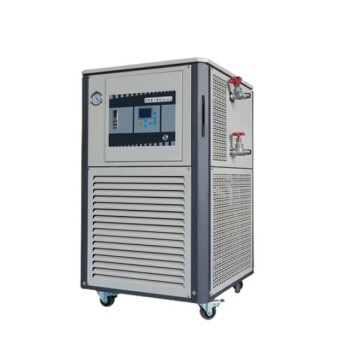
- 100L Chilling Circulator Cooling Water Circulator for Low Temperature Constant Temperature Reaction Bath Water Bath Cooling
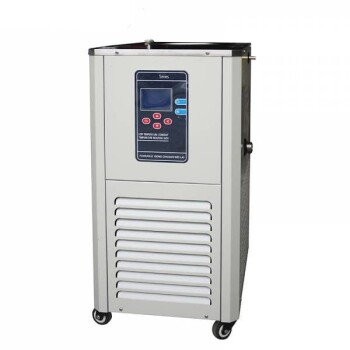
- 5L Chilling Circulator Cooling Water Bath Circulator for Low Temperature Constant Temperature Reaction Bath
- 80L Chilling Circulator Cooling Water Circulator for Water Bath Cooling and Low Temperature Constant Temperature Reaction Bath
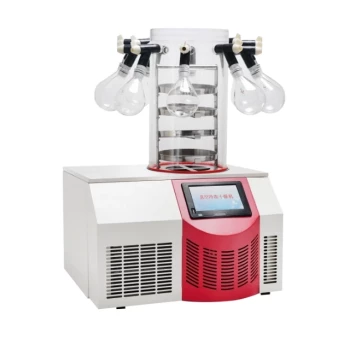
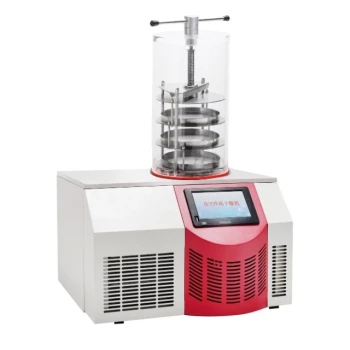
- High Performance Laboratory Freeze Dryer
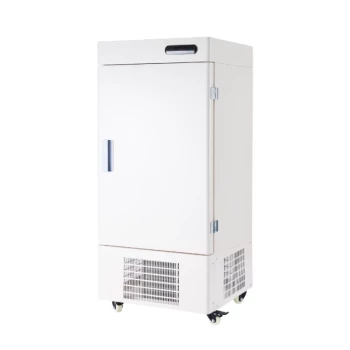
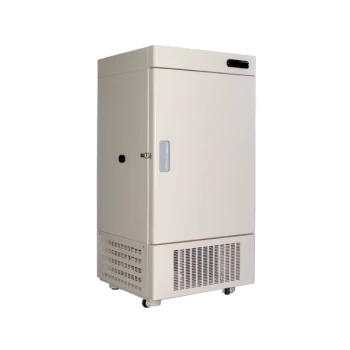
- 158L Precision Vertical Ultra Low Freezer for Laboratory Applications
People Also Ask
- What function does a circulating cooling chiller perform during the gas adsorption isotherm testing of nanoporous carbon?
- Why is a circulating water chiller required for Prussian Blue nanoparticles? Ensure Stability & Batch Reproducibility
- What is the purpose of a cooling circulation water bath system in electrochemical experiments? Enhance Lab Precision
- How does a constant temperature circulator support the leaching reaction of gold scrap? Optimize Gold Recovery Results
- How do constant temperature circulators impact weight-loss immersion tests? Ensure Precision in Corrosion Analysis