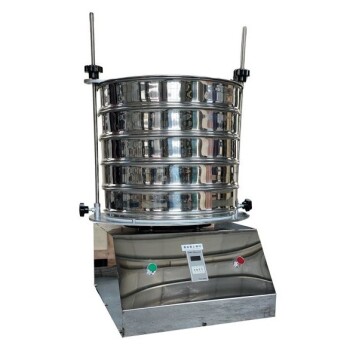
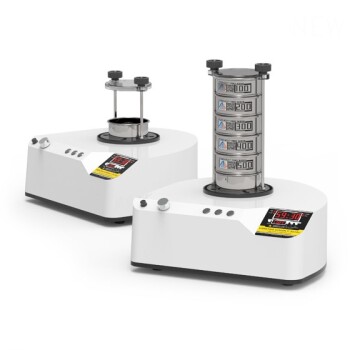
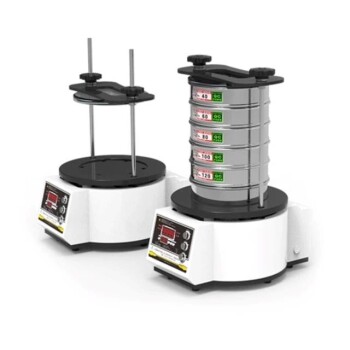
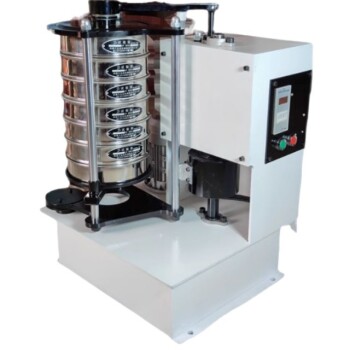
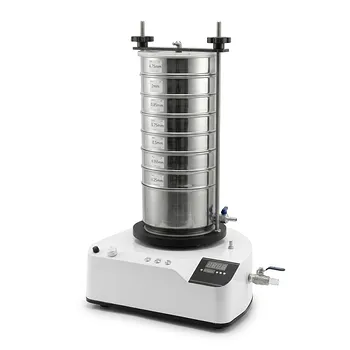
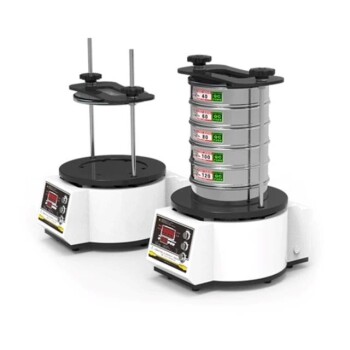
Standard sieves are used to establish a uniform particle size distribution, which is the foundational step for eliminating internal heat and mass transfer resistance. By processing biomass—such as corn stalks or wheat straw—into specific ranges (typically 280 µm to 450 µm), researchers ensure that combustion or pyrolysis occurs synchronously across the entire sample, allowing the study to focus strictly on variables like temperature and atmospheric conditions rather than physical geometry.
Core Takeaway: The technical purpose of sieving is to normalize the physical dimensions of biomass to ensure predictable thermal behavior. This process removes the "noise" of variable particle sizes, enabling precise control over reaction kinetics and ensuring that chemical data is reproducible and accurate.
Eliminating Heat and Mass Transfer Resistance
Overcoming Internal Thermal Gradients
When biomass particles are too large or varied in size, they develop internal heat transfer gradients, where the core of the particle is significantly cooler than the surface. Standard sieves limit the maximum diameter, ensuring that heat penetrates to the center of every particle almost instantaneously for uniform heating.
Normalizing Diffusion Pathways
Variations in particle size create inconsistent "mass transfer resistance," meaning gases produced during reactions take different amounts of time to escape the material. Using a sieve to maintain a consistent aperture range ensures that volatiles are released at a synchronized rate, preventing localized secondary reactions that could skew data.
Ensuring Reaction Synchronization and Reproducibility
Isolating Independent Variables
In reactor studies, the goal is often to observe how a material reacts to changes in temperature or gas composition. By using sieves to fix the particle size as a constant, researchers can confidently attribute changes in reaction behavior to the reactor’s environment rather than the physical traits of the feedstock.
Homogenizing Chemical Interactions
For processes involving chemical activators (like KOH or H3PO4), a uniform particle size is vital for achieving a homogeneous mixture. This consistency ensures that the activation reaction happens evenly throughout the bed, leading to a regular pore structure and stable performance in the final carbon product.
Optimizing Physical Processing and Conversion Yields
Maximizing Effective Surface Area
Small, sieved particles (such as those passing through a No. 60 sieve) provide a much larger specific surface area relative to their volume. This increased exposure to the gasification medium or heat source maximizes contact efficiency, resulting in higher byproduct yields and faster reaction times.
Improving Flowability and Structural Integrity
In molding or pelletizing applications, sieves ensure that the powder has a consistent packing density. This uniformity reduces wear on mechanical molds and ensures that the resulting pellets have high structural integrity and consistent physical properties.
Understanding the Trade-offs and Pitfalls
Loss of Representative Heterogeneity
While sieving creates a "perfect" laboratory sample, it may move the material away from real-world conditions. In industrial-scale reactors, biomass is often processed in bulk with high heterogeneity; over-reliance on highly sieved samples can lead to lab results that are difficult to scale up.
Sieve Blinding and Material Loss
Fibrous biomass can often "blind" or clog standard sieves, leading to an incomplete distribution analysis. Furthermore, the sieving process inherently discards a portion of the raw material, which may lead to a "selection bias" if the chemical composition of the fines differs from the larger fragments.
How to Apply This to Your Project
Recommended Sieving Strategies
To achieve the best results in your reactor experiments, tailor your sieving protocol to your specific analytical goals.
- If your primary focus is Kinetic Modeling (TGA): Use a high-precision sieve to limit particles to a 0.25–0.5 mm range to ensure that chemical kinetics, not heat transfer, are the rate-limiting step.
- If your primary focus is Gasification Efficiency: Aim for a finer mesh (200-300 mesh) to maximize the surface area available for contact with the gasification medium.
- If your primary focus is Mechanical Briquetting: Use larger apertures (1mm–2mm) to ensure flowability while maintaining enough fiber length to provide structural reinforcement during compression.
By strictly controlling particle size through standardized sieving, you transform a raw, heterogeneous biological material into a precise technical feedstock capable of yielding high-fidelity scientific data.
Summary Table:
| Objective | Technical Benefit | Scientific Outcome |
|---|---|---|
| Thermal Control | Eliminates internal heat gradients | Synchronous, uniform heating |
| Kinetic Modeling | Isolates particle size as a constant | Accurate, reproducible chemical data |
| Surface Area | Maximizes gas-solid contact area | Increased byproduct & conversion yields |
| Sample Prep | Homogenizes physical properties | Consistent packing & structural integrity |
Achieve High-Fidelity Results with KINTEK Precision Equipment
Precision in biomass research begins with standardized sample preparation. At KINTEK, we specialize in providing the high-quality tools you need to eliminate experimental 'noise' and ensure data reproducibility.
From high-precision sieving equipment and crushing systems for perfect particle distribution to high-temperature reactors (CVD, vacuum, atmosphere) and muffle furnaces for controlled thermal processing, our portfolio is designed for the most demanding laboratory environments. We also offer hydraulic presses, high-pressure autoclaves, and essential consumables like cruibles and ceramics to support your entire workflow.
Ready to elevate your research accuracy? Contact our technical experts today to find the perfect equipment solutions tailored to your specific biomass and reactor requirements.
References
- Feng Zhang, Lei Deng. Release Characteristics of Potassium during Biomass Combustion. DOI: 10.3390/en16104107
This article is also based on technical information from Kintek Solution Knowledge Base .
Related Products
- Custom PTFE Teflon Parts Manufacturer for PTFE Mesh F4 Sieve
- Laboratory Test Sieves and Sieving Machines
- Three-dimensional electromagnetic sieving instrument
- Vibratory Sieve Shaker Machine Dry Three-Dimensional Vibrating Sieve
- Laboratory Vibratory Sieve Shaker Machine Slap Vibrating Sieve
People Also Ask
- What are the primary reasons for selecting PTFE as a matrix? Enhance Composites with Carbon Nanotube Reinforcement
- How is PTFE utilized for insulation in Alloy 22 corrosion setups? Ensure Signal Purity & Accuracy
- Is PTFE corrosion resistant? Discover the Ultimate Chemical Resistance for Your Lab
- What are the specific applications of PTFE in micro-batch slug flow systems? Enhance Your Microfluidic Reaction Purity
- What is the mesh size of a sieve? A Guide to Particle Size and Sieve Selection