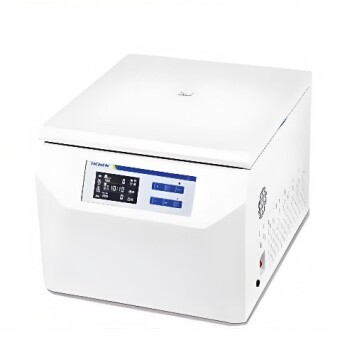
The primary technical significance of a high-pressure reactor in glucose isomerization is its ability to decouple reaction temperature from solvent limitations. By maintaining a pressurized environment (specifically around 10 bar of nitrogen), the reactor prevents the aqueous solvent from boiling at elevated temperatures like 393 K. This ensures the process remains a stable liquid-phase reaction while simultaneously acting as a barrier against oxidative degradation.
In glucose isomerization, pressure is a control variable used to enforce thermodynamic stability. It locks the solvent in the liquid phase and excludes oxygen, thereby maximizing the yield of target sugars like fructose or mannose.
Managing Phase Behavior and Kinetics
To achieve efficient isomerization, you must maintain specific thermodynamic conditions. The high-pressure reactor acts as a physical constraint that allows you to operate beyond the normal boiling point of your solvent.
Preventing Solvent Evaporation
At the standard reaction temperature of 393 K (approximately 120°C), an aqueous solvent would flash into steam at atmospheric pressure. The high-pressure reactor applies an overpressure that significantly raises the solvent's boiling point. This ensures the reaction mixture remains entirely in the liquid phase despite the high heat.
Ensuring Constant Concentration
If the solvent were allowed to evaporate, the volume of the mixture would decrease, causing reactant concentrations to spike unpredictably. By preventing evaporation, the reactor maintains a constant concentration of glucose throughout the process. This stability is essential for maintaining consistent reaction kinetics and achieving reproducible data.
Enhancing Chemical Selectivity
Beyond physical phase management, the pressure environment plays a critical chemical role. The composition of the gas used to pressurize the vessel directly impacts product purity.
Suppressing Oxidative Side Reactions
Sugars like glucose and fructose are highly sensitive to oxidation, which leads to degradation and byproducts. The reactor creates a pressurized inert atmosphere using nitrogen (N2). This positive pressure excludes atmospheric oxygen, effectively suppressing oxidative side reactions that would otherwise consume the reactant.
Increasing Product Yields
By eliminating two major sources of loss—physical loss of solvent and chemical loss via oxidation—the efficiency of the reaction improves. The system channels the maximum amount of glucose into the desired isomerization pathway. Consequently, this environment directly correlates to increased yields of fructose or mannose.
Understanding the Operational Trade-offs
While a high-pressure environment is advantageous for yield and stability, it introduces specific operational demands that must be managed.
Equipment Complexity and Safety
Operating at 10 bar requires vessels rated for medium-to-high pressure, which increases equipment costs compared to atmospheric reflux setups. Safety protocols must be stricter to manage the stored energy of compressed nitrogen.
Sensitivity to Leakage
The benefits of this system are binary; they rely on a perfect seal. Even a minor leak can drop the pressure below the vapor pressure of water at 393 K, causing rapid boiling, or allow oxygen ingress. The system requires robust sealing and monitoring to prevent the immediate negation of its benefits.
Making the Right Choice for Your Process
Deciding to utilize a high-pressure reactor depends on your specific yield requirements and temperature targets.
- If your primary focus is Kinetic Stability: Utilize the high-pressure environment to run reactions above 100°C without altering liquid volume or concentration.
- If your primary focus is Product Purity: Prioritize the use of inert nitrogen pressure to eliminate oxidative degradation and maximize the selectivity for fructose or mannose.
By controlling the pressure environment, you transform temperature from a limiting factor into a tunable parameter for optimal conversion.
Summary Table:
| Feature | Technical Significance in Glucose Isomerization | Impact on Reaction |
|---|---|---|
| Phase Control | Prevents aqueous solvent boiling at 393 K | Maintains stable liquid-phase reaction |
| Inert Atmosphere | Uses N2 to exclude atmospheric oxygen | Suppresses oxidative degradation and byproducts |
| Concentration Stability | Eliminates solvent loss through evaporation | Ensures consistent kinetics and reproducible results |
| Yield Optimization | Decouples temperature from solvent limitations | Maximizes conversion to fructose or mannose |
Elevate Your Chemical Synthesis with KINTEK Precision
Are you looking to optimize your glucose isomerization or high-temperature liquid-phase reactions? KINTEK specializes in advanced laboratory equipment designed for the most demanding research environments. Our premium range of high-temperature high-pressure reactors and autoclaves provides the precise pressure control and thermal stability required to prevent oxidative degradation and ensure maximum product yield.
Beyond reactors, KINTEK offers a comprehensive portfolio including:
- Thermal Processing: Muffle, tube, and vacuum furnaces.
- Material Preparation: Crushing, milling, and hydraulic presses (pellet, isostatic).
- Electrochemistry: Electrolytic cells and high-performance electrodes.
- Lab Essentials: Cooling solutions, PTFE products, and high-purity ceramics.
Ready to transform your process efficiency? Contact our technical experts today to find the perfect equipment solution for your laboratory’s unique needs.
References
- María Ventura, Marcelo E. Domine. Tuning Ca–Al-based catalysts’ composition to isomerize or epimerize glucose and other sugars. DOI: 10.1039/c9gc02823d
This article is also based on technical information from Kintek Solution Knowledge Base .
Related Products
- Customizable Laboratory High Temperature High Pressure Reactors for Diverse Scientific Applications
- Customizable High Pressure Reactors for Advanced Scientific and Industrial Applications
- Stainless High Pressure Autoclave Reactor Laboratory Pressure Reactor
- Mini SS High Pressure Autoclave Reactor for Laboratory Use
- High Pressure Laboratory Autoclave Reactor for Hydrothermal Synthesis
People Also Ask
- How do high-pressure and high-temperature reactors ensure the effective treatment of lignocellulosic wastewater in WAO?
- What equipment is required for high-pressure high-temperature reactions? Master Extreme Chemistry Safely
- How do you control high pressure in a reactor? A Guide to Safe & Stable Operation
- Why is argon better than nitrogen for inert atmosphere? Ensure Absolute Reactivity & Stability
- How does initial oxygen pressure affect the wet oxidation of pharmaceutical sludge? Master Your Oxidation Depth