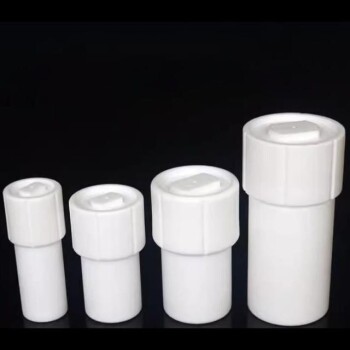
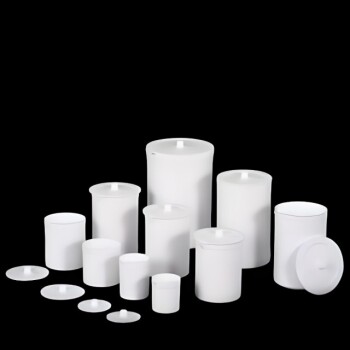
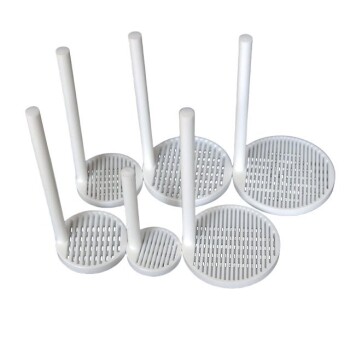
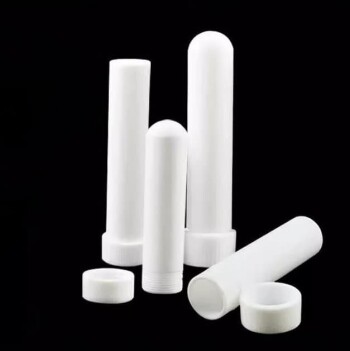
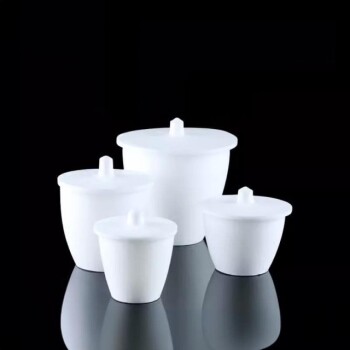
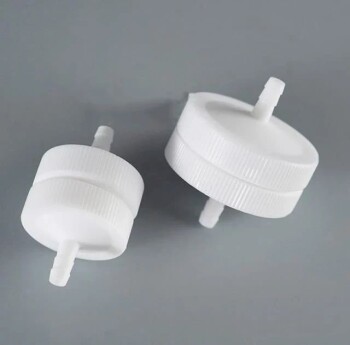
The high-pressure digestion tank with a PTFE liner serves as the fundamental reactor for creating the high-energy environment required for CA-CoNiMn-CLDHs synthesis. It provides a sealed, high-temperature, and high-pressure chamber that facilitates critical ion exchange and in-situ growth between nickel/manganese ions and ZIF-67 templates. This specific setup is what allows the transformation of simple precursors into complex, three-dimensional layered double hydroxide (LDH) hollow structures.
Core Takeaway: The PTFE-lined digestion tank is the "chemical engine" of the solvothermal process, generating the physical pressure and thermal energy necessary to drive the vertical growth of ultrathin nanosheets onto polyhedral surfaces, ultimately defining the nanozyme's catalytic surface area.
Environmental Control and Reaction Kinetics
Overcoming Solvent Boiling Points
The sealed nature of the digestion tank allows the internal temperature to rise well above the normal boiling point of the solvents used. This elevation in temperature increases the kinetic energy of the reactants, enabling chemical transitions that would be impossible under standard atmospheric conditions.
Driving Ion Exchange and In-Situ Growth
The high-pressure environment is essential for facilitating the ion exchange between the nickel/manganese ions and the ZIF-67 templates. This pressure forces the precursors to interact at the molecular level, ensuring that the growth of new structures occurs directly "in-situ" on the surface of the templates.
Maintaining Constant Reaction States
By providing a stable, sealed environment, the autoclave ensures that the precursor solution remains at a constant temperature and pressure for extended periods. This consistency is vital for the uniform nucleation of the nanozymes, preventing variations that could lead to structural defects.
Architecting the 3D Nano-Structure
Vertical Growth of Ultrathin Nanosheets
The specific conditions inside the tank enable ultrathin nanosheets to grow vertically and stagger themselves across polyhedral surfaces. This specialized growth pattern is a direct result of the controlled energy levels maintained within the PTFE-lined vessel.
Construction of Hollow Frameworks
As the reaction progresses under pressure, the ZIF-67 templates are transformed into three-dimensional layered double hydroxide (LDH) hollow structures. This hollow architecture is critical because it significantly increases the specific surface area available for catalytic reactions.
Maximizing Abundant Active Sites
The solvothermal process, regulated by the digestion tank, ensures the formation of a high density of active sites. These sites are the functional components of the nanozyme, and their abundance directly determines the efficiency of the CA-CoNiMn-CLDHs in practical applications.
The Technical Necessity of the PTFE Liner
Ensuring Chemical Inertness and Purity
The polytetrafluoroethylene (PTFE) liner is chosen for its extreme chemical stability, which prevents the reaction mixture from reacting with the stainless steel outer shell. This ensures that the final nanozyme product remains pure and free from metallic contamination that could alter its catalytic properties.
Corrosion Resistance Against Aggressive Precursors
Solvothermal synthesis often involves aggressive chemical precursors that can degrade standard laboratory equipment. The PTFE liner acts as a robust shield, protecting the integrity of the pressure vessel while maintaining the structural integrity of the synthesized Ni/Mn arrays.
Managing Thermal and Pressure Stress
While the stainless steel jacket provides the mechanical strength to withstand internal pressure, the PTFE liner provides the necessary thermal insulation and chemical barrier. This combination allows for safe operation at the high temperatures (often exceeding 150°C to 200°C) required for crystal growth.
Understanding the Trade-offs
Limits of Material Tolerance
While PTFE is highly inert, it has specific temperature limits (typically around 220°C to 250°C) beyond which it can begin to deform or release toxic vapors. Users must balance the need for high-reaction energy with the physical limitations of the liner material.
Cooling and Scalability Constraints
The high-pressure environment requires slow, controlled cooling to prevent structural damage to the hollow LDH nanosheets. This necessity for gradual cooling, combined with the fixed volume of the digestion tank, can limit the speed of production and the ability to scale synthesis for industrial volumes.
How to Apply This to Your Project
Recommendations for Synthesis Control
- If your primary focus is maximizing surface area: Prioritize maintaining a constant, high-pressure state for the full duration of the reaction to ensure the nanosheets stagger correctly without collapsing.
- If your primary focus is product purity: Always inspect the PTFE liner for staining or pitting before use, as degraded liners can introduce impurities into the LDH structure.
- If your primary focus is structural integrity: Ensure the cooling process is conducted at a slow, ambient rate to avoid thermal shock to the 3D hollow frameworks.
The PTFE-lined digestion tank is the indispensable tool that bridges the gap between liquid precursors and the sophisticated, high-performance architecture of CA-CoNiMn-CLDHs nanozymes.
Summary Table:
| Feature | Role in Synthesis | Impact on Final Nanozyme |
|---|---|---|
| PTFE Liner | Provides chemical inertness & corrosion resistance | Ensures high purity and prevents metallic contamination. |
| Sealed Vessel | Elevates solvents above boiling points | Increases kinetic energy for critical ion exchange. |
| Pressure Control | Facilitates in-situ growth on ZIF-67 templates | Drives the formation of 3D hollow LDH frameworks. |
| Thermal Stability | Maintains constant high-energy states | Enables vertical growth of ultrathin, staggered nanosheets. |
| Controlled Cooling | Manages thermal stress post-reaction | Preserves the structural integrity of the nano-architecture. |
Elevate Your Nano-Material Synthesis with KINTEK
Precision in solvothermal synthesis requires equipment that can handle extreme chemical and thermal stress without compromising purity. KINTEK specializes in high-performance laboratory solutions, offering a robust range of high-temperature high-pressure reactors and autoclaves specifically designed for complex reactions like CA-CoNiMn-CLDHs synthesis.
By choosing KINTEK, you benefit from:
- Premium PTFE Products & Liners: Ensuring zero contamination and maximum resistance to aggressive precursors.
- Reliable Thermal Control: Essential for the uniform nucleation and vertical growth of ultrathin nanosheets.
- Versatile Lab Tools: From high-temperature furnaces and hydraulic presses to specialized ceramics and crucibles, we provide the full ecosystem for material research.
Ready to maximize your nanozyme’s active sites and structural integrity? Contact our technical experts today to find the perfect reactor configuration for your laboratory's needs.
References
- Wenjie Tan, Jie Yang. Co(II)-Based Metal-Organic Framework Derived CA-CoNiMn-CLDHs with Peroxidase-like Activity for Colorimetric Detection of Phenol. DOI: 10.3390/ma16186212
This article is also based on technical information from Kintek Solution Knowledge Base .
Related Products
- Custom PTFE Teflon Parts Manufacturer for Microwave Digestion Tank
- Custom PTFE Teflon Parts Manufacturer for PTFE Containers
- Custom PTFE Teflon Parts Manufacturer for Centrifuge Tube Racks
- Custom PTFE Teflon Parts Manufacturer for Reagent Wide Mouth Fine Mouth Sample High Temperature Bottles
- Custom PTFE Teflon Parts Manufacturer for Culture Dish and Evaporation Dish
People Also Ask
- Why are PTFE containers required for PCT leaching tests? Ensure Chemical Inertness and Analytical Precision
- Why use high-quality PTFE containers for CO2 reduction electrolytes? Eliminate silicon contamination and ensure data.
- Why is PTFE Mandatory for Hydrofluoric Acid (HF) Handling? Ensure Safety and Data Integrity in Corrosion Testing
- Why is a PTFE container required for acid leaching of silicon nanosheets? Ensure High Purity and Safety
- Why are polytetrafluoroethylene (PTFE) containers essential for assessing the corrosion resistance of glassified waste?