The high-pressure Teflon-lined autoclave acts as the essential containment vessel that enables the solvothermal reaction between nickel salts and trimesic acid. By maintaining a sealed, high-temperature environment (typically 150 °C), the autoclave facilitates the crystallization of Ni-BTC within a dimethylformamide (DMF) solvent. This setup ensures the resulting metal-organic framework (MOF) achieves its characteristic high specific surface area and hierarchical porous structure.
The autoclave provides the subcritical conditions necessary to increase reactant solubility and overcome activation energy barriers, while the Teflon liner ensures chemical purity by preventing corrosion and metallic contamination.
The Role of High Pressure and Subcritical Temperatures
Facilitating Reactions Above Boiling Points
The primary function of the autoclave is to provide a sealed environment that allows the solvent, such as DMF, to be heated well above its atmospheric boiling point. This creates high internal pressure, which is critical for driving the solvothermal synthesis of Ni-BTC.
Enhancing Solubility and Diffusion
Under these high-pressure conditions, the solubility and diffusion rates of nickel salts and organic ligands are significantly increased. This allows the reactants to mix more effectively than they would under standard reflux conditions, ensuring a more thorough reaction.
Promoting Controlled Nucleation
The internal pressure within the autoclave regulates the nucleation and growth of Ni-BTC crystals. This controlled environment is what allows the framework to self-assemble into a precise, three-dimensional porous structure rather than an amorphous solid.
The Critical Function of the Teflon Liner
Providing Chemical Inertness
The internal Teflon (PTFE) liner is chosen for its exceptional chemical resistance against reactive species and aggressive solvents used in the synthesis. This prevents the reactants from attacking or corroding the stainless steel outer shell of the autoclave.
Ensuring High Product Purity
By acting as a barrier, the liner prevents metallic impurities from the reactor walls from leaching into the reaction mixture. This ensures that the final green Ni-BTC powder maintains its intended chemical composition and catalytic properties.
Facilitating Maintenance and Recovery
The non-stick nature of Teflon allows for the easy recovery of the synthesized MOF powder from the vessel. It also simplifies the cleaning process, preventing cross-contamination between different synthesis batches.
Impact on the Ni-BTC Framework Structure
Achieving High Specific Surface Area
The autoclave environment is directly responsible for the high specific surface area of the Ni-BTC MOF. The steady pressure and temperature allow for the formation of a complex, hierarchical porous network that is essential for gas storage and catalysis.
Inducing Specific Crystallinity
By regulating the preferred growth direction of the crystals, the autoclave helps produce a highly crystalline green powder. This structural regularity is a hallmark of high-quality Ni-BTC synthesized via the solvothermal method.
Understanding the Trade-offs and Safety Risks
Pressure and Filling Ratios
One of the most critical trade-offs in autoclave use is the filling ratio; if the vessel is filled too high, the thermal expansion of the liquid can lead to catastrophic pressure spikes. Users must balance the desire for higher yields with the physical safety limits of the stainless steel shell.
Heating and Cooling Rates
The thick walls of the autoclave and the insulating properties of the Teflon liner create thermal lag. Rapid heating or cooling can lead to uneven crystal sizes or structural defects, requiring precise control over the furnace ramp rates to ensure product consistency.
Temperature Limitations
While Teflon is highly inert, it has a clear thermal ceiling (typically around 220–250 °C). Exceeding these temperatures can cause the liner to soften or release toxic fumes, limiting the synthesis conditions compared to all-metal or ceramic-lined reactors.
How to Apply This to Your Project
Making the Right Choice for Your Goal
- If your primary focus is maximizing surface area: Ensure the autoclave is held at a consistent 150 °C for the full duration to allow for the slow, precise assembly of the hierarchical pores.
- If your primary focus is high-purity catalyst production: Always inspect the Teflon liner for scratches or discoloration before use to prevent the introduction of iron or chromium from the steel shell.
- If your primary focus is structural morphology: Control the cooling rate of the autoclave after the reaction is complete, as slow cooling often promotes larger, more well-defined Ni-BTC crystals.
The high-pressure Teflon-lined autoclave is the definitive tool for transforming simple nickel salts and organic ligands into a sophisticated, high-performance porous framework.
Summary Table:
| Feature | Role in Ni-BTC Synthesis | Key Benefit |
|---|---|---|
| High-Pressure Seal | Enables heating DMF solvent above its boiling point | Increases solubility and reactant diffusion |
| Teflon (PTFE) Liner | Provides chemical inertness and prevents metal leaching | Ensures high chemical purity and easy recovery |
| Subcritical Conditions | Overcomes activation energy barriers for crystallization | Achieves hierarchical porous structures |
| Controlled Environment | Regulates nucleation and growth rates | Produces high specific surface area and crystallinity |
Elevate Your Material Synthesis with KINTEK Solutions
Precision is the key to high-performance metal-organic frameworks. KINTEK specializes in laboratory equipment designed for the most demanding solvothermal reactions. Our high-quality high-pressure reactors and autoclaves, equipped with durable PTFE liners, ensure your Ni-BTC synthesis achieves maximum surface area and purity without metallic contamination.
Beyond autoclaves, KINTEK offers a comprehensive range of solutions for advanced research, including:
- High-Temperature Furnaces: Muffle, tube, and vacuum systems for precise thermal control.
- Material Processing: Crushing, milling, and hydraulic presses for pellet preparation.
- Essential Consumables: High-purity ceramics, crucibles, and PTFE products.
Whether you are developing next-generation catalysts or gas storage materials, our experts are here to provide the reliable equipment your project demands. Contact KINTEK today to find the perfect solution for your lab!
References
- Rakesh Deka, Shaikh M. Mobin. Robust MOF-on-MOF heterostructures as efficient cathode candidates for next-generation supercapacitors. DOI: 10.1039/d3ma00578j
This article is also based on technical information from Kintek Solution Knowledge Base .
Related Products
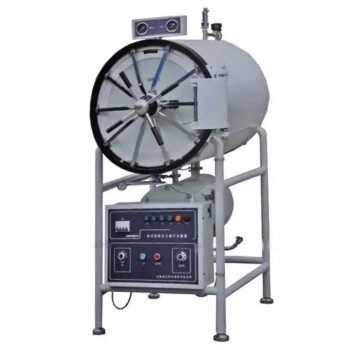
- Laboratory High Pressure Horizontal Autoclave Steam Sterilizer for Lab Use
- High Pressure Laboratory Autoclave Reactor for Hydrothermal Synthesis
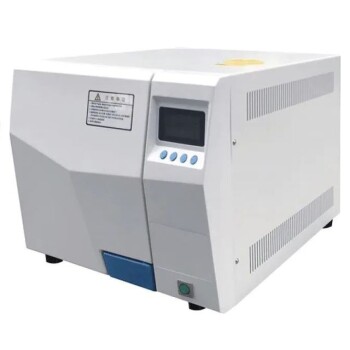
- Desktop Fast High Pressure Laboratory Autoclave Sterilizer 16L 24L for Lab Use
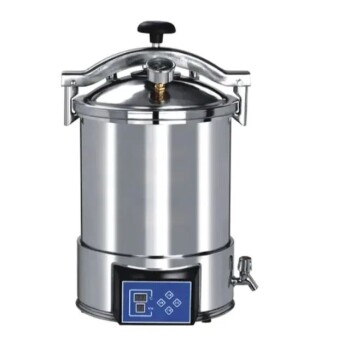
- Portable High Pressure Laboratory Autoclave Steam Sterilizer for Lab Use
- Mini SS High Pressure Autoclave Reactor for Laboratory Use
People Also Ask
- Why is a laboratory high-pressure autoclave sterilizer necessary? Ensure Accuracy in Antibacterial Research
- What is the role of a laboratory high-pressure autoclave in the conversion of furfural to piperidine? Optimize Yields
- What is the primary function of a laboratory autoclave in the pre-treatment of medical plastic waste for liquid fuel?
- What is an autoclave laboratory equipment? The Ultimate Guide to Steam Sterilization
- What is a laboratory autoclave? A Guide to Sterilization with Pressurized Steam