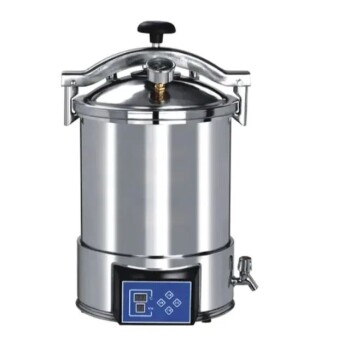
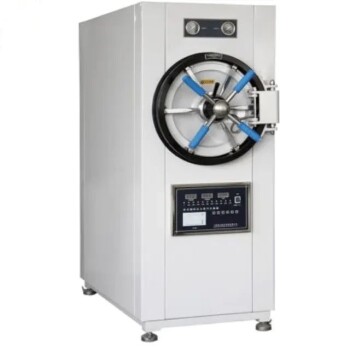
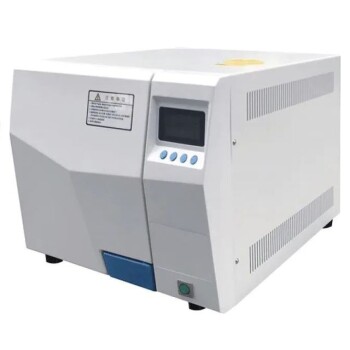
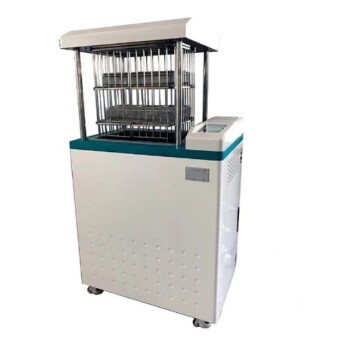
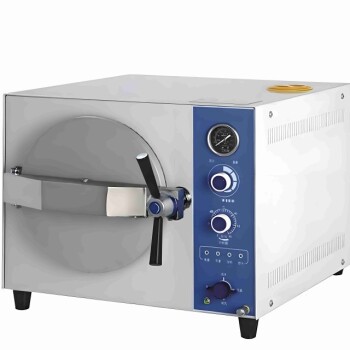
The laboratory high-pressure autoclave is the essential reactor for the catalytic synthesis of piperidine from furfural. It provides a secure, sealed environment capable of maintaining specific gas pressures—typically 0.5 MPa of ammonia and 1.0 MPa of hydrogen—required for the chemical transformation. By integrating precision temperature control and mechanical stirring, the autoclave enables the complex cascade reactions, including ring-opening and reductive amination, to reach completion efficiently.
The autoclave acts as a high-pressure foundation for multiphase catalysis, ensuring that reactive gases like hydrogen and ammonia remain soluble and active within the liquid phase. Its primary role is to overcome mass transfer limitations while providing the thermal energy necessary for the ring-opening and hydrogenation stages of the furfural-to-piperidine pathway.
Facilitating Multiphase Mass Transfer
The conversion of furfural to piperidine is a multiphase process involving gases (H2, NH3), liquids (solvents/reactants), and solid catalysts. The autoclave is engineered to manage these interactions simultaneously.
Overcoming Phase Barriers
High-pressure containment is critical for increasing the solubility of ammonia and hydrogen in the reaction mixture. By maintaining elevated pressures, the autoclave ensures that a sufficient concentration of these gases is available at the catalyst surface to drive the reaction forward.
The Role of Integrated Stirring
Internal magnetic or mechanical stirring creates high-speed turbulence within the vessel. This agitation is vital for reducing the thickness of the boundary layer around catalyst particles, which significantly enhances mass transfer rates across the gas-liquid-solid interfaces.
Managing Complex Cascade Kinetics
The transformation of furfural into piperidine is not a single step but a series of tandem or cascade reactions. The autoclave provides the stability required to manage this sequence without losing volatile intermediates.
Ring-Opening and Reductive Amination
The reactor environment facilitates the initial ring-opening of the furan ring and the subsequent cascade of hydrogenation and reductive amination. Precise temperature control ensures that the activation energy for each of these distinct steps is met without causing thermal degradation of the reactants.
Kinetic Monitoring and Sampling
Advanced autoclaves feature dedicated sampling outlets that allow researchers to extract micro-samples during the run. This capability is essential for tracking the evolution of transient intermediates like furfuryl alcohol and monitoring the carbon balance without depressurizing the system.
Understanding the Trade-offs and Pitfalls
While high-pressure autoclaves are indispensable, they introduce specific operational challenges that must be managed to ensure reaction success and laboratory safety.
Seal Integrity and Corrosion
Using ammonia in a high-pressure environment requires specialized seal materials and corrosion-resistant alloys, such as high-grade stainless steel or Hastelloy. Ammonia can be aggressive toward standard gaskets, leading to pressure leaks that disrupt the precise 0.5 MPa/1.0 MPa gas ratio.
Heat Transfer Delays
In larger autoclave vessels, thermal inertia can lead to significant delays between the heater activation and the internal fluid reaching the target temperature. This lag can cause side reactions or over-processing if the temperature control system is not finely tuned to the specific volume of the reaction.
Mass Transfer Limitations
Even with high-speed stirring, the reaction can become diffusion-limited if the catalyst concentration is too high or the stirring speed is insufficient. If the gas cannot reach the catalyst as fast as the reaction consumes it, the yield of piperidine will drop in favor of incomplete hydrogenation products.
How to Optimize Your Autoclave Setup
To successfully convert furfural to piperidine, the configuration of the autoclave must align with your specific research or production goals.
- If your primary focus is maximizing yield: Prioritize an autoclave with high-speed mechanical stirring (up to 1800 rpm) to ensure that gas solubility and mass transfer never become the rate-limiting steps.
- If your primary focus is reaction mechanism study: Select a model equipped with a high-pressure sampling port to capture the emergence and disappearance of intermediates without interrupting the reaction kinetics.
- If your primary focus is process safety: Ensure the vessel is rated for at least double the intended working pressure and includes integrated over-pressure protection and burst disks compatible with ammonia.
The laboratory high-pressure autoclave transforms furfural conversion from a theoretical pathway into a controllable, repeatable chemical process.
Summary Table:
| Feature | Role in Furfural Conversion | Key Benefit |
|---|---|---|
| Pressure Control | Maintains 0.5 MPa NH3 & 1.0 MPa H2 | Enhances gas solubility for reductive amination |
| Mechanical Stirring | Reduces boundary layer thickness | Overcomes mass transfer limits in multiphase catalysis |
| Precision Heating | Manages activation energy for cascade steps | Ensures stable ring-opening and hydrogenation |
| Sampling Ports | Real-time intermediate monitoring | Allows kinetic tracking without depressurization |
| Corrosion Resistance | Resists aggressive ammonia environments | Ensures seal integrity and long-term reactor safety |
Elevate Your Chemical Synthesis with KINTEK Solutions
Are you looking to optimize complex cascade reactions like the conversion of furfural to piperidine? KINTEK specializes in high-performance laboratory equipment designed for precision and safety. Our advanced high-temperature high-pressure reactors and autoclaves are engineered to handle aggressive media and maintain the exact gaseous environments your research demands.
Why choose KINTEK?
- Superior Mass Transfer: High-speed stirring systems (up to 1800 rpm) to eliminate diffusion limits.
- Built for Durability: Premium alloys and specialized seals designed to withstand ammonia and hydrogen.
- Precision Monitoring: Integrated sampling solutions to capture transient intermediates effortlessly.
- Comprehensive Support: From dental furnaces to hydraulic presses and cooling solutions, we provide the tools to power your entire lab workflow.
Ready to upgrade your reactor setup? Contact our technical experts today to find the perfect autoclave configuration for your specific research goals!
References
- Haifeng Qi, Tao Zhang. Synthesis of piperidines and pyridine from furfural over a surface single-atom alloy Ru1CoNP catalyst. DOI: 10.1038/s41467-023-42043-6
This article is also based on technical information from Kintek Solution Knowledge Base .
Related Products
- High Pressure Laboratory Autoclave Reactor for Hydrothermal Synthesis
- Desktop Fast High Pressure Laboratory Autoclave Sterilizer 16L 24L for Lab Use
- Laboratory High Pressure Horizontal Autoclave Steam Sterilizer for Lab Use
- Laboratory High Pressure Steam Sterilizer Vertical Autoclave for Lab Department
- Portable High Pressure Laboratory Autoclave Steam Sterilizer for Lab Use
People Also Ask
- What role does a high-pressure reactor (autoclave) play in the synthesis of NiCuFe-LDH? Master Hydrothermal Growth
- What Role Does a High-Pressure Reactor or Autoclave Play in HA Catalyst Synthesis? Achieve High Surface Area Materials
- What equipment is required for hydrothermal synthesis of Ga0.25Zn4.67S5.08? Optimize Your Semiconductor Production
- What is the function of a high-pressure reactor in the hydrothermal synthesis of boehmite? Expert Process Insights
- What role does an autoclave play in the synthesis of MnO2 nanofibers? Mastering Hydrothermal Growth