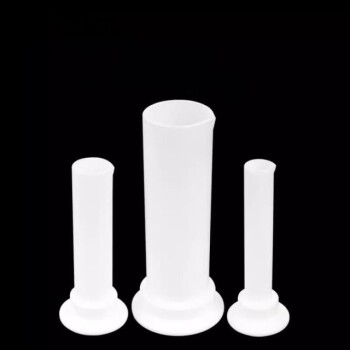
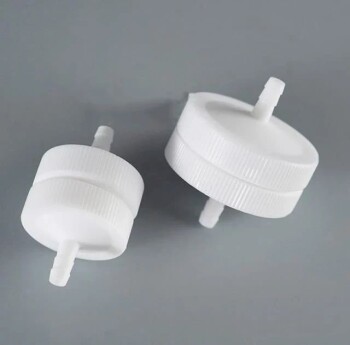
The PTFE-lined high-pressure digestion tank acts as the fundamental reaction vessel for the hydrothermal synthesis of Cadmium Sulfide (CdS) nanowires. It creates a sealed, pressurized environment that allows precursor solutions to be heated above their boiling points, facilitating the oriented growth of crystals. This process is essential for achieving the high crystallinity and specific morphology required for advanced applications like heterojunction photocatalysts.
The autoclave provides a stable, high-pressure, and high-temperature environment that enables the directional crystallization of CdS while protecting the sample from metallic contamination via its chemically inert PTFE liner.
Facilitating Oriented Crystal Growth
Creating the Hydrothermal Environment
During synthesis, the autoclave maintains the precursor solution at constant temperatures (typically 100 °C) for extended periods, such as 8 hours.
This sustained thermal energy allows the reaction to occur under autogenous pressure, where the liquid phase is maintained even as temperatures approach or exceed the solvent's standard boiling point.
Promoting High Crystallinity
The pressurized environment is critical for the oriented growth of Cadmium Sulfide crystals.
By controlling the rate of reaction and nucleation at the molecular level, the tank ensures the formation of regular, high-crystallinity nanowire structures rather than disorganized particles.
The Role of the PTFE Liner
Ensuring Chemical Purity
The Polytetrafluoroethylene (PTFE) liner is used because of its exceptional chemical stability and resistance to corrosion.
It prevents the precursor solution from reacting with or corroding the metal body of the autoclave, which would otherwise introduce metallic impurities into the CdS nanowires.
Managing Corrosive Precursors
Many hydrothermal reactions involve acidic or highly reactive components that would damage standard laboratory equipment.
The PTFE liner acts as an inert barrier, ensuring that the chemical integrity of the nanowires is preserved throughout the hours-long synthesis process.
Structural Safety and Pressure Management
The Stainless Steel Outer Shell
While the PTFE liner handles chemical resistance, the external stainless steel shell provides the mechanical strength necessary for safety.
This shell ensures the structural integrity of the system, allowing it to withstand the high internal pressures generated during the heating process.
Achieving Supercritical-Like Conditions
By sealing the vessel hermetically, the autoclave allows the internal pressure to rise as the temperature increases.
This environment increases the solubility and reactivity of the precursors, which is necessary for the in-situ growth of complex nanostructures on various substrates.
Understanding the Trade-offs
Temperature Limitations
While PTFE is highly stable, it has a functional temperature ceiling, typically around 200 °C to 250 °C.
Exceeding these temperatures can cause the liner to soften or deform, potentially compromising the seal and leading to a dangerous loss of pressure.
Pressure Risks and Cooling Rates
High-pressure reactions carry inherent risks; sudden changes in temperature can lead to pressure spikes or vessel failure.
Furthermore, cooling the autoclave too rapidly can interfere with the crystal structure of the nanowires or cause the PTFE liner to contract differently than the steel shell, leading to leaks.
How to Apply This to Your Synthesis Goal
Making the Right Choice for Your Project
- If your primary focus is high-purity nanowires: Ensure your PTFE liner is thoroughly cleaned and free of scratches to prevent any precursor cross-contamination.
- If your primary focus is structural uniformity: Maintain a strict constant temperature for the full duration of the reaction to allow for consistent oriented crystal growth.
- If your primary focus is laboratory safety: Never exceed the pressure or temperature ratings engraved on the stainless steel shell of the autoclave.
Understanding the synergy between the chemical resistance of PTFE and the structural strength of the autoclave is the key to mastering the synthesis of high-quality CdS nanowires.
Summary Table:
| Component / Feature | Role in CdS Nanowire Synthesis | Key Benefit |
|---|---|---|
| PTFE Liner | Chemical barrier & precursor containment | Prevents metallic contamination; resists corrosive precursors |
| Stainless Steel Shell | Mechanical support & pressure containment | Ensures safety under high internal autogenous pressure |
| Sealed Environment | Thermal & pressure regulation | Facilitates oriented crystal growth and high crystallinity |
| Hydrothermal Process | Controlled nucleation & crystallization | Enables specific morphology required for photocatalysts |
| Temperature Range | Stable heating (typically up to 200-250°C) | Maintains solvent liquid phase above normal boiling point |
Optimize Your Nanomaterial Synthesis with KINTEK
Precision and purity are the cornerstones of successful hydrothermal synthesis. At KINTEK, we specialize in providing high-performance laboratory equipment tailored for advanced research. Our robust high-temperature high-pressure reactors and autoclaves are engineered to provide the stable, contamination-free environment necessary for growing high-quality CdS nanowires and other complex nanostructures.
Beyond autoclaves, KINTEK offers a comprehensive range of tools, including:
- High-Temperature Furnaces: Muffle, tube, and vacuum systems for precise thermal processing.
- Sample Preparation: Crushing, milling, and hydraulic presses (pellet, isostatic) for uniform results.
- Advanced Materials: High-purity PTFE products, ceramics, and crucibles.
- Research Consumables: Battery research tools, electrolytic cells, and cooling solutions.
Ready to elevate your lab's capabilities? Contact our experts today to find the perfect equipment configuration for your synthesis goals. Let KINTEK be your partner in achieving superior material performance.
References
- Shaosen Shi, Yuangang Li. Photocatalytic hydrogen evolution and simultaneously converting high-concentration of thiols into disulfides with excellent yield under visible-light. DOI: 10.1039/d2ta08783a
This article is also based on technical information from Kintek Solution Knowledge Base .
Related Products
- Custom PTFE Teflon Parts Manufacturer for Microwave Digestion Tank
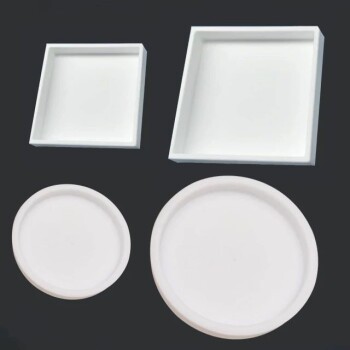
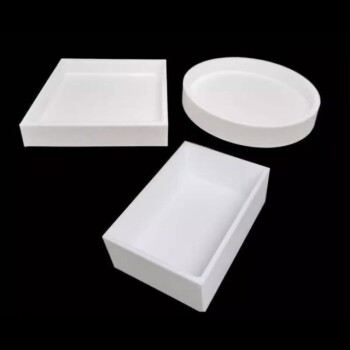
- Custom PTFE Teflon Parts Manufacturer for PTFE Containers
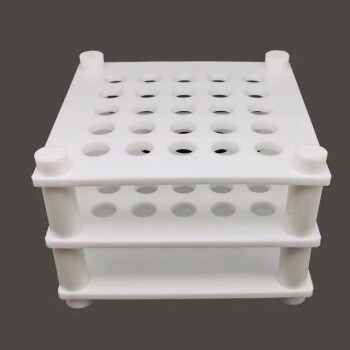
- Custom PTFE Teflon Parts Manufacturer for Centrifuge Tube Racks
- Custom PTFE Teflon Parts Manufacturer for Culture Dish and Evaporation Dish
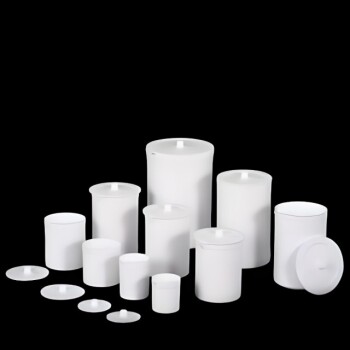
- Custom PTFE Teflon Parts Manufacturer PTFE Beaker and Lids
People Also Ask
- Why are PTFE containers required for PCT leaching tests? Ensure Chemical Inertness and Analytical Precision
- Why use high-quality PTFE containers for CO2 reduction electrolytes? Eliminate silicon contamination and ensure data.
- Why is PTFE Mandatory for Hydrofluoric Acid (HF) Handling? Ensure Safety and Data Integrity in Corrosion Testing
- Why is a PTFE container required for acid leaching of silicon nanosheets? Ensure High Purity and Safety
- Why are polytetrafluoroethylene (PTFE) containers essential for assessing the corrosion resistance of glassified waste?