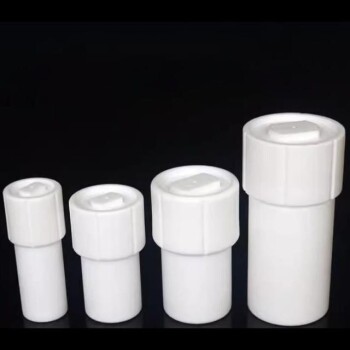
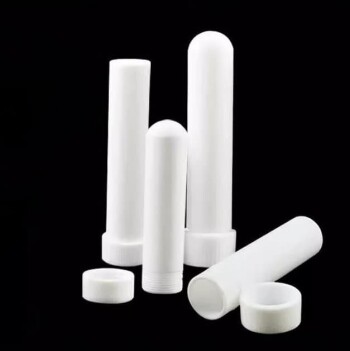
The PTFE-lined stainless steel high-pressure autoclave is the foundational vessel for solvothermal synthesis, providing the corrosion-resistant, high-pressure environment required to produce NiCo-OH precursors. By sustaining temperatures near 100°C and managing autogenous pressure, it facilitates the reaction between metal nitrates and hexamethylenetetramine (HMTA) to ensure the formation of uniform, flower-like hydroxide precipitates.
The autoclave enables solvents to reach temperatures above their normal boiling points while maintaining a chemically inert environment. This controlled high-pressure state is essential for the precise nucleation, uniform growth, and high purity of Nickel-Cobalt hydroxide nanostructures.
The Role of the Sealed Reaction Environment
Maintaining Superheated Solvents
The sealed nature of the autoclave allows solvents to remain in a liquid state at temperatures significantly exceeding their normal boiling points. This creates a solvothermal environment that significantly enhances the solubility of precursors and accelerates the overall reaction rate.
Controlling Autogenous Pressure
As the internal temperature rises, the autoclave generates autogenous pressure, which promotes the deep reaction of metal nitrates within the solution. This pressure is a key driver for in situ crystallization, allowing components to form high-crystallinity structures directly on substrates like carbon cloth.
Enhancing Morphology and Crystallinity
Promoting Uniform Nucleation
The stable high-temperature environment facilitates controlled nucleation, which is necessary for achieving a uniform particle size distribution. Without the constant temperature and pressure provided by the autoclave, the NiCo-OH precursors would likely aggregate into irregular, non-functional masses.
Achieving Specific Nanostructures
The autoclave's ability to maintain subcritical conditions for extended periods ensures that the precursors decompose and react fully. This precision is what allows for the development of complex morphologies, such as flower-like precipitates or nanosheet arrays, which are critical for the material's surface area and reactivity.
Material Integrity and Safety
The Importance of the PTFE Liner
The Polytetrafluoroethylene (PTFE) liner serves as a chemically inert barrier that protects the stainless steel body from corrosive reaction liquids. By preventing the reaction medium from attacking the metal walls, the liner eliminates the risk of introducing impurity metal ions into the precursor powder.
Structural Integrity of the Stainless Steel Shell
While the PTFE liner provides chemical resistance, the stainless steel shell provides the mechanical strength required to withstand high internal pressures safely. This combination ensures that the experiment can proceed at high temperatures without the risk of vessel deformation or catastrophic failure.
Understanding the Trade-offs
Temperature and Pressure Limitations
While highly effective, PTFE-lined autoclaves have strict temperature limits, typically around 200°C to 250°C, beyond which the liner may deform or release toxic vapors. Users must carefully balance the need for high reaction energy with the physical constraints of the polymer lining.
Scalability and Monitoring Challenges
Standard laboratory autoclaves are "black box" reactors, meaning the reaction cannot be monitored in real-time. Additionally, scaling these reactions from small batches to industrial levels requires significant engineering to maintain the same uniformity and heat distribution found in smaller vessels.
How to Apply This to Your Synthesis
When utilizing a PTFE-lined autoclave for NiCo-OH synthesis, your approach should vary based on your specific material goals:
- If your primary focus is high purity: Ensure the PTFE liner is thoroughly cleaned and free of scratches to prevent any cross-contamination or interaction with the stainless steel walls.
- If your primary focus is specific morphology (e.g., flower-like): Maintain a precise constant temperature (such as 100°C or 160°C) for the full duration of the reaction to allow for steady crystal growth.
- If your primary focus is reaction speed: Utilize solvents with lower boiling points to increase autogenous pressure more rapidly, thereby enhancing precursor solubility.
By mastering the high-pressure environment of the autoclave, researchers can precisely tune the electrochemical properties of NiCo-OH precursors for advanced applications.
Summary Table:
| Component/Feature | Primary Function | Benefit for NiCo-OH Synthesis |
|---|---|---|
| PTFE Liner | Chemical Inertness | Prevents metal ion impurities and resists corrosion. |
| Stainless Steel Shell | Mechanical Strength | Safely contains high autogenous internal pressures. |
| Sealed Environment | Superheating Solvents | Increases precursor solubility and accelerates reaction rates. |
| Controlled Thermal State | Stable Growth Environment | Promotes uniform nucleation and flower-like nanostructures. |
Elevate Your Material Synthesis Precision with KINTEK
Achieving the perfect flower-like morphology in NiCo-OH precursors requires uncompromising equipment reliability. KINTEK specializes in high-performance laboratory solutions, offering a premium range of high-temperature high-pressure reactors and autoclaves designed for rigorous solvothermal research.
Whether you are focusing on battery research, nanotechnology, or complex chemical synthesis, our PTFE-lined vessels ensure maximum purity and safety. Beyond reactors, our portfolio includes high-temperature furnaces, crushing systems, and specialized electrolytic cells to support your entire workflow.
Ready to optimize your lab's output? Contact KINTEK today to discover how our precision-engineered equipment can enhance your research results.
References
- Haoyu Tian, Zheng Jiao. Bimetallic Flower-like NiCoP Encapsulated in an N-Doped Carbon Shell with Enhanced Lithium Storage Properties. DOI: 10.3390/batteries9070361
This article is also based on technical information from Kintek Solution Knowledge Base .
Related Products
- Stainless High Pressure Autoclave Reactor Laboratory Pressure Reactor
- Mini SS High Pressure Autoclave Reactor for Laboratory Use
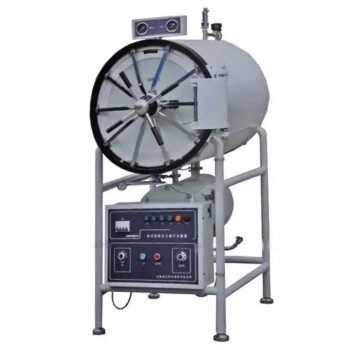
- Laboratory High Pressure Horizontal Autoclave Steam Sterilizer for Lab Use
- Desktop Fast High Pressure Laboratory Autoclave Sterilizer 16L 24L for Lab Use
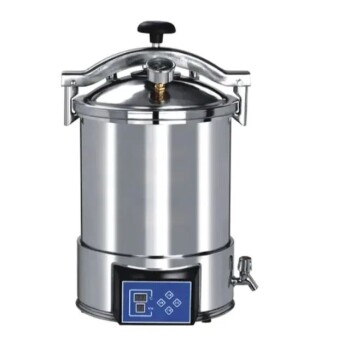
- Portable High Pressure Laboratory Autoclave Steam Sterilizer for Lab Use
People Also Ask
- Why is a laboratory high-pressure reactor necessary for synthesizing fly ash-based zeolite? Achieve Pure Crystallization
- Why is a laboratory high-pressure reactor used in the hydrothermal synthesis of hydroxyapatite catalysts?
- What role does a laboratory high-pressure reactor play in the leaching process of spent cathode materials? Optimize Recovery
- What conditions do laboratory high-pressure reactors provide for HTC? Optimize Your Biochar Production Processes
- How are high-pressure reactors used to prepare metaphosphate electrocatalysts? Master In-Situ Precursor Growth