The stainless steel high-pressure reactor is the critical vessel that enables hydrothermal synthesis by creating a "superheated" environment. It provides a sealed chamber where high temperatures—often reaching 95°C to 120°C—and the resulting internal pressure facilitate the chemical reaction between nickel sources and precipitants. This controlled physical environment is what allows nickel hydroxide (Ni(OH)2) to grow uniformly onto substrates, forming the high-surface-area nanosheet arrays required for advanced electrochemical applications.
The reactor serves as a thermodynamic catalyst, providing the pressure and heat necessary to increase precursor solubility and drive the oriented growth of crystals into precise 2D nanosheet architectures.
Creating the Hydrothermal Environment
Pressure as a Driver for Solubility
In a sealed stainless steel reactor, the internal pressure rises as the temperature increases, often exceeding the normal boiling point of the solvent.
This high-pressure environment significantly increases the solubility of precursors (such as nickel nitrates or sulfates) in the aqueous solution.
By forcing these materials into solution, the reactor ensures a homogenous distribution of ions, which is the first step in creating uniform nanomaterials.
Enhancing Reaction Kinetics
The reactor provides the necessary kinetic conditions for the nucleation and crystal growth of Ni(OH)2.
Because the system is enclosed, it accelerates chemical reactions that would otherwise be impossible at ambient pressure.
This environment allows for rapid crystallization, ensuring the hydroxide forms the specific layered structures needed for subsequent oxide conversion or catalytic use.
Engineering the Nanosheet Morphology
Facilitating Oriented Crystal Growth
The consistent temperature and pressure within the reactor promote oriented growth, directing the crystals to assemble into vertical 2D nanosheet arrays.
This process allows for the in-situ construction of 3D hierarchical structures on substrates like nickel foam.
By controlling the hydrothermal environment, researchers can ensure these nanosheets possess a high specific surface area, which maximizes the exposure of active sites for electrocatalysis.
Ensuring Substrate Adhesion
High-pressure conditions facilitate the direct and firm growth of the precursor nanosheets onto the substrate surface.
This "self-assembly" under pressure creates a strong mechanical bond between the Ni(OH)2 and the nickel mesh or foam.
Without the pressure provided by the reactor, the material might simply precipitate as bulk powder at the bottom of the vessel rather than forming a functional, integrated electrode.
Understanding Technical Trade-offs and Pitfalls
Material Compatibility and Corrosion
While the stainless steel outer shell provides the mechanical strength to hold pressure, it is vulnerable to corrosion from the chemical precursors.
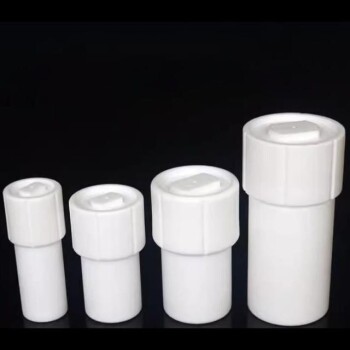
Most high-pressure reactors must be equipped with a PTFE (Teflon) liner to ensure chemical inertness.
The liner prevents nickel ions from reacting with the reactor body, which would otherwise introduce impurities and compromise the structural purity of the nanosheets.
Temperature and Pressure Management
Maintaining a constant temperature (such as 120 °C) is vital, as even minor fluctuations can lead to non-uniform growth or different crystal phases.
Over-pressurization is a primary safety concern; however, under-pressurization often results in incomplete dissolution of the iron or nickel sources.
Failure to properly seal the reactor leads to solvent loss, which halts the hydrothermal process and prevents the formation of the desired 3D nanopillar or nanosheet structures.
Applying This to Your Synthesis Goals
How to Optimize Your Process
- If your primary focus is maximizing surface area: Utilize a reactor that can maintain a stable temperature of at least 95°C to ensure the uniform growth of vertical nanosheet arrays on the substrate.
- If your primary focus is structural purity: Always use a PTFE-lined reactor to prevent the introduction of metal impurities from the stainless steel walls during the coordination reaction.
- If your primary focus is mechanical durability: Prioritize higher-pressure settings to facilitate a firmer, direct growth of the nanosheets onto the nickel foam or mesh.
The high-pressure reactor is not merely a container, but a precision instrument that dictates the final morphology, purity, and performance of nickel hydroxide nanosheets.
Summary Table:
| Key Role | Impact on Synthesis | Technical Requirement |
|---|---|---|
| Pressure Driver | Increases precursor solubility & ion distribution | Precise sealing to prevent solvent loss |
| Kinetic Accelerator | Enables rapid nucleation & crystallization | Stable temperature (95°C - 120°C) |
| Morphology Control | Directs 2D oriented growth & substrate adhesion | Use of PTFE liners to prevent corrosion |
| Structural Support | Facilitates 3D hierarchical assembly (e.g., on Ni foam) | High-pressure mechanical durability |
Elevate Your Material Synthesis with KINTEK Precision
Achieving the perfect 2D architecture for Ni(OH)2 nanosheets requires more than just heat—it requires a controlled, high-pressure environment you can trust. KINTEK specializes in advanced laboratory equipment, offering high-performance high-temperature high-pressure reactors and autoclaves engineered for demanding hydrothermal processes.
Our solutions go beyond the vessel; we provide a complete ecosystem for your research, including:
- Chemical Inertness: Premium PTFE liners and ceramic crucibles to ensure structural purity.
- Process Efficiency: Precision crushing, milling, and sieving systems for precursor preparation.
- Total Control: Cooling solutions, ultra-low temperature freezers, and hydraulic presses for integrated workflows.
Whether you are developing next-generation battery materials or advanced electrocatalysts, KINTEK’s expertise ensures your synthesis is consistent, safe, and scalable.
Ready to optimize your hydrothermal results? Contact our technical team today for a tailored solution!
References
- Linfeng Li, Chundong Wang. Manipulation of Electron Spins with Oxygen Vacancy on Amorphous/Crystalline Composite-Type Catalyst. DOI: 10.1021/acsnano.3c12133
This article is also based on technical information from Kintek Solution Knowledge Base .
Related Products
- Stainless High Pressure Autoclave Reactor Laboratory Pressure Reactor
- Mini SS High Pressure Autoclave Reactor for Laboratory Use
- Customizable High Pressure Reactors for Advanced Scientific and Industrial Applications
- Customizable Laboratory High Temperature High Pressure Reactors for Diverse Scientific Applications
- High Pressure Laboratory Autoclave Reactor for Hydrothermal Synthesis
People Also Ask
- Why is a laboratory high-pressure reactor necessary for synthesizing fly ash-based zeolite? Achieve Pure Crystallization
- Why is a laboratory high-pressure reactor used in the hydrothermal synthesis of hydroxyapatite catalysts?
- What role does a laboratory high-pressure reactor play in the leaching process of spent cathode materials? Optimize Recovery
- What conditions do laboratory high-pressure reactors provide for HTC? Optimize Your Biochar Production Processes
- How are high-pressure reactors used to prepare metaphosphate electrocatalysts? Master In-Situ Precursor Growth