The stainless steel Teflon-lined high-pressure reactor acts as a specialized containment vessel that enables the solvothermal synthesis of MIL-68 (In) precursors. By creating a sealed, high-temperature environment (typically 125 °C), it allows reactants to overcome energy barriers for crystal nucleation. This setup ensures that indium metal ions and organic ligands coordinate efficiently into a highly crystalline Metal-Organic Framework (MOF) structure.
The reactor's primary function is to provide a chemically inert, high-pressure environment that facilitates the precise coordination of metal ions and organic ligands. By operating above the solvent's boiling point, it drives the formation of stable, high-purity crystalline frameworks that are impossible to achieve under standard atmospheric conditions.
Enabling High-Temperature Solvothermal Conditions
Exceeding Atmospheric Boiling Points
In standard glassware, solvents are limited by their boiling points. The high-pressure reactor allows the reaction to reach 125 °C, providing the thermal energy necessary for indium ions and ligands to bond effectively within the solvothermal system.
Facilitating Molecular Coordination
The sealed environment maintains internal pressure, which forces the precursors into a deep physicochemical transformation. This pressure is critical for ensuring the organic ligands and metal ions align into the specific porous architecture characteristic of MIL-68 (In).
Promoting High Crystallinity
By maintaining constant pressure and temperature, the reactor provides a stable environment for controlled nucleation. This stability is essential for the growth of MIL-68 (In) crystals with high degrees of order and structural integrity.
The Protective Role of the Teflon Liner
Preventing Chemical Corrosion
Solvothermal synthesis often uses organic solvents and metal salts that can be highly corrosive to metal surfaces. The Teflon liner (PTFE) acts as a robust barrier, protecting the stainless steel shell from degradation and extending the equipment's lifespan.
Guaranteeing Structural Purity
By preventing direct contact between the reaction solution and the metal shell, the liner ensures no metal impurities leach into the MIL-68 (In) structure. This chemical inertness is vital for maintaining the purity of the precursor and the performance of the final MOF product.
Ensuring Uniform Thermal Distribution
The liner helps facilitate uniform thermal chemical reactions throughout the solution. This uniformity ensures that the indium precursors react consistently, leading to a homogenous product rather than a mixture of different phases.
Understanding Technical Trade-offs and Limitations
Thermal and Pressure Constraints
While Teflon is exceptionally inert, it has a maximum operating temperature (typically around 200–250 °C). Exceeding these limits can lead to liner deformation or mechanical failure, necessitating strict adherence to the 125 °C target for MIL-68 (In).
Scalability and Batch Processing
High-pressure reactors are primarily designed for batch processing at the laboratory or pilot scale. Transitioning from small autoclaves to industrial-scale production requires significant engineering to maintain safety and thermal uniformity across larger volumes.
Optimizing Your MIL-68 (In) Synthesis
Success in preparing high-quality MOF precursors depends on matching reactor parameters to your specific material requirements.
- If your primary focus is maximizing crystallinity: Ensure the reactor is maintained at a consistent temperature for the full duration of the solvothermal cycle to allow for complete molecular coordination.
- If your primary focus is preventing contamination: Inspect the Teflon liner for scratches or thinning before every use to ensure the reactants never contact the stainless steel walls.
- If your primary focus is morphology control: Carefully calibrate the heating and cooling rates of the reactor to guide the crystal growth along the desired specific directions.
The high-pressure reactor is not just a container, but a precision tool that dictates the structural and chemical success of the MIL-68 (In) framework.
Summary Table:
| Feature | Role in MIL-68 (In) Synthesis | Key Benefit |
|---|---|---|
| High-Pressure Shell | Maintains 125°C+ solvothermal conditions | Enables nucleation above boiling points |
| Teflon (PTFE) Liner | Provides a chemically inert reaction environment | Prevents metal contamination & corrosion |
| Sealed Design | Facilitates molecular coordination | Ensures stable, high-purity MOF structures |
| Thermal Stability | Guarantees uniform heat distribution | Promotes high crystallinity and structural order |
Precision Engineering for Your MOF Research
Elevate your material science research with KINTEK’s industry-leading high-temperature high-pressure reactors and autoclaves. Specifically designed for demanding solvothermal processes like MIL-68 (In) preparation, our equipment provides the precise pressure and temperature control necessary for maximum crystallinity and zero contamination.
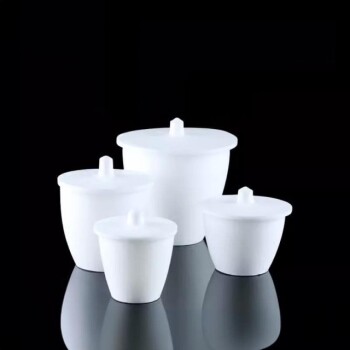
Beyond reactors, KINTEK offers a comprehensive range of PTFE products, ceramics, and crucibles, along with advanced crushing and milling systems and hydraulic presses to support your entire laboratory workflow. Whether you are focusing on battery research or advanced chemical synthesis, our high-quality consumables and equipment ensure reliable, repeatable results.
Ready to optimize your synthesis outcomes? Contact KINTEK today to find the perfect specialized tools for your laboratory and experience the reliability that leading researchers trust.
References
- K. Saravanakumar, Chang Min Park. MOF-derived C, N-In2O3 with GdFeO3 Z-scheme heterostructure for the photocatalytic removal of tetracycline. DOI: 10.1038/s41545-023-00288-0
This article is also based on technical information from Kintek Solution Knowledge Base .
Related Products
- Stainless High Pressure Autoclave Reactor Laboratory Pressure Reactor
- Mini SS High Pressure Autoclave Reactor for Laboratory Use
- Custom PTFE Teflon Parts Manufacturer for Reagent Wide Mouth Fine Mouth Sample High Temperature Bottles
- Customizable High Pressure Reactors for Advanced Scientific and Industrial Applications
- Custom PTFE Teflon Parts Manufacturer for Hydrothermal Synthesis Reactor Polytetrafluoroethylene Carbon Paper and Carbon Cloth Nano-growth
People Also Ask
- Why is a laboratory high-pressure reactor used in the hydrothermal synthesis of hydroxyapatite catalysts?
- What role does a laboratory high-pressure reactor play in the leaching process of spent cathode materials? Optimize Recovery
- Why is a laboratory high-pressure reactor necessary for synthesizing fly ash-based zeolite? Achieve Pure Crystallization
- What conditions do laboratory high-pressure reactors provide for HTC? Optimize Your Biochar Production Processes
- What is the function of a high-pressure reactor autoclave? Enhancing Cu/N Co-Doped Carbon Catalyst Synthesis