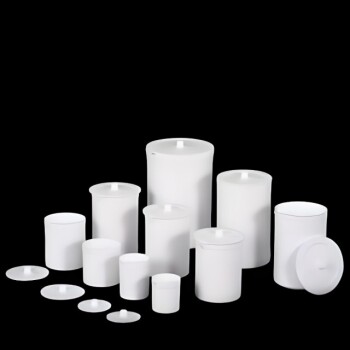
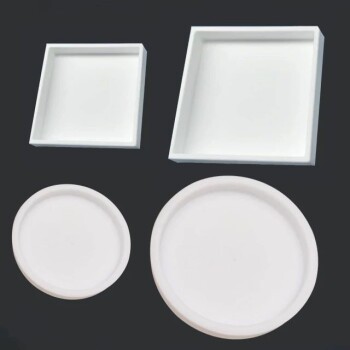
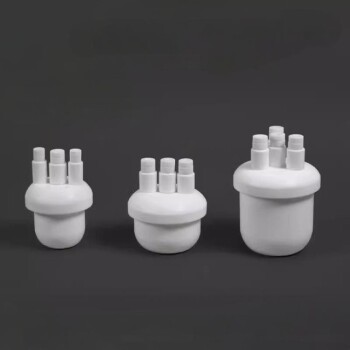
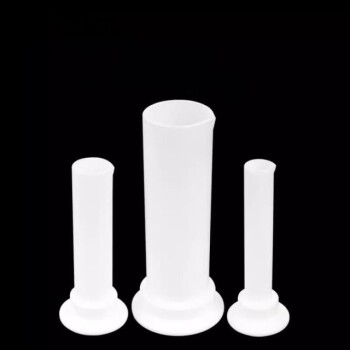
The Teflon-lined stainless steel high-pressure reactor acts as a specialized chemical vessel that enables the synthesis of FeCo-MOF precursors by maintaining high-temperature and high-pressure conditions. It provides a sealed environment, typically at 150°C, where iron (Fe³⁺) and cobalt (Co²⁺) ions can coordinate and nucleate with organic ligands like H2BDC in a dimethylacetamide (DMA) solvent. The Teflon liner is essential for maintaining high purity, as it prevents corrosive reactants from contacting the metal shell and contaminating the framework with impurities.
The reactor facilitates the solvothermal process by creating a controlled, high-energy environment that drives metal-organic coordination and crystal growth. Its dual-material design uses a stainless steel shell for structural strength and a Teflon liner for chemical inertness to ensure structural integrity and phase purity.
Creating the Solvothermal Environment
Achieving Subcritical Conditions
Solvothermal synthesis often requires temperatures that exceed the standard atmospheric boiling point of the solvent. By sealing the reactants within a high-pressure reactor, the solvent reaches a subcritical state, which significantly enhances its penetration and dissolution capabilities.
Facilitating Coordination and Nucleation
The high-pressure environment forces metal ions and organic ligands into close proximity, overcoming energetic barriers to reaction. This allows Fe³⁺ and Co²⁺ to coordinate effectively with the H2BDC ligands, initiating the self-assembled growth of the Metal-Organic Framework (MOF).
Material Integrity and Purity
The Protective Role of the Teflon Liner
Teflon (PTFE) is used for the inner chamber because it is chemically inert and highly resistant to corrosion. Without this liner, the metal salts and organic solvents would react with the stainless steel shell, introducing unwanted metal ions into the FeCo-MOF structure.
Maintaining Mechanical Strength
While Teflon provides chemical protection, it cannot withstand high internal pressures on its own. The stainless steel outer shell provides the necessary mechanical support to contain the autogenous pressure generated during heating, ensuring the safety and stability of the synthesis.
Morphological and Structural Control
Promoting High Crystallinity
The stable thermal environment provided by the reactor allows for the orderly growth of crystal nuclei. This controlled process ensures that the resulting FeCo-MOF precursors possess a specific, uniform morphology and high structural integrity.
Influencing Crystal Phase
By precisely controlling the temperature and pressure within the autoclave, researchers can dictate the final crystal phase of the material. This level of control is vital for producing precursors that meet the specific requirements for downstream applications, such as catalysis or energy storage.
Understanding the Trade-offs
Temperature and Pressure Limits
Teflon has a functional temperature limit, typically around 220°C to 250°C, beyond which it may deform or release toxic vapors. Users must strictly adhere to temperature limits to prevent the liner from failing and compromising the reaction.
Heating and Cooling Rates
The thick walls of the stainless steel reactor create thermal lag, meaning the internal temperature may take time to stabilize. Rapid cooling or heating can stress the Teflon liner, potentially leading to cracks or leaks that ruin the synthesis batch.
Filling Ratios
Overfilling the reactor (typically beyond 80% capacity) can lead to excessive pressure buildup as the liquid expands. Conversely, underfilling may result in insufficient pressure to drive the solvothermal reaction, leading to poor crystallinity or incomplete coordination.
Making the Right Choice for Your Goal
How to Apply This to Your Project
- If your primary focus is high chemical purity: Always inspect the Teflon liner for scratches or discoloration to ensure no metal ions from the shell leach into your FeCo-MOF.
- If your primary focus is uniform crystal size: Utilize a programmable oven to control the heating and cooling ramps, as the reactor's thermal mass will dampen sudden temperature changes.
- If your primary focus is experimental safety: Never exceed the 70-80% volume filling limit to allow for the thermal expansion of the DMA solvent during the 150°C hold.
The Teflon-lined high-pressure reactor is the foundational tool that makes the precise, uncontaminated synthesis of complex mixed-metal frameworks possible.
Summary Table:
| Component/Feature | Primary Function | Impact on FeCo-MOF Synthesis |
|---|---|---|
| Stainless Steel Shell | Structural support & pressure containment | Ensures safety during high-pressure autogenous heating. |
| Teflon (PTFE) Liner | Chemical inertness & corrosion resistance | Prevents metal ion contamination; ensures framework purity. |
| Sealed Environment | Creates subcritical solvent conditions | Enhances solubility & drives metal-ligand coordination. |
| Thermal Stability | Maintains uniform internal temperature | Promotes orderly crystal growth and phase consistency. |
Elevate Your Material Research with KINTEK Precision
Achieving the perfect FeCo-MOF crystal structure requires equipment that delivers uncompromising purity and pressure control. KINTEK specializes in high-performance laboratory solutions, offering a robust range of high-temperature high-pressure reactors and autoclaves specifically designed for demanding solvothermal synthesis.
Beyond reactors, our portfolio supports your entire workflow with:
- Thermal Processing: Muffle, tube, and vacuum furnaces for precise heat treatment.
- Material Preparation: Crushing, milling, and high-precision hydraulic presses.
- Electrochemistry: Advanced electrolytic cells and electrodes for battery research.
- Laboratory Essentials: High-durability PTFE products, ceramics, and crucibles.
Whether you are a researcher focused on catalysis or a distributor looking for reliable OEM/ODM support, KINTEK provides the technical excellence and supply reliability you need to succeed.
Ready to optimize your synthesis results? Contact KINTEK today to find the ideal high-pressure solution for your lab!
References
- Xiqing Cheng, Qin Kuang. Tailoring metal sites of FeCo-MOF nanozymes for significantly enhanced peroxidase-like activity. DOI: 10.1039/d2qi02727e
This article is also based on technical information from Kintek Solution Knowledge Base .
Related Products
- Stainless High Pressure Autoclave Reactor Laboratory Pressure Reactor
- Custom PTFE Teflon Parts Manufacturer for Reagent Wide Mouth Fine Mouth Sample High Temperature Bottles
- Custom PTFE Teflon Parts Manufacturer for Hydrothermal Synthesis Reactor Polytetrafluoroethylene Carbon Paper and Carbon Cloth Nano-growth
- Mini SS High Pressure Autoclave Reactor for Laboratory Use
- Custom PTFE Teflon Parts Manufacturer for Microwave Digestion Tank
People Also Ask
- Why is a laboratory high-pressure reactor used in the hydrothermal synthesis of hydroxyapatite catalysts?
- What role does a laboratory high-pressure reactor play in the leaching process of spent cathode materials? Optimize Recovery
- Why is a laboratory high-pressure reactor necessary for synthesizing fly ash-based zeolite? Achieve Pure Crystallization
- What conditions do laboratory high-pressure reactors provide for HTC? Optimize Your Biochar Production Processes
- What is the function of a high-pressure reactor autoclave? Enhancing Cu/N Co-Doped Carbon Catalyst Synthesis