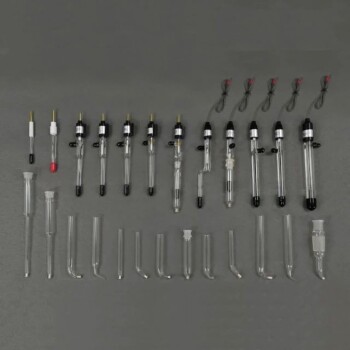
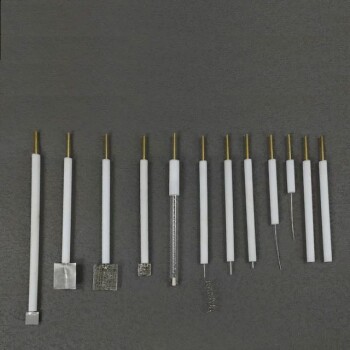
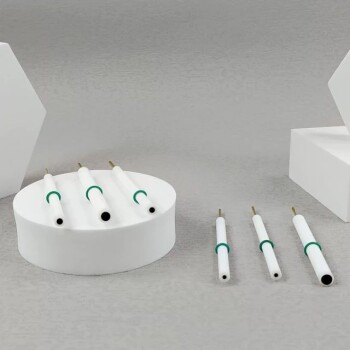
The Saturated Calomel Electrode (SCE) functions as the immutable baseline for your electrochemical measurements. In the context of polarization curve measurements for stainless steel weldments, it serves as the reference electrode, providing a stable and known potential against which the dynamic behavior of the working electrode is measured. Without this fixed standard, accurately capturing the thermodynamic and kinetic properties of the weld zones would be impossible.
The SCE anchors your data by providing a constant reference potential within complex electrochemical environments. It allows you to attribute voltage changes strictly to the corrosion behavior of the stainless steel, rather than fluctuations in the measurement system itself.
The Mechanics of Measurement
Establishing a Universal Standard
The primary function of the SCE is to provide a highly stable standard potential point. By holding this potential constant, it ensures that the data collected—specifically regarding 304L stainless steel welding zones—is relative to a known baseline.
Ensuring Data Repeatability
Because the SCE acts as an absolute reference point, it renders corrosion data comparable across different batches and laboratories. It eliminates the variables introduced by different testing environments, ensuring that a "pitting potential" measured in one lab means exactly the same thing in another.
The Role of the Luggin Capillary
To achieve high precision, the SCE is typically positioned near the working electrode surface via a Luggin capillary. This specific physical setup allows researchers to measure potential changes at the exact surface of the weldment while minimizing ohmic drop errors.
Extracting Critical Parameters
Defining Thermodynamic Limits
The SCE is the fundamental reference used to obtain accurate thermodynamic parameters. It is essential for pinpointing the pitting potential, which marks the voltage at which the steel's protective oxide layer breaks down.
Measuring Kinetic Behavior
Beyond thermodynamics, the SCE enables the measurement of kinetic parameters such as passive current density. This metric indicates how fast the metal corrodes while in its "passive" or protected state.
Identifying Repassivation
The electrode also allows for the accurate determination of the repassivation potential. This is the critical threshold where the stainless steel regains its protective layer after a pitting event has occurred.
Understanding the Trade-offs
The Criticality of Stability
The accuracy of your data is entirely dependent on the stability of the SCE. In electrochemical noise measurements, for example, a drifting reference electrode can produce false signals that look like material behaviors.
Distinguishing Signal from Noise
A stable SCE ensures that potential transient signals are attributed to actual surface events, such as hydrogen bubble desorption or micro-crack initiation. If the reference acts inconsistently, these spontaneous fluctuations may be incorrectly blamed on the measurement system rather than the metal's degradation.
Making the Right Choice for Your Goal
To effectively utilize the SCE in your polarization curve measurements, align your approach with your specific objectives:
- If your primary focus is comparative analysis: Ensure your SCE is properly maintained to guarantee that your pitting potential results are comparable to industry standards and other laboratory batches.
- If your primary focus is mechanism identification: Utilize a Luggin capillary to place the reference point as close to the weld zone as possible, ensuring you capture local potential changes rather than bulk solution resistance.
The SCE is not merely a probe; it is the calibration standard that transforms raw electrical signals into actionable materials science data.
Summary Table:
| Parameter Measured | Role of SCE | Benefit for Weldment Analysis |
|---|---|---|
| Pitting Potential | Provides a fixed baseline | Pinpoints exact oxide layer breakdown voltage |
| Passive Current Density | Enables kinetic tracking | Measures corrosion rate in a protected state |
| Repassivation Potential | Reference point for recovery | Determines threshold for protective layer restoration |
| Data Stability | Minimizes potential drift | Distinguishes material signals from system noise |
Elevate Your Electrochemical Research with KINTEK
Precision in polarization studies begins with high-quality instrumentation. KINTEK specializes in advanced laboratory solutions designed for the rigorous demands of materials science. Whether you are analyzing stainless steel weldments or developing new alloys, our comprehensive range of electrolytic cells, electrodes (including SCE), and high-temperature furnaces provides the stability and accuracy your data requires.
From battery research tools to specialized ceramics and crucibles, we empower labs to transform raw signals into actionable insights. Contact KINTEK today to discuss how our premium equipment can optimize your testing accuracy and streamline your research workflow.
References
- Hong Luo, Xuequn Cheng. Electrochemical Behaviour and Surface Analytical of Welded Stainless Steel in the Room Temperature Simulated PWR Water. DOI: 10.2355/isijinternational.52.2266
This article is also based on technical information from Kintek Solution Knowledge Base .
Related Products
- Reference Electrode Calomel Silver Chloride Mercury Sulfate for Laboratory Use
- Copper Sulfate Reference Electrode for Laboratory Use
- Gold Disc Electrode
- Platinum Sheet Electrode for Laboratory and Industrial Applications
- Platinum Auxiliary Electrode for Laboratory Use
People Also Ask
- What is the function of a reference electrode? Master Precision in Three-Electrode Reactor Reconstruction
- What is the recommended maintenance for the filling solution of a reference electrode? A Guide to Stable & Accurate Readings
- Which electrode is used as a ground reference? Master the Key to Accurate Electrochemical Measurements
- What is the reference electrode in potentiometry? The Key to Stable & Accurate Measurements
- Which electrode is used as a reference? A Guide to Accurate Electrochemical Measurements