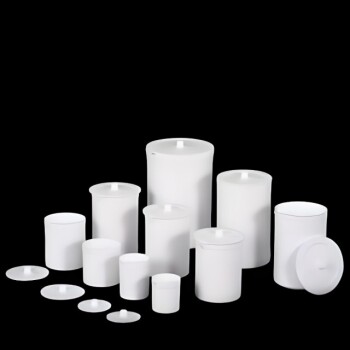
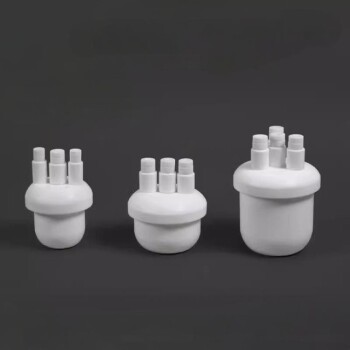
The Teflon-lined stainless steel high-pressure reactor acts as a controlled thermodynamic vessel that enables the chemical integration of titanium into triazine frameworks. This specific environment provides the necessary autogenous pressure and elevated temperatures (typically 100 °C for 24 hours) to force titanium species deep into the framework’s pores. Without this sealed system, the reaction would fail to achieve the required chemical bonding and structural density.
Core Takeaway: The reactor facilitates a high-energy, closed-loop environment where pressure drives the deep embedding of titanium species while the Teflon liner ensures chemical purity by preventing corrosion and metallic leaching.
The Role of the High-Pressure Environment
Facilitating Deep Embedding of Titanium
The high-pressure environment within the reactor is essential for moving titanium species into the internal architecture of the triazine framework. This pressure forces the precursors into the framework's micropores, ensuring a high degree of loading that atmospheric conditions cannot achieve.
Overcoming Kinetic Energy Barriers
Elevated temperatures provide the thermal energy necessary for titanium to form stable chemical bonds within the framework. This heat allows the reactants to overcome energy barriers, transitioning from a simple mixture to a synthesized, titanium-loaded material.
Promoting Uniform Thermochemical Reactions
Because the reactor is a sealed system, it ensures uniform heat distribution and constant pressure throughout the duration of the synthesis. This stability is critical for achieving a consistent distribution of titanium across the entire triazine structure.
The Functional Importance of the Teflon Liner
Preventing Metallic Contamination
The Teflon (PTFE) liner acts as a chemically inert barrier between the reaction solution and the stainless steel walls. This prevents the introduction of chromium, nickel, or iron impurities, which could otherwise poison the catalyst or alter the framework's properties.
Superior Corrosion Resistance
Hydrothermal synthesis often involves aggressive chemical reagents that can degrade metal surfaces. The liner’s chemical stability protects the structural integrity of the autoclave, ensuring the longevity of the equipment and the purity of the final product.
Ensuring System Inertness
By maintaining a completely inert interface, the Teflon liner ensures that the only reactions occurring are those intended between the titanium precursors and the triazine framework. This control is vital for producing high-purity crystalline structures.
Understanding the Trade-offs and Limitations
Temperature Constraints of PTFE
While the Teflon liner provides excellent chemical resistance, it has a physical limit, typically around 220°C to 250°C. Exceeding these temperatures can cause the liner to soften or deform, potentially leading to a seal failure or "creeping" of the material.
Pressure Management Risks
Hydrothermal reactions generate autogenous pressure, which increases exponentially with temperature. If the reactor is overfilled—typically exceeding 80% of its total volume—the lack of headspace can lead to dangerous pressure spikes that exceed the safety ratings of the stainless steel shell.
Cooling and Crystallization Rates
The thick walls of a stainless steel reactor provide high thermal mass, which means the system cools slowly. While this can benefit crystal growth, it can also lead to unintended secondary phases if the cooling rate is not strictly monitored.
How to Optimize Your Synthesis Process
Strategic Recommendations for Success
To achieve the best results in the hydrothermal synthesis of titanium-loaded frameworks, consider the following technical priorities:
- If your primary focus is Maximum Titanium Loading: Ensure the reactor is maintained at a consistent temperature (e.g., 100 °C) for the full 24-hour cycle to allow for complete pore penetration and bonding.
- If your primary focus is Material Purity: Inspect the Teflon liner for any signs of pitting or discoloration before use to ensure no metallic ions from the stainless steel shell contaminate the framework.
- If your primary focus is Structural Consistency: Maintain a filling degree of 60% to 75% to provide sufficient headspace for autogenous pressure to stabilize without risking safety valve activation.
By mastering the thermodynamic conditions within the reactor, you can ensure a robust, high-performance titanium-loaded triazine framework.
Summary Table:
| Component | Role in Synthesis | Key Benefit |
|---|---|---|
| High-Pressure Environment | Forces precursors into framework micropores | Achieves deep titanium embedding |
| Elevated Temperature | Provides thermal energy for bond formation | Overcomes kinetic energy barriers |
| Teflon (PTFE) Liner | Prevents metallic leaching from vessel walls | Ensures high chemical purity |
| Stainless Steel Shell | Contains autogenous pressure & heat | Provides a stable, high-energy environment |
Elevate Your Advanced Material Synthesis with KINTEK
Achieving precise titanium loading and framework purity requires a high-performance environment that guarantees both safety and chemical inertness. KINTEK specializes in premium high-temperature high-pressure reactors and autoclaves designed to meet the rigorous demands of hydrothermal synthesis. Our Teflon-lined systems are engineered to prevent metallic contamination, ensuring your triazine frameworks remain pure and consistent.
From PTFE products and ceramic crucibles to high-temperature furnaces and hydraulic presses, KINTEK provides a comprehensive range of laboratory equipment to support your research from synthesis to characterization. Partner with us for reliable, durable solutions that enhance your lab's productivity and research accuracy.
Contact KINTEK today to find the perfect reactor for your application!
References
- Chao Zhu, Yi Shen. Unveiling Spin State‐Dependent Micropollutant Removal using Single‐Atom Covalent Triazine Framework. DOI: 10.1002/adfm.202210905
This article is also based on technical information from Kintek Solution Knowledge Base .
Related Products
- Stainless High Pressure Autoclave Reactor Laboratory Pressure Reactor
- Custom PTFE Teflon Parts Manufacturer for Reagent Wide Mouth Fine Mouth Sample High Temperature Bottles
- Custom PTFE Teflon Parts Manufacturer for Hydrothermal Synthesis Reactor Polytetrafluoroethylene Carbon Paper and Carbon Cloth Nano-growth
- Mini SS High Pressure Autoclave Reactor for Laboratory Use
- Custom PTFE Teflon Parts Manufacturer for Microwave Digestion Tank
People Also Ask
- Why is a laboratory high-pressure reactor necessary for synthesizing fly ash-based zeolite? Achieve Pure Crystallization
- Why is a laboratory high-pressure reactor used in the hydrothermal synthesis of hydroxyapatite catalysts?
- What role does a laboratory high-pressure reactor play in the leaching process of spent cathode materials? Optimize Recovery
- What conditions do laboratory high-pressure reactors provide for HTC? Optimize Your Biochar Production Processes
- How are high-pressure reactors used to prepare metaphosphate electrocatalysts? Master In-Situ Precursor Growth