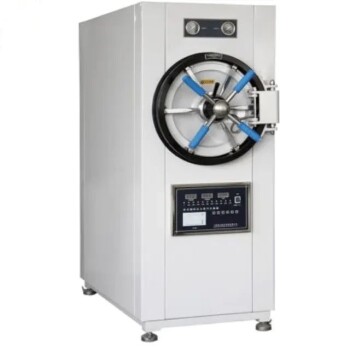
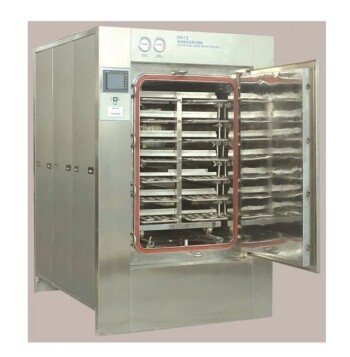
Autoclave systems are the indispensable "pressure vessels" that allow researchers to replicate the extreme physicochemical environments of nuclear reactors within a controlled laboratory setting. By creating a sealed, high-pressure chamber, these systems enable water to be heated up to 360°C—well beyond its boiling point—while allowing for the precise manipulation of water chemistry necessary to test for stress corrosion.
The core function of an autoclave in this context is to simulate the synergistic effect of heat, pressure, and chemistry. You cannot evaluate Environmentally Assisted Cracking (EAC) without simultaneously subjecting the material to all three stressors exactly as they would appear in a reactor core.
Replicating Extreme Thermodynamics
Achieving Reactor-Grade Temperatures
To simulate Light Water Reactor (LWR) environments, testing must occur at temperatures far exceeding standard laboratory limits.
Autoclaves facilitate testing at temperatures up to 360°C, covering the operating range of both Boiling Water Reactors (BWR) and Pressurized Water Reactors (PWR).
The Necessity of High Pressure
At atmospheric pressure, water boils at 100°C, making it impossible to simulate liquid reactor coolants.
Autoclaves solve this by maintaining high-pressure conditions (often around 10.3 MPa for standard simulations and up to 25 MPa for Supercritical Water Reactors). This pressure prevents boiling, keeping water in the liquid or supercritical phase required to interact with materials like 316L stainless steel and alloy 182.
Controlling the Chemical Environment
Precise Water Chemistry
Temperature and pressure alone are insufficient; the chemical composition of the coolant drives corrosion.
Autoclave systems function in conjunction with chemistry control loops to regulate dissolved oxygen (DO) and dissolved hydrogen (DH) levels. This is critical for assessing how oxidants accelerate crack growth.
Simulating Coolant Additives and Impurities
Reactor water is never pure H2O; it contains specific additives and unintended impurities.
These systems allow researchers to inject and control specific chemical compositions, such as boron and lithium, which are used for reactivity control in PWRs. They also allow for the introduction of trace impurity ions, such as sulfates, to test material resilience against realistic contamination.
Evaluating Long-Term Durability
Accelerating Failure Mechanisms
The primary goal of these tests is to evaluate susceptibility to Environmentally Assisted Cracking (EAC).
By maintaining a stable, aggressive environment, autoclaves allow researchers to observe how materials degrade over time. This includes monitoring oxide layer growth and the initiation of cracks in fuel cladding materials like FeCrAl alloys.
Understanding the Trade-offs
Operational Complexity vs. Simulation Fidelity
While autoclaves provide high fidelity, they introduce significant operational complexity.
Maintaining a stable internal environment is difficult; unlike a massive reactor, a small autoclave volume is highly sensitive to minor chemical fluctuations. Researchers must rigorously monitor the "sealed internal space" to ensure the test environment remains constant over long durations.
Safety and Equipment Limits
Working with high-pressure, high-temperature vessels introduces inherent safety risks and equipment limitations.
Pushing parameters to simulate next-generation designs, such as Supercritical Water Reactors (SWCR) at 450°C and 25 MPa, places immense stress on the test equipment itself. This requires specialized materials and heating systems, increasing the cost and maintenance burden of the testing program.
Making the Right Choice for Your Goal
When designing a stress corrosion test, align your autoclave parameters with your specific reactor target:
- If your primary focus is standard BWR/PWR simulation: Prioritize systems that offer stability at 288°C–360°C and pressures around 10.3 MPa, with precise control over boron/lithium and dissolved gases.
- If your primary focus is Supercritical Water Reactors (SWCR): You require high-performance autoclaves capable of withstanding 450°C and 25 MPa to accurately study degradation and oxide growth in advanced materials like 12Cr steel.
Select the system that guarantees the stability of the specific environmental variables most critical to your material's failure mode.
Summary Table:
| Feature | Standard LWR Simulation | Supercritical Water Reactor (SWCR) |
|---|---|---|
| Temperature Range | 288°C – 360°C | Up to 450°C |
| Pressure Requirements | ~10.3 MPa | Up to 25 MPa |
| Key Water Chemistry | Boron, Lithium, Dissolved O2/H2 | High-purity / Trace Impurities |
| Primary Test Focus | Stress Corrosion Cracking (SCC) | Oxide Growth & Advanced Degradation |
| Common Materials | 316L Stainless, Alloy 182 | 12Cr Steel, FeCrAl Alloys |
Precision Engineering for Extreme Research Environments
Advance your nuclear and material science research with KINTEK’s industry-leading laboratory solutions. We specialize in providing high-performance high-temperature high-pressure reactors and autoclaves designed to maintain the rigorous stability required for Environmentally Assisted Cracking (EAC) and stress corrosion testing.
From crushing systems and hydraulic presses to specialized electrolytic cells and ceramics, KINTEK offers the comprehensive tools necessary for demanding laboratory workflows. Empower your facility with equipment that bridges the gap between simulation and reality.
Contact a KINTEK Specialist Today
References
- Mariia Zimina, Hans-Peter Seifert. Effect of surface machining on the environmentally-assisted cracking of Alloy 182 and 316L stainless steel in light water reactor environments: results of the collaborative project MEACTOS. DOI: 10.1515/corrrev-2022-0121
This article is also based on technical information from Kintek Solution Knowledge Base .
Related Products
- High Pressure Laboratory Autoclave Reactor for Hydrothermal Synthesis
- Portable High Pressure Laboratory Autoclave Steam Sterilizer for Lab Use
- Laboratory High Pressure Horizontal Autoclave Steam Sterilizer for Lab Use
- Stainless High Pressure Autoclave Reactor Laboratory Pressure Reactor
- Laboratory High Pressure Steam Sterilizer Vertical Autoclave for Lab Department
People Also Ask
- What role does a high-pressure reactor (autoclave) play in the synthesis of NiCuFe-LDH? Master Hydrothermal Growth
- What Role Does a High-Pressure Reactor or Autoclave Play in HA Catalyst Synthesis? Achieve High Surface Area Materials
- What equipment is required for hydrothermal synthesis of Ga0.25Zn4.67S5.08? Optimize Your Semiconductor Production
- What is the function of a high-pressure reactor in the hydrothermal synthesis of boehmite? Expert Process Insights
- What role does an autoclave play in the synthesis of MnO2 nanofibers? Mastering Hydrothermal Growth