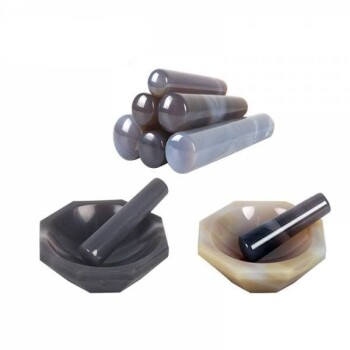
The prevention of metallic contamination is the primary reason ceramic balls are preferred over steel for mixing Silicon Carbide (SiC) and aluminum composite powders. While steel media inevitably wears down during high-energy milling, introducing iron impurities that degrade the aluminum matrix, ceramic balls provide the necessary hardness and chemical stability to facilitate mixing without compromising the material's purity.
The integrity of a metal matrix composite relies on chemical isolation during the milling phase; ceramic media allows for rigorous high-energy impact while eliminating the introduction of foreign iron particles that act as defects in the final sintered product.
The Imperative of Material Purity
Eliminating Iron Contamination
The most significant risk in milling aluminum composites with steel balls is "wear debris." As the balls impact the powder, microscopic steel particles shear off and mix with the aluminum.
These iron impurities are detrimental to the aluminum alloy matrix. They alter the chemical composition and can form unwanted intermetallic phases during sintering, which weakens the final composite.
Ensuring Chemical Stability
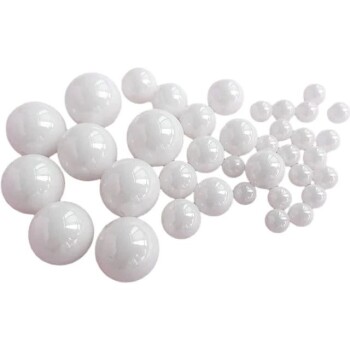
Ceramic balls, typically made from materials like zirconia or alumina, offer superior chemical stability compared to metallic media.
Because they are chemically inert relative to the aluminum and SiC powders, they do not react with the mixture. This ensures that the final properties of the composite are determined solely by the constituent powders, not by reaction byproducts from the grinding media.
Mechanical Efficiency and Microstructure
High Impact Energy for Refinement
Beyond purity, specific ceramics like zirconia offer a high-density advantage. This density translates into substantial impact kinetic energy during the milling process.
High kinetic energy is essential for refining Silicon Carbide and Aluminum powders down to the nanometer or micrometer scale. This intensity is required to break down agglomerates and achieve a truly uniform distribution.
Achieving Homogeneity
The goal of the mixing process is a consistent microstructure. The effective impacts delivered by ceramic media ensure that the SiC reinforcement is evenly dispersed throughout the aluminum matrix.
A uniform powder distribution is critical. Without it, the subsequent sintering process will result in inconsistent mechanical properties and structural weaknesses in the final part.
Understanding the Trade-offs
Wear Resistance vs. Wear Elimination
It is important to understand that while ceramics are superior, they are not impervious to wear. The goal is to minimize wear, not necessarily eliminate it entirely.
High-quality zirconia or alumina balls are selected specifically for their wear resistance. However, over extended milling times, minor amounts of ceramic media may still degrade.
Managing Media Compatibility
The advantage of ceramic wear over steel wear is compatibility. If small amounts of alumina or zirconia wear into the mixture, they are often less harmful to the matrix than iron.
For example, when processing Zirconia Toughened Alumina (ZTA), using zirconia jars and balls ensures that any media wear simply adds a compatible material (zirconia) to the matrix rather than a foreign contaminant.
Making the Right Choice for Your Goal
To maximize the quality of your SiC/Aluminum composite, you must select media based on your specific purity and energy requirements.
- If your primary focus is Absolute Purity: Prioritize high-quality alumina or zirconia media to strictly prevent iron contamination and maintain the integrity of the aluminum matrix.
- If your primary focus is Mixing Efficiency and Particle Refinement: Utilize zirconia media due to its higher density, which imparts greater kinetic energy to refine powders to the nanometer scale.
- If your primary focus is Process Optimization: Implement a ball-to-powder ratio of 5:1 to maximize the number of effective impacts and total grinding energy per unit of time.
Success in powder metallurgy is defined by control; choosing ceramic media is the definitive step to controlling the chemical composition of your final composite.
Summary Table:
| Feature | Steel Balls | Ceramic Balls (Zirconia/Alumina) |
|---|---|---|
| Contamination Risk | High (Iron debris) | Negligible (Chemically inert) |
| Material Purity | Degrades matrix | Maintains chemical integrity |
| Wear Resistance | Moderate | High |
| Chemical Stability | Reactive with some matrices | Highly stable/Inert |
| Best Use Case | General low-cost milling | High-purity composites & Nano-refinement |
Elevate Your Materials Research with KINTEK
Precision in powder metallurgy starts with the right equipment. KINTEK specializes in high-performance laboratory solutions, providing the specialized crushing and milling systems and high-density ceramic grinding media (Zirconia and Alumina) required to prevent contamination in your SiC/Aluminum composites.
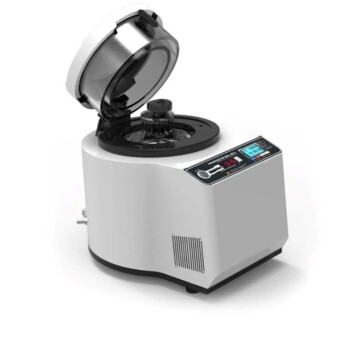
Whether you are refining powders with our planetary ball mills or consolidating them using our precision hydraulic pellet presses and vacuum sintering furnaces, our team is dedicated to helping you achieve a flawless microstructure.
Ready to optimize your composite production? Contact KINTEK today to discover how our comprehensive range of laboratory equipment and consumables can ensure the purity and performance of your final product.
Related Products
- Precision Machined Zirconia Ceramic Ball for Engineering Advanced Fine Ceramics
- Stainless Steel Laboratory Ball Mill for Dry Powder and Liquid with Ceramic Polyurethane Lining
- Laboratory Jar Ball Mill with Alumina Zirconia Grinding Jar and Balls
- Laboratory Jar Mill with Agate Grinding Jar and Balls
- Laboratory Micro Tissue Grinding Mill Grinder
People Also Ask
- What are the applications of zirconia ceramics? Unlock High-Performance Solutions for Extreme Environments
- What is the physical mechanism for selecting hard grinding media? Optimize Your ZrC-Al Matrix Composite Production
- Why are zirconia milling balls preferred for P2-type layered oxides? Ensure High Purity and Grinding Efficiency
- What is the purpose of using zirconia milling balls of different diameters? Optimize Solid Electrolyte Processing
- Why are zirconia grinding jars and balls required for solid-state electrolyte powders? Ensure High Purity & Performance