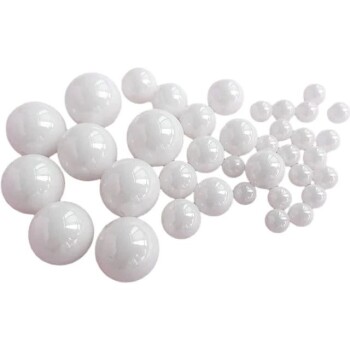
The primary technical advantages of using zirconia (ZrO2) grinding balls are their exceptional density and superior chemical stability. Specifically, their high density generates sufficient impact kinetic energy to thoroughly mix complex components like nano-silicon, sulfide electrolytes, and acetylene black. Simultaneously, their chemical inertness prevents the introduction of metallic impurities, which is critical for avoiding side reactions and preserving the integrity of the electrolyte.
Core Takeaway: Zirconia media acts as a dual-purpose solution: it provides the mechanical force necessary to homogenize hard-to-mix nano-materials while acting as a chemical shield that prevents metallic contamination from degrading sensitive sulfide electrolytes.
Optimizing Mechanical Energy Transfer
High Density Generates Kinetic Energy
Zirconia grinding balls are significantly denser than many alternative ceramic media.
This high density translates directly into superior impact kinetic energy during the milling process.
Ensuring Homogeneity in Complex Mixtures
Preparing silicon composite anodes involves integrating disparate materials, such as nano-silicon, sulfide electrolytes, and acetylene black.
The intense impact force provided by zirconia ensures these components are thoroughly mixed. This energy is essential for breaking down agglomerates and ensuring a uniform distribution of the conductive carbon network around the silicon particles.
Preserving Chemical Purity
Eliminating Metallic Contamination
Standard steel grinding media inevitably sheds metallic particles due to friction and impact.
Zirconia is chemically stable and wear-resistant, effectively eliminating the risk of introducing conductive metallic impurities (such as iron) into the anode mixture.
Preventing Electrolyte Degradation
Sulfide electrolytes used in these composites are highly sensitive to impurities.
The introduction of metals can trigger harmful side reactions that degrade the sulfide electrolyte. By using inert zirconia, you maintain the chemical stability of the electrolyte throughout the milling process.
Superior Wear Resistance
In addition to being chemically inert, zirconia is physically tough.
Its high wear resistance means that even over prolonged milling sessions, the media retains its integrity. This minimizes the volume of media debris entering the final product, ensuring the raw materials remain pure.
Common Pitfalls and Considerations
The Risk of Low-Density Alternatives
Using lighter ceramic media (like silica or alumina) may reduce the risk of metallic contamination, but often fails mechanically.
Lower-density media may not generate sufficient force to break down hard particles or thoroughly mix viscous slurries, leading to inhomogeneous anodes and poor electrochemical performance.
Understanding Material Compatibility
While zirconia minimizes contamination, it is not completely wear-proof.
In rare cases where even trace amounts of zirconium oxide could be detrimental to a specific experimental chemistry, this must be accounted for. However, compared to the catastrophic effects of metallic iron contamination in sulfide systems, zirconia is overwhelmingly the safer choice.
Making the Right Choice for Your Goal
To maximize the performance of your silicon composite anodes, align your grinding media selection with your specific processing targets:
- If your primary focus is Electrochemical Stability: Prioritize zirconia to prevent metallic impurities from triggering side reactions with sulfide electrolytes.
- If your primary focus is Mixing Efficiency: Rely on the high density of zirconia to provide the kinetic energy needed to de-agglomerate nano-silicon and disperse acetylene black.
Summary: Zirconia grinding balls provide the necessary mechanical power to homogenize your anode material without compromising its chemical purity.
Summary Table:
| Feature | Zirconia (ZrO2) Advantage | Impact on Si Anode Preparation |
|---|---|---|
| Material Density | High density (approx. 6.0 g/cm³) | Generates maximum kinetic energy for thorough nano-material mixing. |
| Chemical Stability | Chemically inert and non-metallic | Prevents iron contamination and harmful side reactions in sulfide electrolytes. |
| Wear Resistance | Superior toughness and durability | Minimizes media debris and ensures long-term purity of the anode slurry. |
| Mixing Efficiency | High impact force | Effectively de-agglomerates nano-silicon and disperses conductive carbon. |
Elevate Your Battery Research with KINTEK Precision
Achieving the perfect silicon composite anode requires more than just high-quality raw materials; it demands the right processing tools. KINTEK specializes in advanced laboratory equipment designed for the rigors of energy storage research. From our high-performance crushing and milling systems featuring premium zirconia grinding media to our precision hydraulic pellet presses, we provide the tools you need to ensure material homogeneity and chemical purity.
Whether you are working with sensitive sulfide electrolytes or developing next-generation nano-silicon anodes, KINTEK’s range of planetary ball mills, vacuum furnaces, and battery research consumables are engineered to deliver repeatable, contamination-free results.
Ready to optimize your material preparation? Contact KINTEK today to discuss our customized solutions for your laboratory.
Related Products
- Laboratory Jar Ball Mill with Alumina Zirconia Grinding Jar and Balls
- Precision Machined Zirconia Ceramic Ball for Engineering Advanced Fine Ceramics
- Laboratory Jar Mill with Agate Grinding Jar and Balls
- Laboratory Ball Mill Jar Mill with Metal Alloy Grinding Jar and Balls
- High Energy Planetary Ball Mill Milling Machine for Laboratory
People Also Ask
- What are the primary functions of using a ball mill for BZCY72 powder? Achieve High Purity and Enhanced Sintering
- In what way does a laboratory ball mill affect material properties when modifying PHBV/pulp fiber composites?
- Why is a laboratory ball mill required for ultra-fine fly ash? Unlock Nano-Scale Adsorption Power
- What is the function of a laboratory ball mill in the preparation of AMMCs? Optimize Dispersion & Grain Refinement
- What is the function of a laboratory ball mill in the pretreatment of waste tire char (WTC)? Optimize Material Reactivity