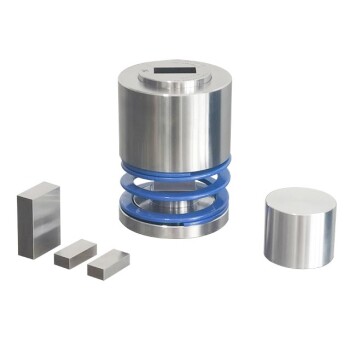
High-pressure stainless steel reactors serve as the fundamental infrastructure for selective hydrogenation experiments involving confined catalysts. They are specifically engineered to safely manage extreme hydrogen pressures—often reaching several megapascals—while maintaining precise reaction temperatures. Crucially, their integrated stirring systems ensure hydrogen gas is thoroughly dissolved in the liquid, overcoming mass transfer limitations to facilitate efficient catalysis.
Core Takeaway These reactors do more than simply contain pressure; they provide the rigorous environment necessary to verify the confinement effect. By simulating industrial processing conditions, the setup allows researchers to prove that a catalyst's physical structure acts as a molecular sieve, admitting specific reactants while physically blocking bulky substrates.
Creating the Essential Reaction Environment
Managing High-Energy Thermodynamics
Selective hydrogenation often requires significant energy inputs to proceed efficiently. Stainless steel reactors are essential because they provide the structural integrity needed to withstand the combination of high temperatures and hydrogen pressures (MPa) without failure.
This robustness prevents leaks of volatile hydrogen gas, ensuring the safety of the laboratory environment. It also allows the system to reach the thermodynamic thresholds where hydrogenation kinetics become favorable.
Overcoming Mass Transfer Limitations
In hydrogenation, the reaction cannot occur if the hydrogen gas does not physically contact the liquid substrate and the solid catalyst.
High-pressure reactors feature precision stirring systems designed to force hydrogen gas into the liquid phase. This ensures the hydrogen is thoroughly dissolved, allowing it to penetrate the catalyst's pores and react with the target molecules effectively.
Verifying the Confinement Effect
Proving Shape Selectivity
The primary scientific goal of using confined catalysts is to achieve shape-selective catalysis. Researchers must prove that the reaction occurs inside the catalyst's restricted pores, rather than on the exterior surface.
High-pressure reactors allow researchers to test "bulky" substrates, such as toluene or substituted nitrobenzenes. If the reactor conditions are perfect but the bulky molecules fail to react, it confirms that the catalyst's pores are successfully sieving out molecules that are too large, verifying the confinement effect.
Simulating Industrial Reality
Academic experiments must often demonstrate that a catalyst is viable for real-world application.
These reactors replicate industrial production environments by subjecting the catalyst to realistic stresses. This validates that the confined catalyst can maintain its selectivity and structural integrity under the harsh conditions found in actual chemical plants.
Understanding the Trade-offs
Visibility vs. Durability
While stainless steel provides unmatched durability, it is opaque. Unlike glass reactors used for low-pressure chemistry, you cannot visually monitor color changes or phase separation in real-time. You rely entirely on internal sensors for data.
Complexity of Operation
Operating at high pressures introduces significant complexity. These systems require rigorous safety protocols, precise leak checking, and careful pressure regulation.
Unlike simple atmospheric setups, a failure in a high-pressure system can be catastrophic. Therefore, the operational overhead is higher, requiring specialized training and maintenance to ensure the pressure regulation valves and seals function correctly.
Making the Right Choice for Your Goal
To maximize the value of your selective hydrogenation experiments, align your reactor usage with your specific scientific objectives:
- If your primary focus is Verifying Selectivity: Use the reactor to test a range of substrate sizes (small vs. bulky) under identical high-pressure conditions to definitively prove the molecular sieving effect.
- If your primary focus is Industrial Viability: Utilize the reactor's high-pressure and temperature capabilities to stress-test the catalyst's stability and conversion rates over extended periods.
By utilizing high-pressure stainless steel reactors, you bridge the gap between theoretical catalyst design and practical, scalable chemical processing.
Summary Table:
| Feature | Benefit for Selective Hydrogenation | Impact on Confined Catalysts |
|---|---|---|
| Structural Integrity | Withstands multi-MPa hydrogen pressures | Ensures safety during high-energy thermodynamics |
| Integrated Stirring | Overcomes mass transfer limitations | Forces H2 into catalyst pores for efficient reaction |
| Precision Control | Maintains exact temperatures & pressures | Replicates industrial conditions for viability testing |
| Sealed Environment | Prevents volatile gas leaks | Allows for accurate measurement of molecular sieving |
Elevate Your Chemical Research with KINTEK
Ready to transition from theoretical catalyst design to scalable industrial processing? KINTEK specializes in precision-engineered laboratory equipment, offering a robust range of high-temperature high-pressure reactors and autoclaves designed specifically for demanding selective hydrogenation experiments.
Whether you are verifying the confinement effect or stress-testing catalyst stability, our high-performance systems provide the safety and control you need. Beyond reactors, we support your entire lab workflow with crushing and milling systems, cooling solutions, and specialized consumables like PTFE and ceramics.
Unlock the full potential of your catalysis research—Contact KINTEK today to find the perfect high-pressure solution for your laboratory!
References
- Moussa Zaarour, Javier Ruiz‐Martínez. Recent developments in the control of selectivity in hydrogenation reactions by confined metal functionalities. DOI: 10.1039/d0cy01709d
This article is also based on technical information from Kintek Solution Knowledge Base .
Related Products
- Stainless High Pressure Autoclave Reactor Laboratory Pressure Reactor
- Mini SS High Pressure Autoclave Reactor for Laboratory Use
- Customizable High Pressure Reactors for Advanced Scientific and Industrial Applications
- Customizable Laboratory High Temperature High Pressure Reactors for Diverse Scientific Applications
- High Pressure Laboratory Autoclave Reactor for Hydrothermal Synthesis
People Also Ask
- Why is a laboratory high-pressure reactor used in the hydrothermal synthesis of hydroxyapatite catalysts?
- Why is a laboratory high-pressure reactor necessary for synthesizing fly ash-based zeolite? Achieve Pure Crystallization
- What role does a laboratory high-pressure reactor play in the leaching process of spent cathode materials? Optimize Recovery
- What conditions do laboratory high-pressure reactors provide for HTC? Optimize Your Biochar Production Processes
- How are high-pressure reactors used to prepare metaphosphate electrocatalysts? Master In-Situ Precursor Growth