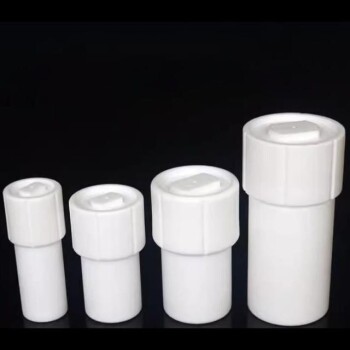
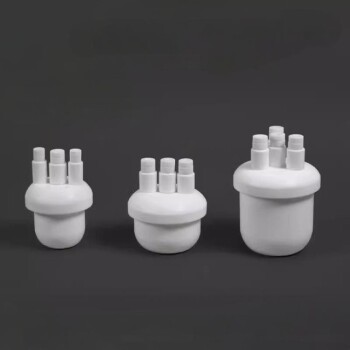
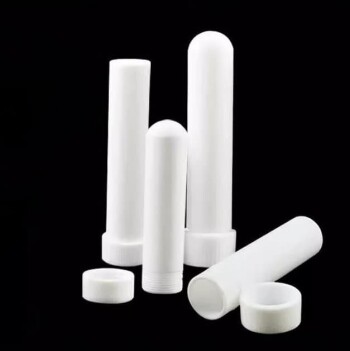
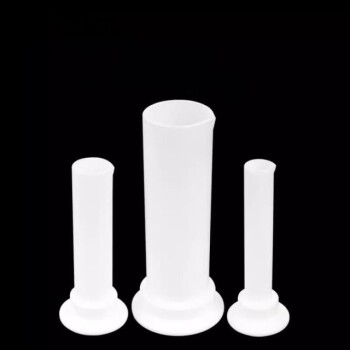
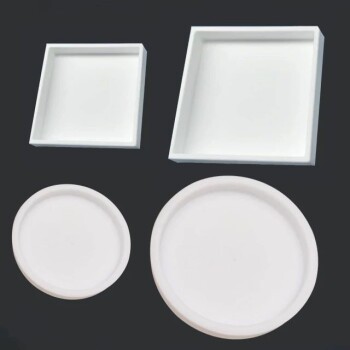
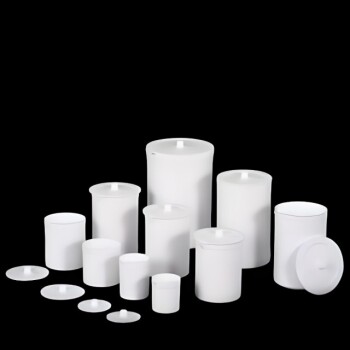
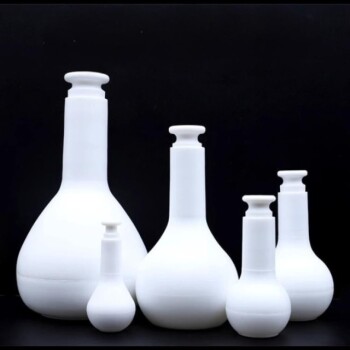
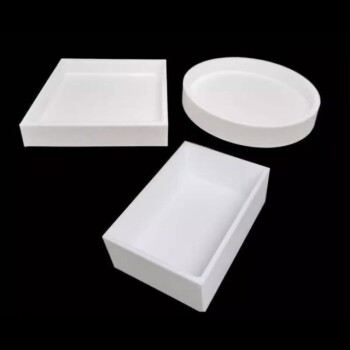
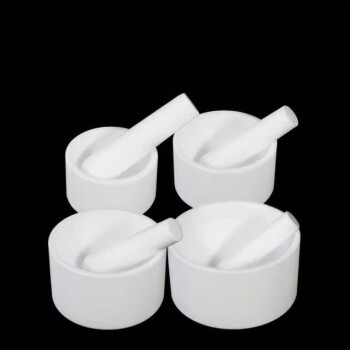
PTFE reaction vessels are the industry standard for M4C3Tx MXene synthesis because they are chemically inert to hydrofluoric acid (HF). Traditional glass and ceramic containers contain silicates that HF rapidly dissolves, leading to catastrophic equipment failure and the introduction of impurities into the MXene product.
The use of Polytetrafluoroethylene (PTFE) is a critical safety and quality requirement in MXene etching. It prevents the corrosive degradation of the reaction vessel and ensures that the final M4C3Tx material remains free from contaminating ions.
The Chemical Conflict: HF vs. Traditional Labware
The Vulnerability of Silicates
Hydrofluoric acid (HF) is uniquely aggressive toward silicate-based materials, which comprise the vast majority of standard laboratory glassware and ceramics. When HF contacts glass, it reacts with silicon dioxide to form silicon tetrafluoride gas and water, effectively dissolving the container from the inside out.
The Risk of Material Contamination
As traditional containers degrade, they release impurity ions—such as silicon, aluminum, and various metal oxides—into the etching solution. For M4C3Tx MXenes, maintaining high purity is essential for electronic and electrochemical applications, and these impurities can irreversibly degrade the material's performance.
Safety Implications of Vessel Failure
The selective etching of M4C3Tx often requires high concentrations of HF (up to 49 wt%) and extended reaction times. A vessel that loses structural integrity during these long-duration processes poses a severe risk of acid leaks, which can lead to laboratory accidents and toxic exposure.
Why PTFE is the Technical Solution
Superior Chemical Inertness
PTFE is a fluoropolymer with exceptionally strong carbon-fluorine bonds, making it one of the most chemically resistant materials available. It does not react with HF, even at the high concentrations and elevated temperatures required to remove aluminum atomic layers from the MAX phase precursor.
Durability During Extended Reaction Cycles
Synthesis of specific MXenes can require etching periods lasting up to 96 hours at temperatures around 60 °C. PTFE maintains its mechanical properties and chemical resistance throughout these long cycles, ensuring the environment remains stable from start to finish.
Management of Reaction Byproducts
Modern PTFE reactors are often designed with venting systems to safely manage gases generated during the etching process. This design allows for pressure stabilization without compromising the container’s resistance to the corrosive acidic environment.
Understanding the Trade-offs
Thermal Limitations
While PTFE is excellent for typical etching temperatures, it has a lower thermal ceiling than glass or metal. It generally should not be used for reactions exceeding 260 °C, as the material can begin to soften or release toxic fumes.
Mechanical Softness and Creep
PTFE is a relatively soft plastic that can undergo "creep" or deformation under high pressure over time. Users must ensure that seals and threaded caps are checked regularly to prevent leaks caused by the material shifting during repeated thermal cycling.
Heat Transfer Inefficiency
Compared to glass or stainless steel, PTFE is a poor thermal conductor. This means that heating or cooling the reaction mixture takes longer, requiring precise temperature monitoring inside the vessel rather than relying solely on the external heater setting.
Guidelines for Reactor Selection in MXene Synthesis
Effective MXene synthesis requires a balance of safety, purity, and process control. Use the following guidelines to ensure your setup meets the technical requirements of the M4C3Tx etching process.
- If your primary focus is material purity: Always use high-grade PTFE or PFA vessels to eliminate the risk of ion leaching from the container walls.
- If your primary focus is laboratory safety: Select PTFE-lined stainless steel autoclaves or reactors with integrated venting to handle the high pressures and corrosive nature of concentrated HF.
- If your primary focus is process scalability: Invest in thick-walled PTFE reaction stations that offer consistent thermal distribution despite the material's naturally low conductivity.
By prioritizing PTFE-based infrastructure, researchers ensure the structural integrity of their equipment and the electrochemical excellence of their M4C3Tx MXenes.
Summary Table:
| Feature | PTFE Reaction Vessels | Traditional Labware (Glass/Ceramic) |
|---|---|---|
| HF Chemical Resistance | Superior: Highly inert to concentrated HF | Fail: Rapidly dissolves due to silicate reaction |
| Contamination Risk | None: Prevents leaching of impurity ions | High: Releases Si, Al, and metal oxides |
| Structural Safety | High: Maintains integrity during long cycles | Critical: Risk of catastrophic leaks and exposure |
| Thermal Conductivity | Low (Requires internal monitoring) | High |
| Temperature Limit | Max 260°C | High (but unusable with HF) |
Secure Your MXene Synthesis with KINTEK’s Corrosion-Resistant Solutions
When working with aggressive hydrofluoric acid for M4C3Tx MXene etching, your equipment's integrity is non-negotiable. KINTEK specializes in high-performance laboratory solutions that bridge the gap between safety and scientific excellence.
We offer a comprehensive range of PTFE products, high-temperature high-pressure reactors, and autoclaves specifically designed to handle corrosive chemical environments without compromising material purity. From PTFE-lined reaction vessels to advanced crushing and milling systems for precursor preparation, KINTEK provides the specialized tools researchers need for reliable, repeatable results.
Don't let vessel failure or ion contamination compromise your research. Contact our laboratory specialists today to explore our full portfolio of reactors, consumables, and cooling solutions tailored for your synthesis needs.
References
- Yanan Huang, Yuping Sun. Defect‐Free Few‐Layer M<sub>4</sub>C<sub>3</sub>T<sub>x</sub> (M = V, Nb, Ta) MXene Nanosheets: Synthesis, Characterization, and Physicochemical Properties. DOI: 10.1002/advs.202302882
This article is also based on technical information from Kintek Solution Knowledge Base .
Related Products
- Custom PTFE Teflon Parts Manufacturer for Microwave Digestion Tank
- Custom PTFE Teflon Parts Manufacturer for Three-Necked Round Bottom Flask
- Custom PTFE Teflon Parts Manufacturer for Centrifuge Tubes
- Custom PTFE Teflon Parts Manufacturer for Reagent Wide Mouth Fine Mouth Sample High Temperature Bottles
- Custom PTFE Teflon Parts Manufacturer for PTFE Measuring Cylinder 10/50/100ml
People Also Ask
- Why are PTFE containers required for PCT leaching tests? Ensure Chemical Inertness and Analytical Precision
- Why use high-quality PTFE containers for CO2 reduction electrolytes? Eliminate silicon contamination and ensure data.
- Why is PTFE Mandatory for Hydrofluoric Acid (HF) Handling? Ensure Safety and Data Integrity in Corrosion Testing
- Why is a PTFE container required for acid leaching of silicon nanosheets? Ensure High Purity and Safety
- Why are polytetrafluoroethylene (PTFE) containers essential for assessing the corrosion resistance of glassified waste?