Zirconia grinding media is preferred for LAGP precursor preparation primarily because of its unique combination of extreme hardness and chemical inertness. Unlike metallic grinding media, zirconia withstands the mechanical stress of long-duration milling without shedding conductive impurities into the powder, thereby preserving the critical electrochemical properties of the final electrolyte.
The dominant factor driving this selection is the preservation of ionic conductivity. Any metallic contamination introduced by wear from the grinding jar or balls will degrade the purity of the LAGP powder, rendering the final solid electrolyte less effective.
The Imperative of Chemical Purity
Preventing Metallic Contamination
The synthesis of LAGP (Lithium Aluminum Germanium Phosphate) requires high-purity precursor powders. During the mixing and grinding process, the grinding media is subjected to intense friction and impact.
If metallic jars (such as stainless steel) were used, microscopic metal particles would abrade into the mixture. Zirconia is chemically inert, meaning it does not react with the precursor materials, eliminating this source of contamination.
Preserving Ionic Conductivity
The performance of a solid electrolyte is measured by its ionic conductivity. The presence of foreign metal ions or structural impurities acts as a barrier to lithium-ion movement.
By using zirconia, you ensure that the powder remains free of these "traffic jams" in the crystal lattice. This allows the final material to achieve the high ionic conductivity necessary for efficient battery performance.
Mechanical Efficiency in Processing
Extreme Wear Resistance
Preparing LAGP precursors often involves planetary ball milling for extended periods (e.g., 12-hour cycles) to achieve the necessary particle refinement.
Zirconia is characterized by extreme hardness. It resists the wear and tear of these long cycles significantly better than softer ceramic alternatives, ensuring the grinding media itself does not degrade prematurely.
High Density and Impact Energy
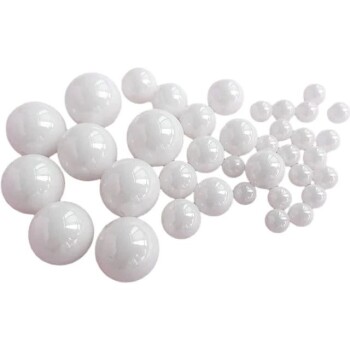
Beyond simple durability, the physical weight of the grinding media matters. Zirconia balls have a high density compared to other ceramics.
This density translates into higher impact energy during the milling process. This energy is essential for effectively breaking down refractory oxide powders and refining particle sizes to the specific levels required for a uniform reaction.
Common Pitfalls in Media Selection
The Risk of "Softer" Ceramics
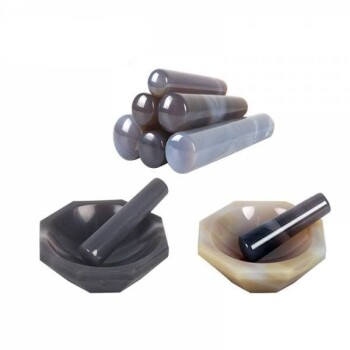
One might consider using softer ceramic media (like agate or alumina) to avoid metallic contamination. However, these materials often lack the density required to fracture hard precursor particles efficiently.
Using lighter or softer media can result in incomplete reactions or excessively long milling times, which introduces process inefficiencies without guaranteeing better purity.
The "Trace" Impurity Trap
It is a common misconception that trace amounts of wear debris are negligible. In solid-state electrolytes, even minor deviations in stoichiometry or purity can drastically alter electrochemical stability.
Zirconia minimizes this risk not just by being hard, but by ensuring that any minute wear that does occur is chemically compatible or less detrimental than metallic iron or chromium.
Making the Right Choice for Your Goal
When setting up your milling parameters for LAGP synthesis, align your media selection with your specific performance targets:
- If your primary focus is maximum ionic conductivity: Prioritize zirconia to completely eliminate the risk of metallic impurities that block ion transport pathways.
- If your primary focus is process efficiency: Rely on the high density of zirconia balls to provide the kinetic energy needed to refine particle size rapidly.
Using zirconia is not merely a preference; it is a fundamental requirement for achieving the purity standards demanded by high-performance solid-state batteries.
Summary Table:
| Feature | Zirconia Media | Metallic Media (e.g., Steel) | Soft Ceramics (e.g., Agate) |
|---|---|---|---|
| Contamination Risk | Low (Chemically Inert) | High (Metallic Ions) | Moderate (Mineral Particles) |
| Wear Resistance | Extremely High | Moderate | Low |
| Impact Energy | High (High Density) | High | Low (Low Density) |
| Impact on Conductivity | Preserves Performance | Degrades Ionic Flow | Potential Structural Defects |
| Best Use Case | Precision Battery Research | General Industrial Milling | Low-hardness Materials |
Elevate Your Battery Research with KINTEK
Don't let impurities compromise your solid-state electrolyte performance. KINTEK specializes in premium laboratory equipment designed for the most demanding material science applications. From high-density zirconia grinding jars and balls to precision planetary ball mills and high-temperature furnaces, we provide the tools you need to achieve superior powder purity and particle refinement.
Whether you are synthesizing LAGP or exploring new electrode chemistries, our team offers the expertise and consumables—including PTFE products, ceramics, and specialized crucibles—to ensure your results are reproducible and efficient.
Ready to optimize your milling process? Contact KINTEK Today for a tailored solution.
Related Products
- Laboratory Jar Ball Mill with Alumina Zirconia Grinding Jar and Balls
- Precision Machined Zirconia Ceramic Ball for Engineering Advanced Fine Ceramics
- Laboratory Jar Mill with Agate Grinding Jar and Balls
- Laboratory Ball Mill Jar Mill with Metal Alloy Grinding Jar and Balls
- Laboratory Four-Body Horizontal Jar Mill
People Also Ask
- What are the primary functions of using a ball mill for BZCY72 powder? Achieve High Purity and Enhanced Sintering
- In what way does a laboratory ball mill affect material properties when modifying PHBV/pulp fiber composites?
- Why is a laboratory ball mill required for ultra-fine fly ash? Unlock Nano-Scale Adsorption Power
- What is the function of a laboratory ball mill in the preparation of AMMCs? Optimize Dispersion & Grain Refinement
- What is the function of a laboratory ball mill in the pretreatment of waste tire char (WTC)? Optimize Material Reactivity