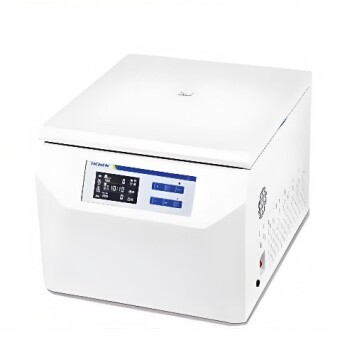
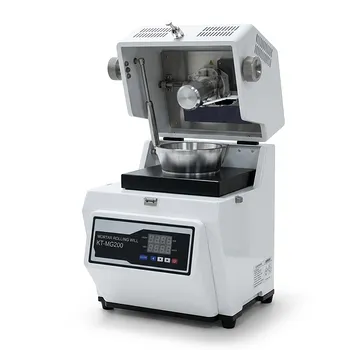
The precision laboratory shaker is the critical component for ensuring atomic-level mixing during the EDTA-CA sol-gel synthesis of double B-site perovskites. By providing a simultaneous environment of constant high temperature (95 °C) and vigorous mechanical agitation, it ensures that metal ions and complexing agents react completely. This process results in a transparent, uniform gel, which is the foundational requirement for producing high-purity crystalline phases during the subsequent calcination stage.
Core Takeaway: High-precision agitation is required to eliminate local concentration gradients and ensure efficient mass transfer, allowing metal ions to distribute uniformly within the complexing matrix for a high-purity final product.
The Role of Agitation in Complexation Chemistry
Facilitating Multi-Ion Interaction
In double B-site perovskite synthesis, multiple distinct metal ions must be complexed by EDTA and Citric Acid (CA) simultaneously. Vigorous mechanical agitation increases the collision frequency between these ions and the complexing agents, ensuring that every ion is captured within the organic matrix.
Eliminating Local Concentration Gradients
Without continuous motion, "pockets" of high ion concentration can form within the solution. These gradients lead to non-uniform gelation or localized rapid reactions, which prevent the formation of a truly homogeneous precursor and result in impure phases after heating.
Overcoming Mass Transfer Resistance
Efficient mass transfer is essential for maintaining consistent chemical reaction kinetics across the entire volume of the sol. The shaker provides a constant shear force that overcomes internal resistance, ensuring the solute and solvent interact at a predictable and repeatable rate.
Thermal Stability and Gel Uniformity
Maintaining a Constant 95 °C Environment
The EDTA-CA process is highly sensitive to temperature fluctuations during the complexation stage. A high-precision shaker integrates thermal control with motion, ensuring that heat is distributed evenly through the fluid and preventing localized "hot spots" that could trigger premature evaporation.
Achieving a Transparent Gel State
The ultimate goal of the shaking process is the formation of a transparent gel with highly uniform component distribution. Transparency is a visual indicator that the metal ions have been successfully dispersed at the molecular level, rather than clumping into microscopic precipitates.
Prerequisite for High-Temperature Calcination
The purity of the final perovskite phase is determined by the quality of the gel. If the shaker fails to provide enough agitation, the resulting stoichiometric imbalances will manifest as unwanted secondary phases (such as simple oxides) during the final high-temperature calcination.
Understanding the Trade-offs and Pitfalls
Risks of Low-Precision Equipment
Using low-quality shakers can lead to inconsistent rotation speeds or temperature drifting. This lack of control compromises experimental repeatability, making it nearly impossible to produce identical batches of perovskite materials for comparative research.
Inadequate Agitation vs. Localized Boiling
If agitation is too weak, the solution may experience localized boiling at the container base while the top remains cool. This disrupts the sol-gel transition, leading to a brittle, non-uniform precursor that will not yield the desired double B-site structure.
Balancing Shear Force
While vigorous agitation is necessary, it must be stable. Excessive, erratic vibrations can introduce air bubbles or cause splashing, which may alter the evaporation rate of the solvent and shift the concentration of the reactants unexpectedly.
How to Apply This to Your Synthesis Project
Strategic Implementation
To ensure the highest quality synthesis of double B-site perovskites, tailor your equipment settings to your specific material goals.
- If your primary focus is Phase Purity: Prioritize a shaker with high RPM stability and digital temperature feedback to ensure atomic-level homogeneity in the gel.
- If your primary focus is Batch Repeatability: Utilize a programmable shaker that can precisely replicate the agitation duration and thermal profile across multiple days of synthesis.
- If your primary focus is Scaling Production: Ensure the shaker provides sufficient torque to maintain vigorous mass transfer as the volume and viscosity of the EDTA-CA solution increase.
The precision of your laboratory shaker directly dictates the structural integrity and chemical purity of the resulting perovskite material.
Summary Table:
| Key Feature | Role in EDTA-CA Sol-Gel Process | Impact on Final Perovskite |
|---|---|---|
| Vigorous Agitation | Eliminates local concentration gradients | Prevents unwanted secondary oxide phases |
| Precise Thermal Control | Maintains constant 95 °C environment | Ensures uniform gelation and prevents boiling |
| Mass Transfer Stability | Overcomes chemical reaction resistance | Achieves atomic-level molecular dispersion |
| RPM Repeatability | Maintains consistent shear forces | Ensures experimental batch-to-batch reliability |
Elevate Your Material Synthesis with KINTEK Precision
At KINTEK, we understand that achieving atomic-level homogeneity in double B-site perovskites requires more than just basic stirring. Our high-precision laboratory shakers and homogenizers provide the rigorous thermal stability and mechanical agitation necessary to eliminate concentration gradients and ensure a perfect gel state.
Beyond synthesis, KINTEK offers a comprehensive ecosystem for advanced material research, including:
- High-Temperature Furnaces: Muffle, vacuum, and tube furnaces for precise calcination.
- Processing Equipment: Hydraulic pellet presses, crushing systems, and ball mills.
- Specialized Tools: High-pressure reactors, electrolytic cells, and battery research consumables.
Whether you are a researcher focused on phase purity or a lab manager scaling production, our equipment is engineered for reliability and repeatability. Contact KINTEK today to discover how our specialized laboratory solutions can optimize your synthesis workflow and deliver superior crystalline results.
References
- Daryoush Sanaei, Vassilis J. Inglezakis. Synthesis of a novel perovskite-carbon aerogel hybrid adsorbent with multiple metal-Lewis active sites for the removal of dyes from water: experimental and DFT studies. DOI: 10.1039/d2nj05646a
This article is also based on technical information from Kintek Solution Knowledge Base .
Related Products
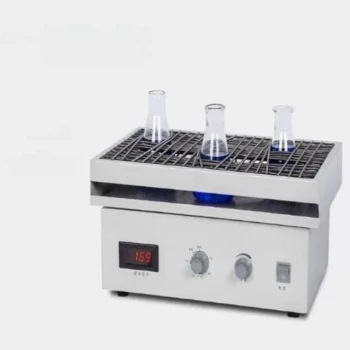
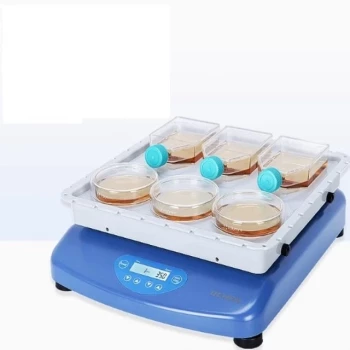
- Laboratory Multifunctional Small Speed-Adjustable Horizontal Mechanical Shaker for Lab
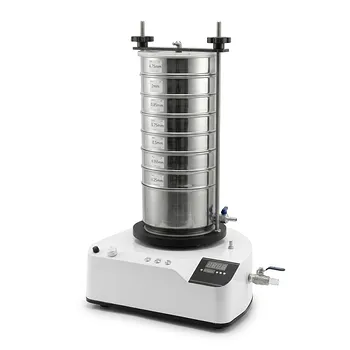
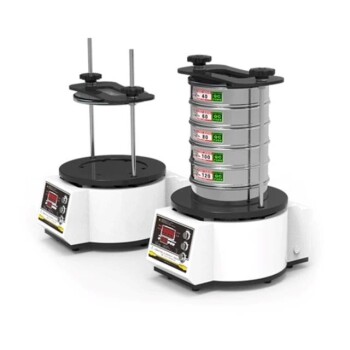
- Laboratory Vibratory Sieve Shaker Machine for Dry and Wet Three-Dimensional Sieving
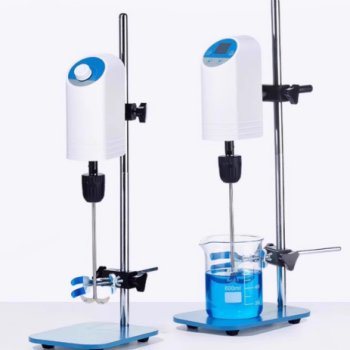
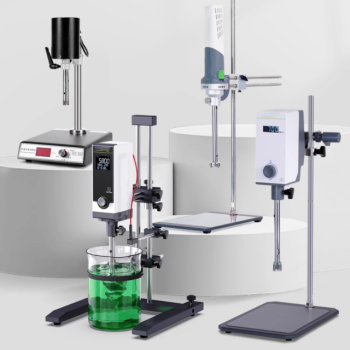
- High Performance Laboratory Stirrers for Diverse Applications
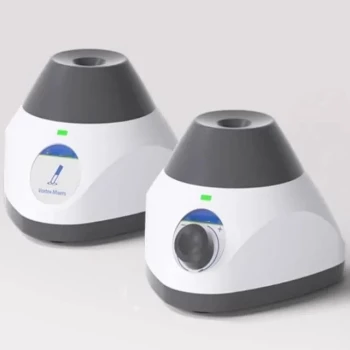
- Laboratory Vortex Mixer Orbital Shaker Multifunctional Rotation Oscillation Mixer
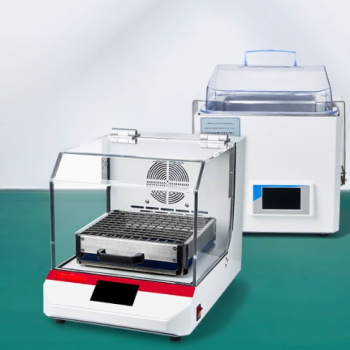
- Laboratory Oscillating Orbital Shaker
People Also Ask
- How do static culture and shaking culture affect the morphology of BC? Optimize Lab Shaker Results
- What is the role of a laboratory shaker in silane sol preparation? Master Uniform Aramid Fabric Coating
- Why is a laboratory shaker required for continuous 24-hour catalyst treatment? Achieve Deep Uniform Impregnation
- What is the function of a laboratory shaker in evaluating Fe-C@C nanoparticles? Optimize Methylene Blue Adsorption
- How do laboratory shakers or stirrers influence the efficiency of hydrogen production during dark fermentation?