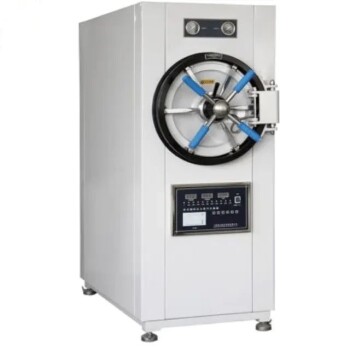
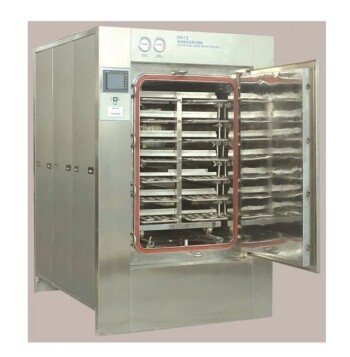
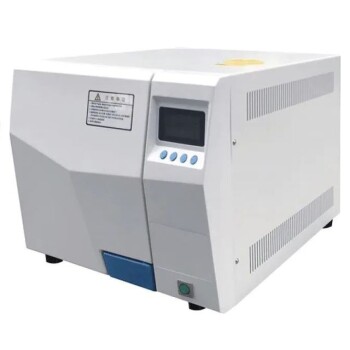
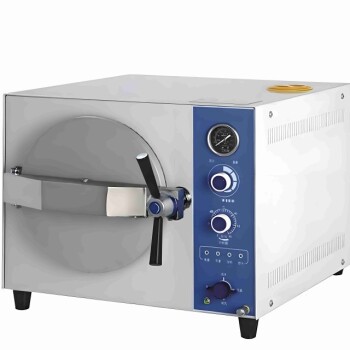
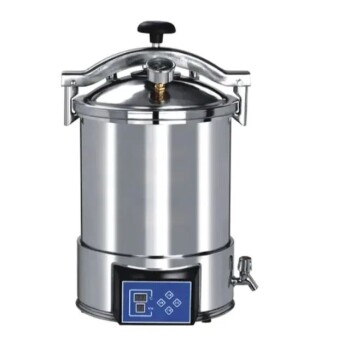
A high-pressure digestion tank or hydrothermal autoclave is the critical enabler of Hydrothermal Carbonization (HTC). These specialized vessels create a sealed environment that allows water to remain in a subcritical liquid state at temperatures well above its atmospheric boiling point (typically 130°C to 300°C). This specific pressurized environment triggers the chemical pathways—such as hydrolysis, dehydration, and polymerization—required to transform wet organic waste into high-value hydrochar or carbon quantum dots without the need for energy-intensive pre-drying.
Core Takeaway: The essential role of a high-pressure reactor is to maintain water in a liquid, subcritical state at elevated temperatures. This environment fundamentally alters the physical and chemical properties of water, allowing it to act as both a catalyst and a solvent to carbonize biomass efficiently.
The Thermodynamics of Subcritical Water
Maintaining the Liquid Phase
At atmospheric pressure, water turns to steam at 100°C, which is insufficient for the deep chemical restructuring required for carbonization. A high-pressure reactor provides the saturated steam pressure necessary to keep water liquid at temperatures reaching 250°C or higher.
Water as a Reactive Solvent
Under high pressure and temperature, the ion constant of water increases significantly. This shift allows water to behave like a non-polar solvent, facilitating the breakdown of complex organic polymers like cellulose and lignin.
Promoting Thermal Degradation
The pressurized environment accelerates thermal degradation and nucleation. This ensures that carbon sources are efficiently converted into structured materials, such as spherical porous carbon or fluorescent carbon quantum dots, within the safety of a PTFE liner.
Driving Chemical Transformations
From Biomass to Hydrochar
The autoclave environment allows biomass to undergo a sequence of hydrolysis, dehydration, and decarboxylation reactions. These processes remove oxygen and hydrogen from the organic matter, resulting in a carbon-dense product known as hydrochar.
Breaking Molecular Bonds
High pressure is essential for breaking stable chemical structures, such as the ether bonds in lignin. This allows for demethylation and alkylation, which are necessary to convert raw waste into a fuel with a higher heating value.
Controlled Nucleation and Growth
For laboratory applications, these tanks facilitate controlled heterogeneous nucleation. This is critical for synthesizing specific morphologies, such as nanosheets, which provide the high surface area needed for electrocatalytic reactions.
Practical Advantages for Waste Management
Handling High-Moisture Feedstocks
Traditional thermochemical processes like pyrolysis require feedstock to be dried, which is energy-intensive. HTC reactors allow for the direct processing of high-moisture biomass, such as microalgae or wood chips, saving significant operational costs.
Uniform Heat and Mass Transfer
Many high-pressure reactors include integrated stirring systems. These systems ensure thorough contact between the biomass and water, maintaining uniform heat transfer and resulting in consistent product quality.
Improved Dehydration Properties
The pressure within the reactor alters the physical structure of the waste, creating porous carbon materials. This process significantly improves the dehydration properties of the resulting char, making it easier to handle and transport.
Understanding the Trade-offs
Material Limitations and Corrosion
Operating at high temperatures and pressures requires specialized materials like PTFE (Teflon) liners to protect the stainless steel vessel from corrosive chemical species. Without these liners, the acidic environment created during carbonization can rapidly degrade the reactor.
Safety and Autogenous Pressure
The pressure inside these tanks is autogenous, meaning it is generated by the heating of the liquid itself. This requires rigorous safety protocols and pressure-relief mechanisms to prevent vessel failure during the carbonization process.
Scale-up Complexity
While hydrothermal autoclaves are highly effective at the laboratory scale, transitioning to industrial volumes presents engineering challenges. Maintaining uniform pressure and temperature across large-scale reactors requires sophisticated thermal management and heavy-duty construction.
Making the Right Choice for Your Goal
To successfully implement hydrothermal carbonization, you must align your equipment selection with your specific output requirements.
- If your primary focus is synthesizing nanomaterials: Utilize a laboratory-grade hydrothermal autoclave with a PTFE liner to ensure high purity and controlled nucleation of carbon quantum dots.
- If your primary focus is waste-to-energy conversion: Prioritize a high-pressure stirred reactor to ensure uniform heat transfer and high-quality hydrochar production from bulk organic waste.
- If your primary focus is processing high-moisture biomass: Ensure your reactor is rated for at least 250°C to maintain subcritical water conditions without the need for expensive pre-drying stages.
By mastering the pressurized environment of the hydrothermal autoclave, you can transform low-value organic waste into high-performance carbon materials.
Summary Table:
| Feature | Function in HTC | Key Benefit |
|---|---|---|
| Subcritical State | Keeps water liquid at 130°C-300°C | Eliminates energy-intensive pre-drying |
| Reactive Solvent | Increases water ion constant | Facilitates breakdown of lignin & cellulose |
| PTFE Liner | Chemical resistance | Protects vessel from acidic carbonization byproduct |
| Stirring System | Uniform mass transfer | Ensures consistent hydrochar quality and density |
| Pressure Control | Manages autogenous pressure | Enables controlled nucleation for nanomaterials |
Ready to transform organic waste into high-value hydrochar? At KINTEK, we specialize in precision laboratory equipment designed for the most demanding hydrothermal applications. Our advanced range of high-temperature high-pressure reactors and autoclaves—available with durable PTFE liners and integrated stirring—is engineered to maintain the perfect subcritical environment for efficient carbonization.
Beyond reactors, KINTEK offers a comprehensive portfolio including crushing systems, muffle furnaces, and essential consumables like ceramics and crucibles to support your entire material synthesis workflow. Contact KINTEK today to find the perfect high-pressure solution for your research!
References
- Wan-Ying Ying, Shuoping Chen. Magnetic Carbon Quantum Dots/Iron Oxide Composite Based on Waste Rice Noodle and Iron Oxide Scale: Preparation and Photocatalytic Capability. DOI: 10.3390/nano13182506
This article is also based on technical information from Kintek Solution Knowledge Base .
Related Products
- High Pressure Laboratory Autoclave Reactor for Hydrothermal Synthesis
- Laboratory High Pressure Steam Sterilizer Vertical Autoclave for Lab Department
- Laboratory High Pressure Horizontal Autoclave Steam Sterilizer for Lab Use
- Stainless High Pressure Autoclave Reactor Laboratory Pressure Reactor
- Portable High Pressure Laboratory Autoclave Steam Sterilizer for Lab Use
People Also Ask
- What role does a high-pressure reactor (autoclave) play in the synthesis of NiCuFe-LDH? Master Hydrothermal Growth
- What Role Does a High-Pressure Reactor or Autoclave Play in HA Catalyst Synthesis? Achieve High Surface Area Materials
- What equipment is required for hydrothermal synthesis of Ga0.25Zn4.67S5.08? Optimize Your Semiconductor Production
- What is the function of a high-pressure reactor in the hydrothermal synthesis of boehmite? Expert Process Insights
- What role does an autoclave play in the synthesis of MnO2 nanofibers? Mastering Hydrothermal Growth