Knowledge Why is a PTFE-Lined High-Pressure Autoclave Needed for ZE41A Alloy Coatings? Ensure Purity and Chemical Inertness
Author avatar

Tech Team · Kintek Solution

Updated 20 hours ago

Why is a PTFE-Lined High-Pressure Autoclave Needed for ZE41A Alloy Coatings? Ensure Purity and Chemical Inertness


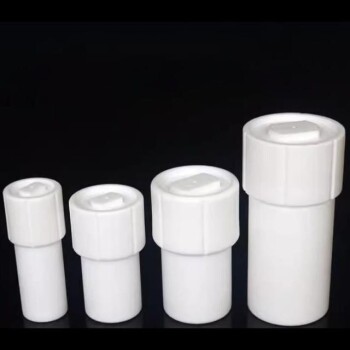
The necessity of a high-pressure hydrothermal autoclave with a Polytetrafluoroethylene (PTFE) liner lies in its unique ability to decouple chemical inertness from mechanical strength.

For the synthesis of ZE41A magnesium alloy coatings, this equipment is required to maintain a pristine reaction environment while containing the high pressures generated at temperatures between 120 and 160 °C. It prevents the corrosive reaction solution from contacting the stainless steel shell, thereby eliminating the risk of metallic ion contamination that would degrade the coating's quality.

Core Takeaway The autoclave system solves a dual engineering challenge: the stainless steel outer shell handles the physical stress of high-pressure steam, while the internal PTFE liner provides a chemically inert "clean room" to prevent side reactions and contamination during the growth of magnesium hydroxide layers.

The Critical Role of the PTFE Liner

Preventing Metallic Ion Contamination

The primary function of the PTFE liner is to act as an impermeable barrier. In hydrothermal synthesis, the reaction solution is often aggressive and capable of leaching ions from standard metal vessels.

If the solution were to contact the stainless steel autoclave body directly, iron or chromium ions could dissolve into the mixture. The PTFE liner isolates the solution, ensuring the reaction system remains free of foreign metallic impurities.

Ensuring Chemical Inertness

Magnesium alloys, such as ZE41A, are highly reactive. To grow a stable coating, the environment must be chemically neutral regarding the vessel walls.

PTFE (Teflon) possesses exceptional chemical inertness. It does not react with the solution or the magnesium alloy substrate, effectively preventing side reactions that could alter the composition of the intended magnesium hydroxide coating.

Managing the Hydrothermal Environment

Withstanding Autogenous Pressure

Creating a hydrothermal coating requires heating water above its boiling point in a sealed volume, typically between 120 and 160 °C. This generates significant autogenous pressure (pressure generated by the substance itself as it heats).

PTFE alone lacks the mechanical rigidity to contain this pressure. The stainless steel outer body provides the necessary structural integrity to withstand the force, while the liner transmits the pressure without failing.

Facilitating Stable Coating Growth

The combination of heat and pressure drives the reaction kinetics. This environment allows the coating to transition from a loose, amorphous structure to a dense, crystalline structure.

By maintaining a clean and pressurized environment for 1-3 hours, the system promotes the stable formation of magnesium hydroxide ($Mg(OH)_2$). This dense crystalline structure is directly responsible for the final corrosion resistance of the ZE41A alloy.

Understanding the Trade-offs

Temperature Limitations

While PTFE is excellent for chemical resistance, it has thermal limits. It functions well within the 120-160 °C range required for this specific synthesis, but it can soften or deform at significantly higher temperatures (approaching 250 °C).

Heat Transfer Efficiency

PTFE is a thermal insulator, unlike the stainless steel shell. This means there is a lag between the furnace temperature and the actual solution temperature inside the liner.

Operators must account for this thermal lag when programming the electric heating furnace to ensure the reaction medium actually reaches and maintains the target temperature for the required duration.

Making the Right Choice for Your Goal

The configuration of your hydrothermal reactor dictates the quality of your final output.

  • If your primary focus is Coating Purity: Prioritize the integrity of the PTFE liner; any scratches or defects in the liner will lead to immediate iron contamination from the outer shell.
  • If your primary focus is Mechanical Safety: Ensure the stainless steel outer vessel is rated for pressures exceeding the autogenous pressure generated at your maximum target temperature (160 °C).
  • If your primary focus is Corrosion Resistance: Strictly control the temperature (120-160 °C) and holding time (1-3 hours) to ensure the coating transitions fully to a dense crystalline structure.

Ultimately, the PTFE-lined autoclave is not just a vessel, but a precision tool that balances physical containment with chemical isolation to engineer high-performance coatings.

Summary Table:

Feature Function in Hydrothermal Synthesis Benefit for ZE41A Coating
PTFE Liner Provides a chemically inert barrier Prevents metallic ion contamination and side reactions
SS Outer Shell Provides structural mechanical strength Safely contains high autogenous pressure (120-160 °C)
Pressure Control Increases reaction kinetics Facilitates transition to a dense, crystalline structure
Thermal Insulation Regulates heat transfer Maintains stable environment for magnesium hydroxide growth

Elevate Your Materials Research with KINTEK

Precision is paramount in hydrothermal synthesis. At KINTEK, we specialize in providing high-performance high-temperature high-pressure reactors and autoclaves designed specifically for the rigorous demands of magnesium alloy research and coating development. Our PTFE-lined solutions ensure your ZE41A coatings remain pure, crystalline, and corrosion-resistant.

From advanced crushing and milling systems to precision hydraulic presses and vacuum furnaces, KINTEK offers a comprehensive ecosystem of laboratory equipment and consumables to support every stage of your workflow.

Ready to optimize your synthesis process? Contact our technical experts today to find the perfect autoclave configuration for your laboratory needs!

References

  1. Yuguang Zhang, Chaoxiong Zhang. Improving electrochemical corrosion properties of ZE41A magnesium alloy via hydrothermal treatment. DOI: 10.1051/e3sconf/202126102031

This article is also based on technical information from Kintek Solution Knowledge Base .

Related Products

People Also Ask

Related Products

Customizable Laboratory High Temperature High Pressure Reactors for Diverse Scientific Applications

Customizable Laboratory High Temperature High Pressure Reactors for Diverse Scientific Applications

High-pressure lab reactor for precise hydrothermal synthesis. Durable SU304L/316L, PTFE liner, PID control. Customizable volume & materials. Contact us!

Stainless High Pressure Autoclave Reactor Laboratory Pressure Reactor

Stainless High Pressure Autoclave Reactor Laboratory Pressure Reactor

Discover the versatility of Stainless High Pressure Reactor - a safe and reliable solution for direct and indirect heating. Built with stainless steel, it can withstand high temperatures and pressures. Learn more now.

High Pressure Laboratory Autoclave Reactor for Hydrothermal Synthesis

High Pressure Laboratory Autoclave Reactor for Hydrothermal Synthesis

Discover the applications of Hydrothermal Synthesis Reactor - a small, corrosion-resistant reactor for chemical labs. Achieve rapid digestion of insoluble substances in a safe and reliable way. Learn more now.

Portable Digital Display Automatic Laboratory Sterilizer Lab Autoclave for Sterilization Pressure

Portable Digital Display Automatic Laboratory Sterilizer Lab Autoclave for Sterilization Pressure

Portable autoclave sterilization pressure is a device that uses pressure saturated steam to quickly and effectively sterilize items.

Laboratory High Pressure Horizontal Autoclave Steam Sterilizer for Lab Use

Laboratory High Pressure Horizontal Autoclave Steam Sterilizer for Lab Use

The horizontal autoclave steam sterilizer adopts the gravity displacement method to remove the cold air in the inner chamber, so that the inner steam and cold air content is less, and the sterilization is more reliable.

Portable High Pressure Laboratory Autoclave Steam Sterilizer for Lab Use

Portable High Pressure Laboratory Autoclave Steam Sterilizer for Lab Use

Portable autoclave sterilization pressure is a device that uses pressure saturated steam to quickly and effectively sterilize items.

Custom PTFE Teflon Parts Manufacturer for PTFE Mesh F4 Sieve

Custom PTFE Teflon Parts Manufacturer for PTFE Mesh F4 Sieve

PTFE mesh sieve is a specialized test sieve designed for particle analysis in various industries, featuring a non-metallic mesh woven from PTFE filament. This synthetic mesh is ideal for applications where metal contamination is a concern . PTFE sieves are crucial for maintaining the integrity of samples in sensitive environments, ensuring accurate and reliable results in particle size distribution analysis.

Desktop Fast High Pressure Laboratory Autoclave Sterilizer 16L 24L for Lab Use

Desktop Fast High Pressure Laboratory Autoclave Sterilizer 16L 24L for Lab Use

The desktop fast steam sterilizer is a compact and reliable device used for rapid sterilization of medical, pharmaceutical, and research items.

Laboratory High Pressure Steam Sterilizer Vertical Autoclave for Lab Department

Laboratory High Pressure Steam Sterilizer Vertical Autoclave for Lab Department

Vertical pressure steam sterilizer is a kind of sterilization equipment with automatic control, which is composed of heating system, microcomputer control system and overheating and overpressure protection system.

Laboratory Sterilizer Lab Autoclave Vertical Pressure Steam Sterilizer for Liquid Crystal Display Automatic Type

Laboratory Sterilizer Lab Autoclave Vertical Pressure Steam Sterilizer for Liquid Crystal Display Automatic Type

Liquid crystal display automatic vertical sterilizer is a safe, reliable and automatic control sterilization equipment, which is composed of heating system, microcomputer control system and overheating and overvoltage protection system.

Laboratory Sterilizer Lab Autoclave Pulsating Vacuum Desktop Steam Sterilizer

Laboratory Sterilizer Lab Autoclave Pulsating Vacuum Desktop Steam Sterilizer

The pulsating vacuum desktop steam sterilizer is a compact and reliable device used for rapid sterilization of medical, pharmaceutical, and research items.

Desktop Fast Laboratory Autoclave Sterilizer 35L 50L 90L for Lab Use

Desktop Fast Laboratory Autoclave Sterilizer 35L 50L 90L for Lab Use

The desktop fast steam sterilizer is a compact and reliable device used for rapid sterilization of medical, pharmaceutical, and research items. It efficiently sterilizes surgical instruments, glassware, medicines, and resistant materials, making it suitable for various applications.

Custom PTFE Teflon Parts Manufacturer for Magnetic Stirring Bar

Custom PTFE Teflon Parts Manufacturer for Magnetic Stirring Bar

The PTFE magnetic stirring bar, made from high-quality PTFE, offers exceptional resistance to acids, alkalis, and organic solvents, coupled with high-temperature stability and low friction. Ideal for laboratory use, these stirring bars are compatible with standard flask ports, ensuring stability and safety during operations.

Desktop Fast Laboratory Autoclave Sterilizer 20L 24L for Lab Use

Desktop Fast Laboratory Autoclave Sterilizer 20L 24L for Lab Use

The desktop fast steam sterilizer is a compact and reliable device used for rapid sterilization of medical, pharmaceutical, and research items.

Custom PTFE Teflon Parts Manufacturer Grinding Bowl

Custom PTFE Teflon Parts Manufacturer Grinding Bowl

PTFE is renowned for its exceptional chemical resistance, thermal stability, and low friction properties, making it a versatile material in various industries. The PTFE grinding bowl, specifically, finds applications where these properties are crucial.

Warm Isostatic Press WIP Workstation 300Mpa for High Pressure Applications

Warm Isostatic Press WIP Workstation 300Mpa for High Pressure Applications

Discover Warm Isostatic Pressing (WIP) - A cutting-edge technology that enables uniform pressure to shape and press powdered products at a precise temperature. Ideal for complex parts and components in manufacturing.

Custom PTFE Teflon Parts Manufacturer for Hollow Cleaning Basket and Rack Carrier

Custom PTFE Teflon Parts Manufacturer for Hollow Cleaning Basket and Rack Carrier

The PTFE hollow cleaning flower basket is a specialized laboratory tool designed for efficient and safe cleaning processes. Made from high-quality polytetrafluoroethylene (PTFE), this basket offers exceptional resistance to acids, alkalis, and organic solvents, ensuring durability and reliability in various chemical environments.

Molybdenum Tungsten Tantalum Evaporation Boat for High Temperature Applications

Molybdenum Tungsten Tantalum Evaporation Boat for High Temperature Applications

Evaporation boat sources are used in thermal evaporation systems and are suitable for depositing various metals, alloys and materials. Evaporation boat sources are available in different thicknesses of tungsten, tantalum and molybdenum to ensure compatibility with a variety of power sources. As a container, it is used for vacuum evaporation of materials. They can be used for thin film deposition of various materials, or designed to be compatible with techniques such as electron beam fabrication.

Automatic Lab Cold Isostatic Press CIP Machine Cold Isostatic Pressing

Automatic Lab Cold Isostatic Press CIP Machine Cold Isostatic Pressing

Efficiently prepare samples with our Automatic Lab Cold Isostatic Press. Widely used in material research, pharmacy, and electronic industries. Provides greater flexibility and control compared to electric CIPs.

Infrared Heating Quantitative Flat Plate Press Mold

Infrared Heating Quantitative Flat Plate Press Mold

Discover advanced infrared heating solutions with high-density insulation and precise PID control for uniform thermal performance in various applications.


Leave Your Message