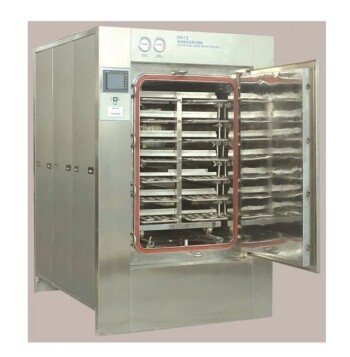
Nickel-based alloys are the definitive material choice for Supercritical Carbon Dioxide (S-CO2) autoclave construction due to their ability to withstand extreme thermal and mechanical stress while resisting chemical degradation. These high-pressure vessels are required to operate safely at temperatures up to 600 °C and pressures of 20 MPa for extended periods, conditions that demand superior material performance.
The selection of a nickel-based alloy serves a dual purpose: it guarantees the physical safety of the pressurized system and preserves the chemical purity of the experiment by preventing reactions between the vessel walls and the corrosive medium.
The Engineering Demands of S-CO2 Testing
Extreme Environmental Conditions
The autoclave in an S-CO2 system is not merely a container; it is a pressure vessel subjected to severe operational loads.
Primary requirements include sustaining temperatures of 600 °C (and potentially up to 650 °C in some configurations) alongside ultra-high pressures of 20 MPa.
Long-Term Durability
These conditions are not transient; the system must maintain integrity during long-term exposure tests.
Experiments often run for extended durations, such as 500 hours, requiring the material to resist creep and fatigue without deformation.
Why Nickel-Based Alloys Are Superior
Exceptional High-Temperature Strength
Standard materials often lose significant structural integrity when pushed beyond 500 °C.
Nickel-based alloys possess exceptional high-temperature strength, ensuring the autoclave maintains its shape and containment capabilities under the immense mechanical stress of 20 MPa pressure.
Resistance to Oxidation
At high temperatures, many metals react rapidly with oxygen or oxygen-bearing compounds, leading to rapid degradation.
Nickel-based alloys offer superior resistance to oxidation, preventing the formation of scaling that could weaken the vessel walls over time.
Ensuring Experimental Integrity
Preventing Chemical Interference
The most critical scientific reason for using Nickel-based alloys is to maintain a pure and stable chemical environment.
If the autoclave material were to react with the S-CO2, it would alter the chemical composition of the testing medium.
Isolating the Test Variable
The goal of these experiments is to evaluate the corrosion resistance of specific samples or protective coatings, not the autoclave itself.
By using a highly corrosion-resistant Nickel-based alloy, researchers ensure that any chemical changes observed are due to the sample's interaction with the environment, not a reaction with the autoclave body.
The Risks of Material Compromise
The "Active Vessel" Pitfall
A common pitfall in high-temperature corrosion testing is utilizing a vessel constructed from a material that is less noble or reactive than the test sample.
If the autoclave body corrodes, it acts as a "sink" for corrosive elements, effectively changing the aggressiveness of the S-CO2 environment.
Compromised Safety Margins
Using materials with lower thermal stability introduces significant safety risks.
Under the stress of 20 MPa, a material that softens or creeps at 600 °C could lead to catastrophic failure of the pressure boundary, endangering personnel and equipment.
Making the Right Choice for Your Goal
If your primary focus is Operational Safety:
- Prioritize Nickel-based alloys to ensure the pressure boundary remains robust and stable at temperatures reaching 600 °C and pressures of 20 MPa.
If your primary focus is Data Accuracy:
- Select Nickel-based alloys to eliminate background corrosion reactions, ensuring the chemical environment remains pure for accurate evaluation of coatings and samples.
The integrity of your data and the safety of your laboratory rely on the inert strength of the autoclave material.
Summary Table:
| Feature | Requirement for S-CO2 Systems | Nickel-Based Alloy Performance |
|---|---|---|
| Temperature Resistance | Up to 600°C - 650°C | Maintains high-temperature strength & shape |
| Pressure Stability | 20 MPa (High Pressure) | Exceptional creep and fatigue resistance |
| Oxidation Resistance | High (Oxygen-bearing environments) | Superior resistance; prevents scaling/weakening |
| Chemical Purity | Inert testing environment | Minimal reactivity; prevents sample contamination |
| Safety Longevity | 500+ hour exposure tests | High structural integrity over long durations |
Elevate Your Research with KINTEK’s Precision Engineering
Don’t compromise your data accuracy or laboratory safety with inferior materials. KINTEK specializes in advanced laboratory solutions, providing high-performance high-temperature high-pressure reactors and autoclaves engineered from premium Nickel-based alloys to withstand the most demanding S-CO2 environments.
From high-temperature furnaces (muffle, vacuum, and CVD) to our robust crushing, milling, and hydraulic press systems, we offer a comprehensive portfolio designed for excellence. Whether you are conducting battery research or material corrosion studies, our team is ready to provide the specialized equipment and consumables (PTFE, ceramics, and crucibles) you need.
Ready to secure your results? Contact KINTEK today to discuss your custom autoclave requirements!
References
- Zhaodandan Ma, Xianglong Guo. Corrosion Behavior of Alumina-Forming Austenitic Steel in Supercritical Carbon Dioxide Conditions: Effects of Nb Content and Temperature. DOI: 10.3390/ma16114081
This article is also based on technical information from Kintek Solution Knowledge Base .
Related Products
- Mini SS High Pressure Autoclave Reactor for Laboratory Use
- High Pressure Laboratory Autoclave Reactor for Hydrothermal Synthesis
- Stainless High Pressure Autoclave Reactor Laboratory Pressure Reactor
- Desktop Fast High Pressure Laboratory Autoclave Sterilizer 16L 24L for Lab Use
- Laboratory High Pressure Horizontal Autoclave Steam Sterilizer for Lab Use
People Also Ask
- Why use high-pressure reactors for molecular sieve synthesis? Unlock Superior Crystallinity and Framework Control
- What are the advantages of using a high-pressure reactor like an autoclave? Maximize Liquefaction Speed & Yield
- Why are high-pressure reactors or autoclaves necessary for the synthesis of new functional materials? Unlock Precision.
- What is the function of a high-pressure reactor autoclave? Enhancing Cu/N Co-Doped Carbon Catalyst Synthesis
- How are high-pressure reactors used to prepare metaphosphate electrocatalysts? Master In-Situ Precursor Growth