The synthesis of SiO2@SnO2 heterostructures requires a PTFE-lined stainless steel autoclave to create a pressurized, chemically inert environment. This specific setup allows the reaction to occur at 150°C—well above the boiling point of the solvent—enabling potassium stannate and urea to react fully and nucleate uniformly onto the silica template without corroding the vessel or contaminating the product.
The autoclave acts as a high-pressure reactor where the stainless steel shell provides the structural strength to withstand internal pressure, while the PTFE liner ensures chemical purity and corrosion resistance. This dual-material design is essential for facilitating the hydrothermal crystallization and dense coating necessary for high-quality heterostructures.
The Structural Necessity of the Stainless Steel Shell
Withstanding High Autogenous Pressure
In a sealed hydrothermal system, heating liquid precursors to 150°C generates significant autogenous pressure. The stainless steel outer shell is engineered to contain this pressure safely, preventing the vessel from deforming or failing during the hours-long synthesis process.
Providing Thermal Stability
Stainless steel maintains its mechanical integrity at elevated temperatures. This allows for a stable and consistent thermal environment, which is critical for the controlled growth of SnO2 layers on the SiO2 core.
The Chemical Necessity of the PTFE Liner
Superior Corrosion Resistance
The reagents used in this synthesis, such as potassium stannate and urea, can become highly reactive and potentially corrosive under hydrothermal conditions. The PTFE (Polytetrafluoroethylene) liner is chemically inert, protecting the stainless steel walls from chemical attack and degradation.
Preventing Metal Ion Contamination
Without a liner, the reaction mixture would come into direct contact with the metal vessel. The PTFE barrier prevents the leaching of metal ions (like iron or chromium) from the steel into the solution, ensuring the high purity and structural integrity of the SiO2@SnO2 heterostructures.
Facilitating Uniform Nucleation
The smooth, non-stick surface of the PTFE liner promotes convection and uniform mixing of the precursors. This environment is essential for the SnO2 to form a dense, uniform coating on the silica template rather than precipitating unevenly or sticking to the vessel walls.
Understanding the Trade-offs and Limitations
Temperature Constraints of PTFE
While PTFE is exceptionally inert, it has a physical limit; it begins to soften and can release toxic fumes if heated above 250°C. For the SiO2@SnO2 synthesis at 150°C, it is perfectly safe, but it cannot be used for ultra-high-temperature solvothermal processes.
Pressure Risks and Filling Ratios
Overfilling the PTFE liner can lead to excessive pressure buildup that might compromise the seal or the vessel itself. Maintaining a filling ratio between 60% and 80% is a critical safety trade-off to ensure there is enough headspace for vapor expansion without risking a rupture.
Cooling and Seal Integrity
Rapid cooling can cause the PTFE liner and the stainless steel shell to contract at different rates, potentially damaging the seal. A slow, controlled cooling process is required to preserve the equipment and the crystallinity of the synthesized nanomaterials.
How to Apply This to Your Synthesis
If your primary focus is Phase Purity:
Ensure the PTFE liner is thoroughly cleaned with acid between runs to prevent cross-contamination from previous synthesis batches.
If your primary focus is Coating Uniformity:
Maintain a steady reaction temperature of 150°C to ensure the urea decomposes at a controlled rate, which regulates the pH and facilitates uniform SnO2 nucleation.
If your primary focus is Safety and Longevity:
Never exceed the maximum pressure rating of the autoclave and inspect the PTFE liner regularly for signs of deformation or "creep," replacing it if the seal becomes unreliable.
By balancing the mechanical strength of steel with the chemical resistance of PTFE, researchers can reliably produce the high-purity heterostructures required for advanced technological applications.
Summary Table:
| Component | Role in Synthesis | Key Benefit |
|---|---|---|
| Stainless Steel Shell | Structural Support | Safely contains high autogenous pressure at 150°C. |
| PTFE Liner | Chemical Barrier | Prevents metal contamination and resists corrosive reagents. |
| Sealed Environment | Pressure Generation | Facilitates hydrothermal crystallization above boiling points. |
| Smooth Surfaces | Convection Control | Promotes uniform SnO2 nucleation on the SiO2 template. |
Elevate Your Material Synthesis with KINTEK Precision
Achieving the perfect SiO2@SnO2 heterostructure requires equipment that never compromises on purity or safety. KINTEK specializes in high-performance laboratory solutions, offering a robust selection of high-temperature high-pressure reactors and autoclaves designed specifically for demanding hydrothermal processes.
Beyond our industry-leading reactors, our comprehensive portfolio includes:
- Thermal Processing: Muffle, tube, vacuum, and atmosphere furnaces.
- Material Preparation: Crushing, milling, and hydraulic pellet presses.
- Specialized Lab Tools: Electrolytic cells, battery research consumables, and high-purity ceramics.
Whether you are a researcher focused on nanomaterials or a lab manager optimizing workflow, KINTEK provides the reliability and technical support you need. Contact us today to find the perfect autoclave for your lab!
References
- Qi Shao, Yan Li. Construction of Carbon Nanofiber-Wrapped SnO2 Hollow Nanospheres as Flexible Integrated Anode for Half/Full Li-Ion Batteries. DOI: 10.3390/nano13152226
This article is also based on technical information from Kintek Solution Knowledge Base .
Related Products
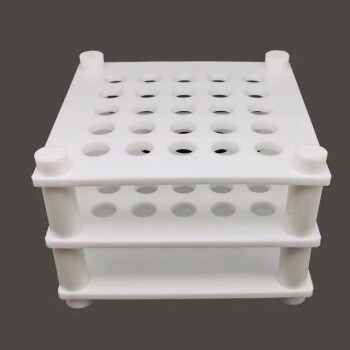
- Custom PTFE Teflon Parts Manufacturer for Centrifuge Tube Racks
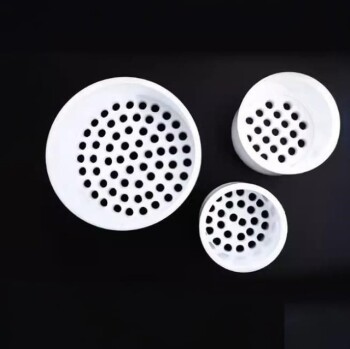
- Custom PTFE Teflon Parts Manufacturer for PTFE Mesh F4 Sieve
- Custom PTFE Teflon Parts Manufacturer Corrosion Resistant Cleaning Rack Flower Basket
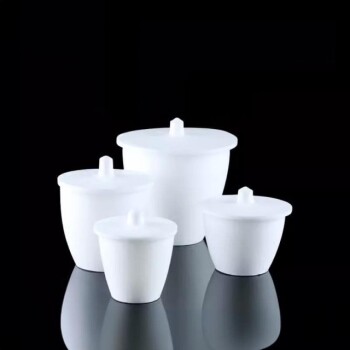
- Custom Machined and Molded PTFE Teflon Parts Manufacturer with PTFE Crucible and Lid
- Custom PTFE Teflon Parts Manufacturer for Cleaning Racks
People Also Ask
- Why is slender PTFE tubing necessary for flow control in multi-channel catalyst aging? Ensure Equal Gas Distribution
- Why are PTFE containers required for PCT leaching tests? Ensure Chemical Inertness and Analytical Precision
- Why are PTFE containers necessary for selective HF etching of MAX phases? Ensure Safe & Pure MXene Synthesis
- What role do PTFE containers play in trace metal detection? Ensure Analytical Precision in Photocatalysis Studies
- Why is a PTFE container required for acid leaching of silicon nanosheets? Ensure High Purity and Safety