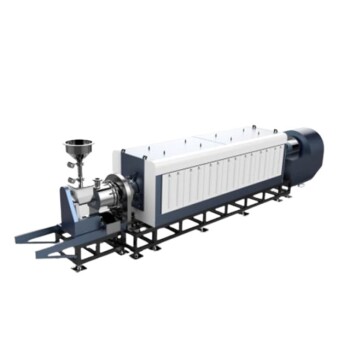
A sealed reactor is strictly necessary to prevent the evaporation of ethanol solvents during the treatment process. This containment is the primary mechanism for maintaining the stable reaction concentration required for successful modification.
By preventing solvent loss, the sealed environment drives the condensation reaction between ODTS and surface hydroxyl groups, ensuring a uniform low-surface-energy layer.
Controlling the Chemical Environment
Preventing Solvent Evaporation
The primary function of the sealed reactor is to contain the ethanol solvents used in the solution.
Without a seal, the ethanol would evaporate rapidly during the immersion treatment. This loss of solvent would alter the composition of the mixture unpredictably.
Maintaining Concentration Stability
By trapping the solvent, the reactor ensures a stable reaction concentration throughout the entire process.
Consistency in concentration is vital. It ensures that the chemical potential remains constant, allowing the reactants to interact as intended without fluctuation.
Optimizing the Grafting Process
Facilitating the Condensation Reaction
The stable environment promotes a specific condensation reaction.
This reaction occurs between the silane coupling agent (ODTS) and the hydroxyl groups present on the titanium dioxide coating surface. The sealed conditions optimize the kinetics for this chemical bond to form.
Achieving Uniform Coverage
The ultimate goal of this process is to graft ODTS onto the bamboo substrate to create a low-surface-energy layer.
Because the concentration is stable and the reaction is controlled, the ODTS is grafted uniformly and securely. This uniformity is what generates the effective superhydrophobic properties.
Understanding the Operational Considerations
Managing Pressure and Safety
While a sealed reactor is necessary for chemical stability, it introduces the challenge of internal pressure.
Heating a solvent like ethanol in a closed system creates vapor pressure. Operators must ensure the reactor is rated to handle these pressures to prevent mechanical failure.
Complexity of Access
Using a sealed system limits real-time accessibility.
Unlike an open bath where adjustments can be made mid-process, a sealed reactor requires precise preparation. Once the reaction begins, the environment cannot be altered until the process is complete.
Ensuring Success in Superhydrophobic Modification
To achieve a high-quality superhydrophobic finish on bamboo substrates, consider the following based on your specific goals:
- If your primary focus is Chemical Consistency: Use a fully sealed reactor to prevent ethanol evaporation and maintain a static concentration profile.
- If your primary focus is Surface Durability: Prioritize the sealed environment to maximize the condensation reaction, ensuring the ODTS grafts securely to the titanium dioxide layer.
A controlled, sealed environment is the defining factor in transforming a standard coating into a uniform, high-performance superhydrophobic surface.
Summary Table:
| Feature | Role in ODTS Treatment | Impact on Outcome |
|---|---|---|
| Evaporation Control | Prevents ethanol solvent loss | Maintains chemical potential and concentration |
| Chemical Environment | Traps reactants in a closed system | Facilitates consistent condensation reactions |
| Surface Modification | Ensures uniform ODTS grafting | Creates high-performance low-surface-energy layers |
| Process Stability | Stabilizes hydroxyl group interaction | Guarantees secure bonding to titanium dioxide |
Elevate Your Surface Engineering with KINTEK
Precise control over chemical environments is critical for successful superhydrophobic modification. KINTEK specializes in advanced laboratory equipment designed to handle the rigors of ODTS treatment and beyond. Whether you require high-temperature high-pressure reactors and autoclaves to manage solvent vapor pressure or crushing and milling systems for substrate preparation, we provide the reliable tools your research demands.
From PTFE products and crucibles to specialized battery research tools and cooling solutions, KINTEK delivers the comprehensive portfolio needed to ensure uniform, high-performance results for our global laboratory and industrial customers.
Ready to optimize your grafting process? Contact KINTEK today for expert guidance and high-quality laboratory solutions!
References
- Diana Vanda Wellia, Yulia Eka Putri. Fabrication of Superhydrophobic Film on the Surface of Indonesian Bamboo Timber by TiO<sub>2</sub> Deposition and Using Octadecyltrichlorosilane as a Surface Modifier Agent. DOI: 10.22146/ijc.46740
This article is also based on technical information from Kintek Solution Knowledge Base .
Related Products
- Stainless High Pressure Autoclave Reactor Laboratory Pressure Reactor
- Customizable Laboratory High Temperature High Pressure Reactors for Diverse Scientific Applications
- High Pressure Laboratory Autoclave Reactor for Hydrothermal Synthesis
- Mini SS High Pressure Autoclave Reactor for Laboratory Use
- Super Sealed Electrolytic Electrochemical Cell
People Also Ask
- Why is a laboratory high-pressure reactor used in the hydrothermal synthesis of hydroxyapatite catalysts?
- Why is a laboratory high-pressure reactor necessary for synthesizing fly ash-based zeolite? Achieve Pure Crystallization
- What role does a laboratory high-pressure reactor play in the leaching process of spent cathode materials? Optimize Recovery
- What conditions do laboratory high-pressure reactors provide for HTC? Optimize Your Biochar Production Processes
- How are high-pressure reactors used to prepare metaphosphate electrocatalysts? Master In-Situ Precursor Growth