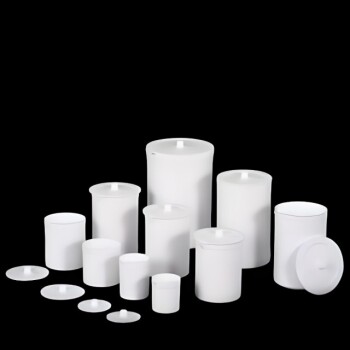
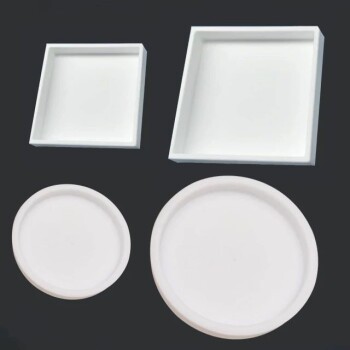
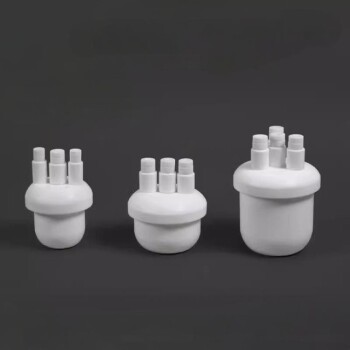
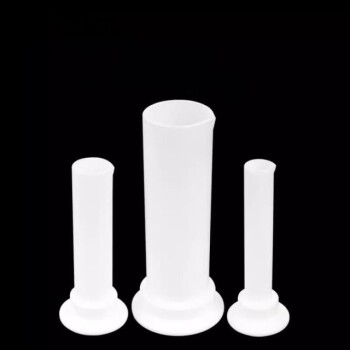
The synthesis of Copper Ferrite nanoparticles requires a Teflon-lined stainless steel high-pressure reactor to create the hydrothermal environment necessary for crystal formation. This specialized equipment allows for a sealed, high-temperature reaction that increases the solubility and reactivity of precursors, ensuring uniform nucleation. The Teflon liner is essential for protecting the reactor from corrosive reagents and preventing metal ion contamination, which guarantees the high purity of the final nanoparticles.
A Teflon-lined reactor acts as a high-pressure "pressure cooker" that enables chemical reactions at temperatures well above the boiling point of solvents. This environment is the only way to achieve the specific solubility and kinetic conditions required for Copper Ferrite to crystallize with high purity and controlled morphology.
Creating the Hydrothermal Environment
The synthesis of advanced nanomaterials like Copper Ferrite often relies on hydrothermal or solvothermal processes. These reactions must occur in a closed system to achieve the necessary physical conditions.
Overcoming Solubility Barriers
At standard atmospheric pressure, many precursor materials used in Copper Ferrite synthesis have limited solubility. The high-pressure reactor allows the solvent to reach temperatures above its boiling point, creating subcritical conditions that dramatically enhance the solubility and diffusion capacity of the reactants.
Driving Nucleation and Crystal Growth
The autogenous pressure generated inside the sealed reactor reduces the activation energy required for the reaction. This internal pressure promotes the thorough chelation of iron and copper ions, leading to uniform nucleation and the steady growth of regular crystal structures.
The Critical Role of the Teflon Liner
While the stainless steel vessel provides the mechanical strength to withstand high internal pressure, the Teflon (PTFE) liner is the component that makes the chemistry possible.
Protecting Chemical Purity
Copper Ferrite synthesis often involves reactive precursors and solvents that would otherwise react with the metal walls of the reactor. The chemical inertness of Teflon ensures that no iron, chromium, or nickel from the stainless steel leaches into the reaction, maintaining the precise stoichiometric purity of the nanoparticles.
Ensuring Structural Integrity
The Teflon liner acts as a sacrificial and replaceable barrier that prevents corrosion of the stainless steel shell. Without this liner, strong chemical reagents used in the synthesis would pit and weaken the steel vessel, eventually leading to catastrophic equipment failure under pressure.
Understanding the Trade-offs
While these reactors are essential, they come with specific limitations and risks that must be managed to ensure successful synthesis.
- Temperature Constraints: Teflon begins to soften and lose its structural integrity at temperatures exceeding 250°C. For reactions requiring higher heat, more expensive liners like PPL or gold-plated vessels may be necessary.
- The "Black Box" Problem: Because the reactor is a sealed metal vessel, researchers cannot observe the reaction in real-time. This requires precise timing and temperature calibration, as any errors in the heating profile can lead to non-uniform particle sizes.
- Safety Risks: High-pressure reactors store significant potential energy. Overfilling the Teflon liner (typically beyond 80% capacity) can lead to excessive pressure and the activation of safety rupture disks or vessel failure.
How to Apply This to Your Project
When selecting or using a reactor for Copper Ferrite synthesis, your choice should be dictated by your specific experimental requirements.
- If your primary focus is high purity: Ensure the Teflon liner is free of scratches or staining from previous experiments to prevent cross-contamination of metal ions.
- If your primary focus is uniform particle size: Prioritize a reactor with a high-quality heating jacket or oil bath to ensure a uniform thermal environment throughout the vessel.
- If your primary focus is high-yield production: Use a reactor with a larger internal volume but maintain a fill ratio of 60% to 80% to ensure sufficient headspace for pressure generation without over-pressurization.
By utilizing the unique high-pressure environment and chemical protection of a Teflon-lined reactor, you can reliably produce high-quality Copper Ferrite nanoparticles with predictable magnetic and catalytic properties.
Summary Table:
| Component | Key Function | Benefit for Copper Ferrite Synthesis |
|---|---|---|
| Stainless Steel Shell | Mechanical Strength | Withstands high autogenous pressure during hydrothermal processes. |
| Teflon (PTFE) Liner | Chemical Inertness | Prevents metal ion leaching and protects against corrosive precursors. |
| Sealed System | Subcritical Environment | Increases solvent boiling point to enhance precursor solubility and reaction kinetics. |
| Autogenous Pressure | Activation Energy Reduction | Drives uniform nucleation and controlled crystal morphology. |
Elevate Your Nanomaterial Research with KINTEK
Achieve uncompromising purity and precision in your hydrothermal synthesis. KINTEK specializes in high-performance laboratory solutions, offering a robust selection of high-temperature high-pressure reactors and autoclaves specifically designed to meet the rigorous demands of nanoparticle production.
Our Teflon-lined systems provide the perfect balance of mechanical strength and chemical resistance, ensuring your Copper Ferrite synthesis is free from contamination and equipment failure. Beyond reactors, we provide a comprehensive range of crushing and milling systems, centrifuges, and furnaces to support your entire material science workflow.
Ready to optimize your lab's performance?
Contact KINTEK today to find the ideal reactor configuration for your project and benefit from our expert technical support and premium laboratory consumables.
References
- Rasha Khalid Sabri Mhemid, Mohammed Salim Shihab. Decontamination of Metronidazole Antibiotic – A Novel Nanocomposite-Based Strategy. DOI: 10.12911/22998993/168500
This article is also based on technical information from Kintek Solution Knowledge Base .
Related Products
- Stainless High Pressure Autoclave Reactor Laboratory Pressure Reactor
- Custom PTFE Teflon Parts Manufacturer for Reagent Wide Mouth Fine Mouth Sample High Temperature Bottles
- Custom PTFE Teflon Parts Manufacturer for Hydrothermal Synthesis Reactor Polytetrafluoroethylene Carbon Paper and Carbon Cloth Nano-growth
- Mini SS High Pressure Autoclave Reactor for Laboratory Use
- Custom PTFE Teflon Parts Manufacturer for Microwave Digestion Tank
People Also Ask
- Why is a laboratory high-pressure reactor necessary for synthesizing fly ash-based zeolite? Achieve Pure Crystallization
- Why is a laboratory high-pressure reactor used in the hydrothermal synthesis of hydroxyapatite catalysts?
- What role does a laboratory high-pressure reactor play in the leaching process of spent cathode materials? Optimize Recovery
- What conditions do laboratory high-pressure reactors provide for HTC? Optimize Your Biochar Production Processes
- How are high-pressure reactors used to prepare metaphosphate electrocatalysts? Master In-Situ Precursor Growth