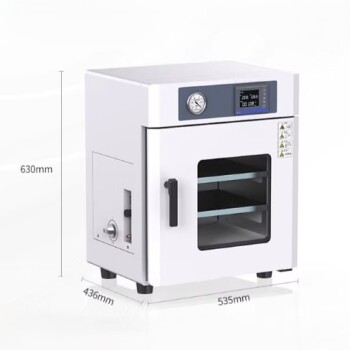
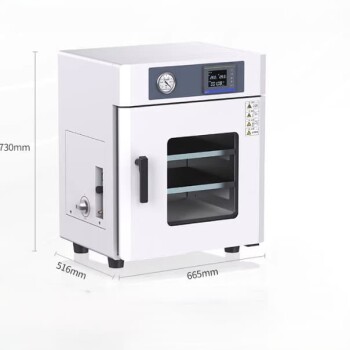
The critical necessity of a vacuum oven for conductive polymers like PEDOT and PANI stems from its ability to manipulate thermodynamic conditions to favor evaporation without high heat.
By lowering the ambient pressure, the oven significantly reduces the boiling points of residual solvents such as methanol, hydrochloric acid (HCl), and moisture. This allows you to rapidly purge these contaminants at safe temperatures (e.g., 60°C), preventing the structural and chemical degradation that inevitably occurs during standard high-temperature drying.
Core Insight: Vacuum drying is not simply about accelerating the process; it is a preservation strategy. It decouples evaporation from extreme heat, ensuring that the conductive polymer's doping state—and therefore its electrochemical utility—remains intact while achieving high purity.
The Physics of Preservation
To understand why a standard convection oven is insufficient for conductive polymers (CPs), you must look at the relationship between pressure and phase change.
Lowering the Boiling Point
In a standard environment, removing solvents like methanol or aqueous HCl requires heating the material to near their boiling points (65°C to 100°C+ at 1 atm).
Under vacuum, the vapor pressure required for these liquids to boil is reached at significantly lower temperatures. This allows efficient solvent removal at mild thermal settings, often around 60°C.
Preventing Thermal Degradation
Conductive polymers are organic materials with conjugated backbones that are sensitive to thermal stress. High temperatures can cause chain scission or cross-linking.
By utilizing vacuum pressure, you eliminate the need to expose the polymer to the thermal thresholds that trigger these degradation mechanisms.
Protecting Electrochemical Performance
The primary goal of synthesizing PEDOT or PANI is usually to utilize their electrical conductivity or electrochemical activity. The drying phase is where these properties are often lost if not handled correctly.
Inhibiting Oxidation
Heat and oxygen are a destructive combination for CPs. Heating these powders in the presence of air can lead to rapid oxidative degradation.
A vacuum oven operates in an oxygen-deprived environment. This prevents atmospheric oxygen from reacting with the polymer backbone or the dopant molecules during the heating process.
Preserving Doping States
The conductivity of polymers like PANI and PEDOT relies heavily on their "doping" state (the presence of charge carriers).
Excessive heat can de-dope the material, effectively turning a conductor into an insulator. Vacuum drying maintains the electrochemical activity required for future applications, such as supercapacitors or composite fillers.
Clearing Micro-Pores
Though often overlooked, effective drying preserves the material's surface area.
Just as with Covalent Organic Frameworks (COFs) or other porous materials, residual solvents can block the microscopic pores of the polymer. Vacuum drying ensures deep extraction of these residuals, keeping the active surface area accessible for electrolyte interaction in future applications.
Understanding the Trade-offs
While vacuum drying is superior for CPs, it introduces specific challenges that must be managed to ensure equipment longevity and safety.
Corrosive Vapors and Pump Damage
The primary reference notes the removal of hydrochloric acid (HCl). When HCl evaporates inside the oven, it travels directly to your vacuum pump.
Standard rotary vane pumps can be rapidly destroyed by acidic vapors. You must use a chemical-resistant diaphragm pump or a cold trap to condense the acid before it reaches the pump mechanism.
The Risk of Over-Drying
While low temperature minimizes risk, the high-vacuum environment is aggressive.
Extreme vacuum levels applied for too long can sometimes induce physical stress on the powder particles. It is essential to monitor the drying curve and stop once the mass stabilizes, rather than drying indefinitely.
Making the Right Choice for Your Goal
The settings you choose for your vacuum oven should depend on your specific synthesis byproducts and end-goals.
- If your primary focus is Electrochemical Conductivity: Prioritize the lowest effective temperature (e.g., <60°C) to protect the doping agents and prevent thermal de-doping.
- If your primary focus is Purity and Stoichiometry: Ensure your vacuum pump is chemically resistant to HCl and allow sufficient time for deep pore evacuation to remove all solvent mass.
Ultimately, the vacuum oven is the gatekeeper of your material's quality, ensuring that the delicate chemistry achieved during synthesis is not undone by the physics of drying.
Summary Table:
| Feature | Vacuum Drying Benefits for CPs | Impact on Material Quality |
|---|---|---|
| Temperature Control | Efficient solvent removal at low heat (e.g., 60°C) | Prevents chain scission and thermal degradation |
| Atmospheric Shielding | Oxygen-deprived environment | Inhibits oxidative degradation of conjugated backbones |
| Doping Preservation | Low-thermal threshold processing | Maintains electrochemical activity and conductivity |
| Pore Integrity | Deep extraction of residual solvents/acids | Preserves surface area for electrolyte interaction |
Elevate Your Material Research with KINTEK Precision
Don't let improper drying compromise the conductivity of your PEDOT or PANI synthesis. KINTEK specializes in advanced laboratory solutions designed for delicate chemical processes. From chemical-resistant vacuum ovens and high-performance cold traps to protect your equipment from acidic vapors, to our comprehensive range of crushing, milling, and electrochemical research tools, we provide the precision you need to maintain the integrity of your conductive polymers.
Ready to optimize your drying protocol? Contact KINTEK today to find the perfect vacuum system and consumables for your lab!
References
- V. Yuste‐Sanchez, Raquel Verdejo. Dielectric Properties of All-Organic Coatings: Comparison of PEDOT and PANI in Epoxy Matrices. DOI: 10.3390/jcs4010026
This article is also based on technical information from Kintek Solution Knowledge Base .
Related Products
- 23L Laboratory Vacuum Drying Oven
- 56L Vertical Laboratory Vacuum Drying Oven
- Vacuum Heat Treat Sintering Brazing Furnace
- 2200 ℃ Graphite Vacuum Heat Treat Furnace
- Ultra-High Temperature Graphite Vacuum Graphitization Furnace
People Also Ask
- Why is a laboratory vacuum drying oven recommended for rice straw residues? Protect Your Biomass Integrity
- What role does a laboratory vacuum drying oven play in the preparation of modified multi-walled carbon nanotubes?
- What is the importance of using a laboratory vacuum drying oven? Preserving Slow-Release Microcapsule Integrity
- Why is a Laboratory Vacuum Drying Oven recommended for PBAT microspheres? Protect Sensitive Polymer Integrity
- What role does a laboratory vacuum drying oven play in processing nanoparticle powder samples? Protect Sample Integrity