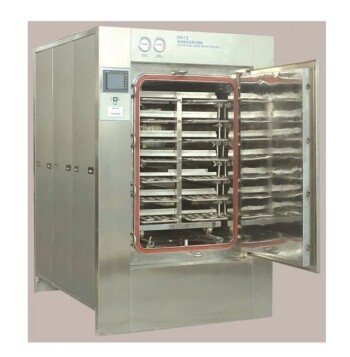
An autoclave acts as the fundamental sterilization gatekeeper in the preparation of an Immobilized Cell Reactor (ICR). It utilizes high-pressure saturated steam at 121°C to completely sterilize both the reactor body and its internal polymer matrix components before the experiment begins.
Core Takeaway The autoclave is not just for cleanliness; it is a tool for scientific validation. By eliminating all background microbial contamination, it ensures that any observed performance—specifically metal removal—is strictly attributable to your specific bacterial strains, rather than accidental environmental contaminants.
The Mechanics of Sterilization
Using High-Pressure Steam
The autoclave subjects the ICR components to saturated steam at a temperature of 121°C.
This specific temperature and pressure combination is the industry standard for destroying biological agents.
Penetrating the Matrix
The high pressure forces steam into the complex structure of the polymer matrix.
This ensures that the sterilization is not merely superficial but reaches deep into the internal components where bacteria will later be immobilized.
Ensuring Scientific Integrity
Eliminating Variables
In any biological experiment, unknown variables are the enemy of reliable data.
The autoclave process removes potential microbial contamination that naturally exists on equipment and materials.
Validating Metal Removal Performance
ICR systems are often used to test specific biological functions, such as the ability to remove metals from a solution.
If the reactor is not sterile, "wild" bacteria could contribute to this metal removal.
Attributing Cause and Effect
To prove that your specific inoculated bacterial strains are doing the work, the environment must start as a blank slate.
Autoclaving guarantees that the results you record are strictly attributable to the strains you introduced.
Critical Considerations and Requirements
Material Compatibility
While the autoclave is necessary for biology, it places stress on materials.
The polymer matrix and reactor body must be robust enough to withstand 121°C without melting or deforming.
The Risk of Compromised Data
Failing to autoclave does not just risk "dirty" equipment; it risks invalidating the entire study.
Without this step, it is impossible to claim with certainty that your selected biological agent is responsible for the reactor's efficiency.
Making the Right Choice for Your Project
The use of an autoclave is a non-negotiable step in establishing a controlled experimental environment.
- If your primary focus is Data Accuracy: You must autoclave to ensure that metal removal metrics are the direct result of your inoculated strains, not background noise.
- If your primary focus is System Design: You must select polymer matrices and reactor materials that are chemically and physically stable at 121°C.
Sterilization is the baseline requirement that transforms a physical vessel into a valid scientific instrument.
Summary Table:
| Feature | Autoclave Requirement | Impact on ICR Performance |
|---|---|---|
| Sterilization Agent | Saturated Steam at 121°C | Destroys all background biological agents |
| Matrix Penetration | High-Pressure Delivery | Reaches internal polymer structures for deep sterilization |
| Data Integrity | Baseline Neutralization | Ensures results are attributable solely to inoculated strains |
| Material Resilience | Thermal Stability | Reactor and matrix must withstand high-temp stress |
Elevate Your ICR Research with Precision Sterilization
Don't let background contamination compromise your scientific integrity. KINTEK specializes in advanced laboratory solutions, offering robust high-temperature high-pressure reactors and autoclaves designed to meet the rigorous demands of Immobilized Cell Reactor (ICR) preparation.
Whether you are developing complex polymer matrices or conducting metal removal studies, our high-performance autoclaves ensure your system starts as a blank slate for accurate, publishable data. Pair your reactor with our premium consumables, including PTFE products, ceramics, and crucibles, or explore our full range of high-temperature furnaces and hydraulic presses for material synthesis.
Ready to ensure the highest standards of experimental validation? Contact KINTEK today to find the perfect sterilization solution for your lab!
References
- BİNNUR KIRATLI HERAND, Melek Özkan. Continuous metal bioremoval by new bacterial isolates in immobilized cell reactor. DOI: 10.1007/s13213-013-0705-y
This article is also based on technical information from Kintek Solution Knowledge Base .
Related Products
- Portable High Pressure Laboratory Autoclave Steam Sterilizer for Lab Use
- Laboratory Horizontal Autoclave Steam Sterilizer Lab Microcomputer Sterilizer
- Desktop Fast High Pressure Laboratory Autoclave Sterilizer 16L 24L for Lab Use
- Portable Digital Display Automatic Laboratory Sterilizer Lab Autoclave for Sterilization Pressure
- Desktop Fast Laboratory Autoclave Sterilizer 35L 50L 90L for Lab Use
People Also Ask
- Why is a laboratory high-pressure autoclave sterilizer necessary? Ensure Accuracy in Antibacterial Research
- What is the role of a laboratory high-pressure autoclave in the conversion of furfural to piperidine? Optimize Yields
- What are the two types of autoclave used in the laboratory? Gravity vs. Pre-Vacuum Explained
- What precautions should be taken during autoclave in laboratory? A Complete Safety Guide to Prevent Burns and Explosions
- What extreme conditions does a laboratory autoclave simulate? Testing Wear Resistance of Nuclear Fuel Cladding