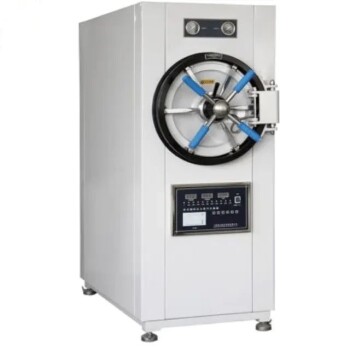
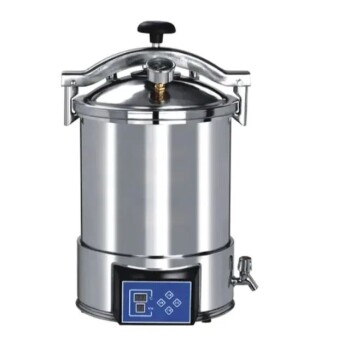
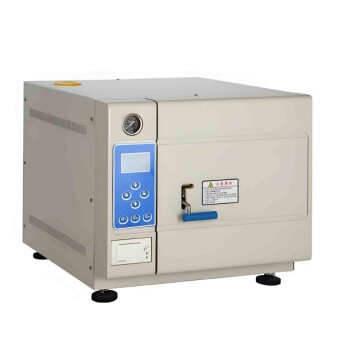
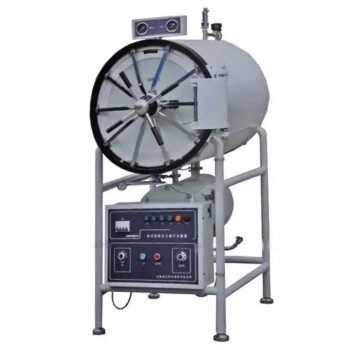
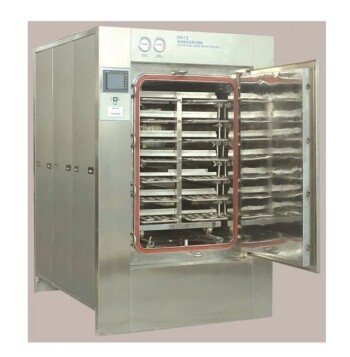
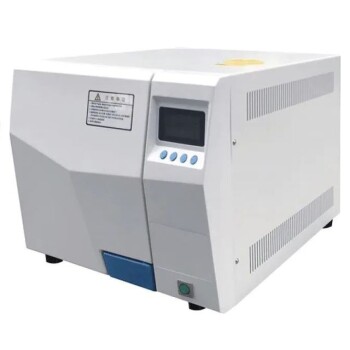
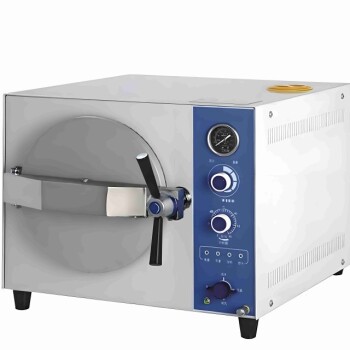
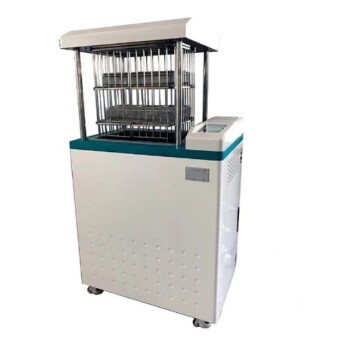
An autoclave acts as the critical gatekeeper for experimental validity. By subjecting stainless steel coupons to a rigorous environment of high temperature and pressure, it completely eradicates all background microorganisms to create a sterile baseline. This ensures the surface is truly clean before specific bacteria, such as Staphylococcus aureus or Listeria monocytogenes, are introduced for analysis.
The primary purpose of autoclaving is to isolate the test variable, ensuring that observed antimicrobial results are caused exclusively by the specific agent being tested (e.g., silver ions) rather than environmental contamination.
The Mechanics of Sterilization
Establishing a High-Energy Environment
To prepare stainless steel coupons effectively, mere cleaning is insufficient; true sterilization is required. An autoclave utilizes high temperature and high pressure to penetrate the surface irregularities of the metal. This extreme environment is necessary to destroy resilient microbial life forms that standard cleaning might miss.
Elimination of Background Flora
The goal is to achieve a state of total sterility by eliminating all background microorganisms. Any bacteria or fungi naturally present on the steel coupons would compete with the test organisms or alter the chemical environment. Autoclaving removes this biological "noise," leaving the coupon essentially blank.
Ensuring Experimental Integrity
Creating a Controlled Inoculation Surface
Once the coupon is sterile, researchers can introduce specific test pathogens, such as Listeria monocytogenes or Staphylococcus aureus, with confidence. Because the background flora has been removed, the starting population of bacteria is known and controlled. This precision allows for accurate measurement of bacterial reduction over time.
Isolating the Antimicrobial Variable
The core objective of this testing is often to verify the efficacy of implanted agents, such as silver ions. If the coupon is not autoclaved, it becomes impossible to distinguish whether cell death is caused by the silver ions or by contamination. Sterilization isolates the variable, confirming that any antimicrobial effect is derived solely from the treated steel.
The Risks of Inadequate Preparation
Data Contamination
If the sterilization step is bypassed or performed incorrectly, the integrity of the entire experiment is compromised. Environmental contamination introduces unknown variables that skew results, leading to false positives or negatives regarding the steel's antimicrobial properties.
Inability to Verify Causality
Without a sterile baseline, you cannot scientifically prove causality. You lose the ability to assert that the implanted silver ions are the mechanism of action. This lack of certainty renders the resulting data unsuitable for validation or regulatory approval.
Ensuring Reliable Antimicrobial Data
To ensure your test results are both accurate and defensible, consider the following regarding your preparation protocols:
- If your primary focus is Data Accuracy: Prioritize autoclaving to eliminate environmental noise, ensuring that any reduction in bacterial growth is statistically attributable to the antimicrobial agent.
- If your primary focus is Process Validation: Use the autoclave step to prove that your baseline material was sterile before inoculation, verifying the specific activity of agents like silver ions.
A rigorous sterilization protocol is the only way to transform a piece of steel into a reliable scientific instrument.
Summary Table:
| Step | Purpose | Benefit |
|---|---|---|
| Sterilization | High temperature & pressure | Eradicates all resilient background microorganisms |
| Baseline Creation | Eliminate biological noise | Provides a blank slate for specific pathogen inoculation |
| Variable Isolation | Identify cause of cell death | Confirms efficacy of agents like silver ions vs. contamination |
| Validation | Data integrity | Ensures results are defensible for regulatory approval |
Elevate Your Laboratory Precision with KINTEK
Don't let environmental contamination compromise your research integrity. KINTEK specializes in high-performance laboratory equipment designed to meet the rigorous demands of antimicrobial testing and material science.
Our comprehensive range of high-temperature high-pressure reactors and autoclaves ensures a sterile baseline for every experiment, while our specialized consumables like PTFE products, ceramics, and crucibles provide the durability your lab requires. Whether you are testing silver-ion efficacy or developing new antimicrobial surfaces, KINTEK offers the crushing, milling, and thermal solutions needed for reliable, defensible data.
Ready to optimize your sterilization protocols? Contact us today to find the perfect equipment for your lab!
References
- Caroline Isabel Kothe, Eduardo César Tondo. Silver implantation on AISI 304 stainless steel surface using low-energy doses and the antimicrobial effect against Salmonella Enteritidis and Listeria monocytogenes. DOI: 10.25177/jfst.5.5.ra.10674
This article is also based on technical information from Kintek Solution Knowledge Base .
Related Products
- Portable High Pressure Laboratory Autoclave Steam Sterilizer for Lab Use
- Laboratory Horizontal Autoclave Steam Sterilizer Lab Microcomputer Sterilizer
- Desktop Fast High Pressure Laboratory Autoclave Sterilizer 16L 24L for Lab Use
- Portable Digital Display Automatic Laboratory Sterilizer Lab Autoclave for Sterilization Pressure
- Desktop Fast Laboratory Autoclave Sterilizer 35L 50L 90L for Lab Use
People Also Ask
- Why is a laboratory high-pressure autoclave sterilizer necessary? Ensure Accuracy in Antibacterial Research
- What is the role of a laboratory high-pressure autoclave in the conversion of furfural to piperidine? Optimize Yields
- What are the two types of autoclave used in the laboratory? Gravity vs. Pre-Vacuum Explained
- What precautions should be taken during autoclave in laboratory? A Complete Safety Guide to Prevent Burns and Explosions
- What extreme conditions does a laboratory autoclave simulate? Testing Wear Resistance of Nuclear Fuel Cladding