The sterility of your substrate is the deciding factor in the success of your fermentation process. An autoclave is required to treat biomass hydrolysate because it provides a high-pressure saturated steam environment that completely eliminates potential microbial contamination. By maintaining a temperature of 121 °C for 30 minutes, this process creates the necessary blank slate for your specific yeast strain to function effectively.
Core Takeaway Autoclaving creates a sterile environment that prevents foreign bacteria from competing with yeast for essential sugar sources. This elimination of competition is the primary mechanism for ensuring high bioethanol yield during fermentation.
The Mechanics of Sterilization
To understand why the autoclave is non-negotiable, one must look at the physical requirements of true sterilization.
High-Pressure Saturated Steam
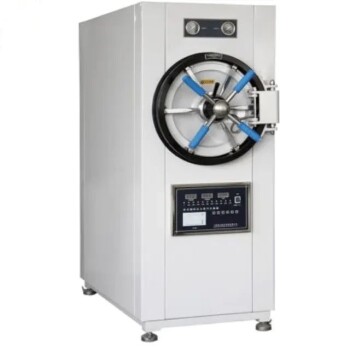
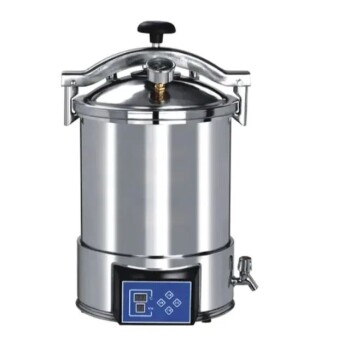
The autoclave generates a specific environment of high-pressure saturated steam. This allows the chamber to reach temperatures that boiling water alone cannot achieve.
The 121 °C Standard
To ensure the destruction of contaminants, the hydrolysate must be subjected to 121 °C. The standard duration for this treatment is 30 minutes.
Total Microbial Elimination
This combination of time, heat, and pressure is required to kill robust microbial life. It ensures the complete elimination of any bacteria or fungi naturally present in the biomass.
Protecting the Fermentation Process
The purpose of sterilization is not just cleanliness; it is about resource management within the chemical reaction.
Preventing Resource Competition
Biomass hydrolysate is rich in sugars, which act as the fuel for fermentation. Foreign bacteria, if left alive, will aggressively consume these sugar sources.
Safeguarding the Sugar Supply
If bacteria compete for the sugar, less fuel remains for the yeast. Autoclaving removes these competitors to ensure the sugar is available exclusively for the intended fermentation agents.
Creating a Monoculture
The goal is to cultivate a specific yeast, typically Saccharomyces cerevisiae. A sterile environment allows this yeast to grow without interference from aggressive wild strains.
Ensuring Process Efficiency
Ultimately, the use of an autoclave translates directly to the output metrics of your project.
Maximizing Bioethanol Yield
The presence of contaminants correlates directly with lower production numbers. By eliminating competition, you maximize the biological conversion of sugar into ethanol.
Consistency of Results
Sterilization removes the variable of random bacterial growth. This ensures that yield fluctuations are due to process parameters, not biological contamination.
Understanding the Trade-offs
While autoclaving is essential for yield, it introduces specific constraints that must be managed.
Energy and Time Intensity
Running an autoclave cycle at 121 °C for 30 minutes is energy-intensive. It also adds a mandatory waiting period to the production workflow.
Equipment Dependency
The process relies heavily on the proper calibration of the autoclave. If the equipment fails to maintain pressure or temperature for the full duration, the "sterility" becomes a false assumption.
Making the Right Choice for Your Goal
To maximize the efficiency of your bioethanol production, apply these principles to your workflow:
- If your primary focus is Process Purity: Strictly adhere to the 121 °C temperature requirement to ensure no foreign bacteria survive to contaminate the batch.
- If your primary focus is Maximum Yield: Ensure the full 30-minute duration is met so Saccharomyces cerevisiae has zero competition for the sugar source.
A sterile foundation is the single most important factor in predicting a successful, high-yield fermentation outcome.
Summary Table:
| Parameter | Specification | Purpose in Fermentation |
|---|---|---|
| Temperature | 121 °C | Total elimination of robust microbial life |
| Time | 30 Minutes | Ensures heat penetration for complete sterilization |
| Medium | High-Pressure Saturated Steam | Achieves temperatures above boiling for deep sterilization |
| Target Contaminant | Bacteria & Wild Fungi | Prevents consumption of sugar sources by foreign microbes |
| Core Objective | Sterile Substrate | Provides a blank slate for Saccharomyces cerevisiae |
Secure Your Fermentation Success with KINTEK
Don't let microbial contamination compromise your bioethanol yield. KINTEK specializes in advanced laboratory solutions designed for high-stakes research and production. Our high-performance high-temperature high-pressure reactors and autoclaves provide the precision and reliability needed to ensure a perfectly sterile environment for your biomass hydrolysate.
From precise high-temperature furnaces and crushing systems to professional-grade PTFE and ceramic consumables, KINTEK provides the comprehensive toolkit required for excellence in battery research, material science, and bio-processing.
Ready to maximize your process efficiency? Contact our laboratory equipment experts today to find the perfect sterilization and processing solution for your facility.
References
- Nurfahmi, S.M. Ashrafur Rahman. Production Process and Optimization of Solid Bioethanol from Empty Fruit Bunches of Palm Oil Using Response Surface Methodology. DOI: 10.3390/pr7100715
This article is also based on technical information from Kintek Solution Knowledge Base .
Related Products
- Portable High Pressure Laboratory Autoclave Steam Sterilizer for Lab Use
- Laboratory Horizontal Autoclave Steam Sterilizer Lab Microcomputer Sterilizer
- Desktop Fast High Pressure Laboratory Autoclave Sterilizer 16L 24L for Lab Use
- Portable Digital Display Automatic Laboratory Sterilizer Lab Autoclave for Sterilization Pressure
- Desktop Fast Laboratory Autoclave Sterilizer 35L 50L 90L for Lab Use
People Also Ask
- Why is a laboratory high-pressure autoclave sterilizer necessary? Ensure Accuracy in Antibacterial Research
- What is the role of a laboratory high-pressure autoclave in the conversion of furfural to piperidine? Optimize Yields
- What are the two types of autoclave used in the laboratory? Gravity vs. Pre-Vacuum Explained
- What precautions should be taken during autoclave in laboratory? A Complete Safety Guide to Prevent Burns and Explosions
- What extreme conditions does a laboratory autoclave simulate? Testing Wear Resistance of Nuclear Fuel Cladding