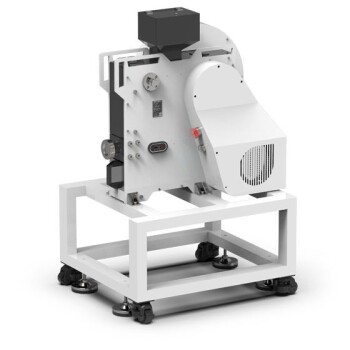
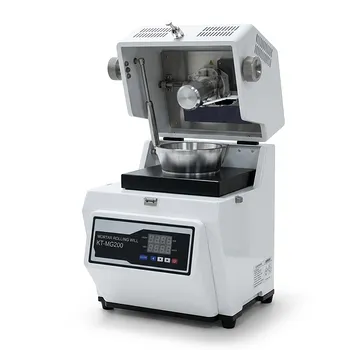
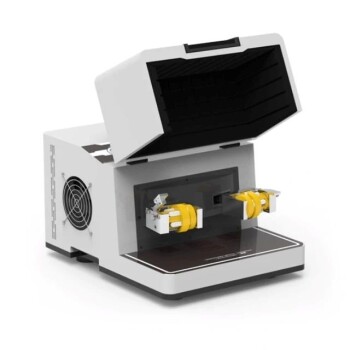
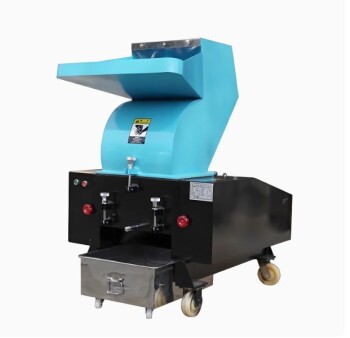
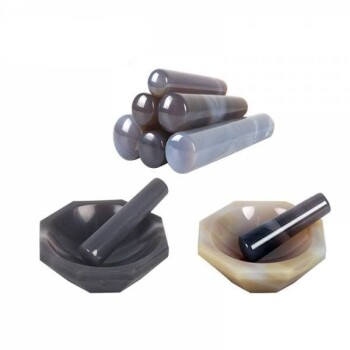
Industrial-grade grinders and crushers are used to transform bulky, irregular biomass into a fine, uniform powder to optimize the pyrolysis process. By significantly increasing the specific surface area of the raw material, these machines ensure rapid and uniform heat transfer throughout the biomass. This physical refinement is essential for achieving consistent chemical reactions and high-quality biochar.
Pre-pyrolysis grinding eliminates thermal gradients within biomass particles, ensuring that heat penetrates to the core of every fragment simultaneously. This uniformity is the fundamental requirement for producing biochar with predictable physicochemical properties and a well-developed pore structure.
The Role of Surface Area in Thermal Conversion
Accelerating Heat Transfer
Grinding biomass into fine particles—often smaller than 1mm to 3mm—dramatically increases the material's specific surface area. This allows the thermal energy within the pyrolysis reactor to contact a much larger percentage of the material's mass at once.
As a result, the biomass reaches its required reaction temperature far more quickly than unprocessed material. This speed is critical for maintaining efficient energy consumption and high throughput in industrial operations.
Ensuring Uniform Core Penetration
In large, coarse biomass fragments, the exterior often carbonizes while the core remains under-processed due to poor thermal conductivity. Grinding ensures that heat is transferred rapidly and uniformly to the core of every particle.
This uniform penetration prevents "cold spots" during the reaction. By ensuring the entire particle undergoes the same thermal experience, the process yields a homogenous final product.
Impact on Biochar Quality and Consistency
Homogeneity of Physicochemical Properties
Consistency is the primary metric for high-grade biochar, especially for industrial or agricultural applications. Mechanical refinement ensures that the resulting biochar maintains consistent physicochemical properties across the entire batch.
Without this uniformity, the biochar might exhibit varied carbon content or unstable chemical structures. Grinding provides the ideal physical form for predictable results in every production cycle.
Optimizing Pore Structure Development
The development of a biochar’s pore structure is highly dependent on how reaction gases and heat interact with the material. Fine grinding facilitates the uniform penetration of heat and activation gases, such as carbon dioxide.
This leads to a more consistent development of pores, which is vital for applications like filtration or soil enhancement. A refined particle size ensures the final biochar has the high surface area needed for effective adsorption.
Process Efficiency and Material Handling
Increasing Chemical Reaction Rates
By reducing the physical barriers to heat and gas diffusion, grinding significantly increases the chemical reaction rate. This allows the pyrolysis process to proceed at a faster pace without sacrificing quality.
Increased reaction kinetics lead to better conversion efficiency, turning more of the raw biomass into usable biochar. This efficiency is a cornerstone of profitable, large-scale biochar production.
Integration with Additives and Binders
If the biochar is intended for modification or pelletization, a fine powder is a technical necessity. It allows for high uniformity when mixing carbon powder with binders or chemical modifiers like calcium sources.
Consistent mixing ensures that any subsequent chemical modification processes are effective throughout the entire batch. This level of refinement is necessary to produce high-strength activated carbon pellets or specialized modified biochars.
Understanding the Trade-offs
Energy Consumption and Costs
While grinding improves pyrolysis efficiency, the grinding process itself requires significant mechanical energy. The cost of operating high-capacity industrial grinders must be balanced against the gains in biochar quality.
Processing material to an excessively fine size (e.g., below 0.12 mm) can increase operational costs and maintenance requirements for the grinding equipment. Producers must determine the "optimal" particle size that balances energy input with product performance.
Dust Management and Safety
Reducing biomass to a fine powder introduces the challenge of dust control within the facility. Fine biomass dust is highly combustible and requires sophisticated separation and filtration equipment to ensure a safe working environment.
Furthermore, extremely fine powders can lead to material loss during transport or within the reactor if the airflow is not precisely managed. Proper integration with feeding and separation equipment is mandatory.
How to Apply This to Your Project
Making the Right Choice for Your Goal
The degree of grinding required depends largely on your intended end-use and the scale of your production.
- If your primary focus is high-surface-area activated carbon: Grind the material to a fine powder (less than 0.12 mm to 1 mm) to ensure maximum pore development and uniform activation.
- If your primary focus is large-scale agricultural soil amendments: Target a consistent millimeter-sized particle (below 3 mm) to balance energy costs with the need for uniform heating.
- If your primary focus is experimental reproducibility: Use a high-speed milling system to ensure absolute uniformity in particle size, which will stabilize reaction kinetics and improve data accuracy.
The mechanical refinement of biomass is not merely a preparation step, but a critical control mechanism for the entire thermochemical conversion process.
Summary Table:
| Key Factor | Impact on Pyrolysis Process | Resulting Biochar Quality |
|---|---|---|
| Increased Surface Area | Rapid and uniform heat absorption | Higher conversion efficiency |
| Uniform Particle Size | Eliminates thermal gradients and cold spots | Consistent physicochemical properties |
| Fine Particle Milling | Accelerates chemical reaction kinetics | Enhanced pore structure and adsorption |
| Material Homogeneity | Stable, predictable thermochemical reactions | Superior-grade, uniform final product |
Optimize Your Biomass Thermal Conversion with KINTEK
Achieving the perfect biochar starts with precise material preparation. KINTEK provides high-performance crushing and milling systems designed to transform irregular biomass into the uniform powder required for efficient pyrolysis.
Pair our grinding solutions with our industry-leading range of high-temperature furnaces (muffle, vacuum, tube, and atmosphere) and high-pressure reactors to gain total control over your carbonization process. From laboratory-scale research to industrial production, KINTEK offers the specialized equipment—including hydraulic presses and essential ceramics—needed to ensure consistent, high-quality results.
Ready to enhance your production efficiency and biochar quality? Contact KINTEK today to find the ideal equipment for your laboratory or industrial facility!
References
- Wei Zhang, Yong Sik Ok. Machine learning based prediction and experimental validation of arsenite and arsenate sorption on biochars. DOI: 10.1016/j.scitotenv.2023.166678
This article is also based on technical information from Kintek Solution Knowledge Base .
Related Products
- Laboratory Jaw Crusher
- Laboratory Grinding Mill Mortar Grinder for Sample Preparation
- Laboratory High Throughput Tissue Grinding Mill Grinder
- Laboratory Hybrid Tissue Grinding Mill
- Powerful Plastic Crusher Machine
People Also Ask
- What role do laboratory crushers and standard sieves play in Datura stramonium pretreatment? Optimize Your HTL Yield
- What is a laboratory crusher? The First Step to Accurate Sample Analysis
- What is the primary function of a laboratory crusher? Optimize Biomass & Coal Co-Gasification Efficiency
- What is a jaw crusher for labs? The Essential First Step for Accurate Sample Analysis
- How does a jaw crusher contribute to the primary processing of slate waste? Optimize Your Size Reduction Workflow