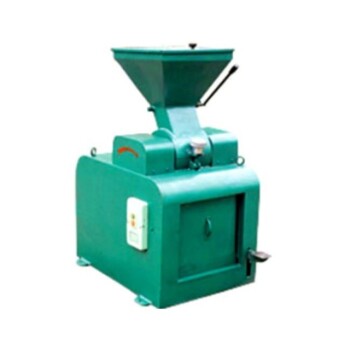
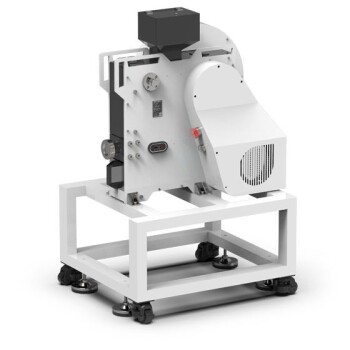
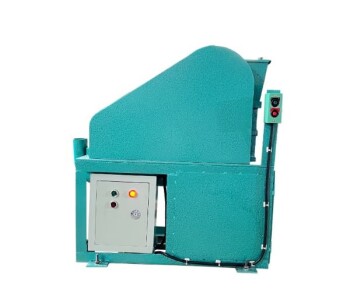
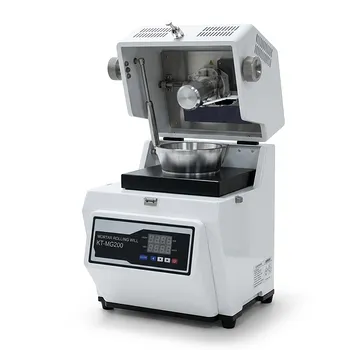
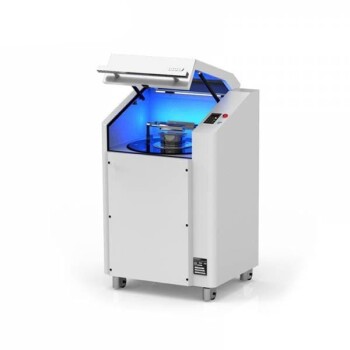
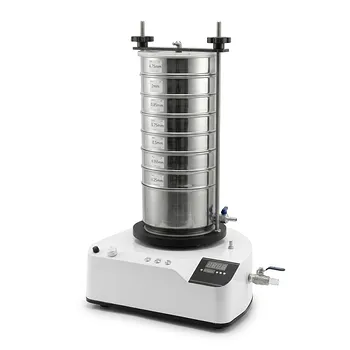
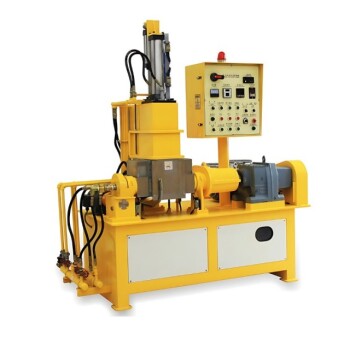
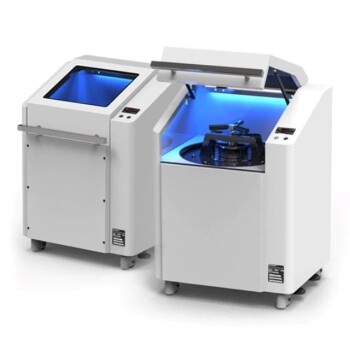
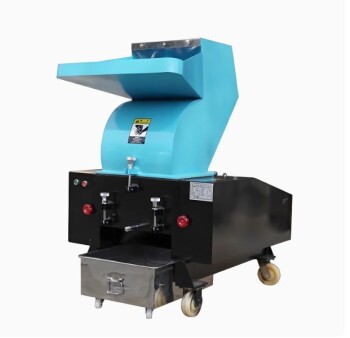
The primary function of a laboratory crusher is the controlled size reduction of raw materials. specifically reducing corn stover and sub-bituminous coal to a particle range typically between 25 micrometers and 1 millimeter. This mechanical process is the foundational step in preparing samples for both analytical instrumentation and actual co-gasification experiments.
Core Insight: The value of a laboratory crusher is not merely in breaking things down, but in maximizing specific surface area. By precisely controlling particle size, you unlock the material's potential for efficient heat and mass transfer, which is the governing factor in successful thermochemical conversion.
The Mechanics of Preparation
Achieving Precise Particle Ranges
To prepare for co-gasification, raw heterogeneous materials must be homogenized. The crusher takes fibrous corn stover and brittle sub-bituminous coal and reduces them to a standardized size.
This output typically falls within the 25 micrometer to 1 millimeter range.
Ensuring Sample Consistency
Reliable experimentation requires that both the biomass (corn stover) and the fossil fuel (coal) interact predictably.
If particle sizes vary too widely, the two materials will segregate or react at vastly different rates. The crusher ensures both feedstocks meet the same geometric standards.
Why Particle Size Drives Gasification Efficiency
Increasing Specific Surface Area
The physical reduction of the sample has a direct chemical consequence: it drastically increases the specific surface area available for reaction.
Larger chunks of coal or corn stover "hide" their inner mass from the reaction zone. Crushing exposes this internal mass to the process environment immediately.
Enhancing Heat and Mass Transfer
Gasification is a thermochemical process that relies on heat penetrating the particle and volatile gases escaping it.
Small, crushed particles facilitate rapid heat transfer into the material's core. Simultaneously, they improve mass transfer, allowing reactant gases to penetrate and product gases to exit efficiently.
Facilitating Analytical Accuracy
Beyond the reaction itself, the crushed state is critical for the instrumentation used to monitor the process.
Analytical devices often require fine powders to provide accurate readings. A properly crushed sample ensures that the data collected regarding reaction kinetics is representative of the whole material, rather than an artifact of a specific, oddly shaped chunk.
Understanding the Trade-offs
The Risk of Over-Fining
While smaller is generally better for surface area, there is a lower limit to effective crushing.
Reducing material to ultra-fine dust (below the 25-micrometer threshold) can introduce handling difficulties or issues with feed systems in experimental setups.
Uniformity vs. Average Size
A common pitfall is focusing solely on the average size while ignoring the size distribution.
A crusher that produces a mix of dust and large shards will result in uneven gasification rates. The goal is a narrow distribution where the majority of particles fall strictly within the target range.
How to Apply This to Your Project
When preparing feedstocks for co-gasification, your approach to crushing should be dictated by your specific experimental endpoint.
- If your primary focus is reaction kinetics: Aim for the lower end of the size spectrum (closer to 25 micrometers) to minimize heat transfer limitations and isolate the chemical reaction rate.
- If your primary focus is industrial simulation: Target a slightly coarser range (up to 1 millimeter) to better replicate the conditions and mass transfer challenges found in real-world gasifiers.
Ultimately, the laboratory crusher transforms raw, unpredictable feedstocks into a uniform scientific variable, enabling reproducible and quantifiable energy data.
Summary Table:
| Parameter | Target Range / Detail | Impact on Co-Gasification |
|---|---|---|
| Primary Function | Controlled size reduction | Ensures material homogeneity and consistency. |
| Particle Size Range | 25 μm to 1 mm | Maximizes specific surface area for faster reactions. |
| Mechanical Goal | Increasing Surface Area | Enhances heat penetration and mass transfer rates. |
| Material Focus | Corn Stover & Sub-bituminous Coal | Prevents segregation and ensures uniform reaction rates. |
| Analytical Benefit | Representative Powders | Increases accuracy of reaction kinetics data. |
Elevate Your Feedstock Preparation with KINTEK Precision
Achieving the perfect particle size distribution is critical for reliable co-gasification and thermochemical research. KINTEK specializes in high-performance crushing and milling systems and sieving equipment designed to handle diverse materials from fibrous biomass like corn stover to brittle sub-bituminous coal.
Our comprehensive laboratory portfolio—including high-temperature furnaces, hydraulic presses, and advanced reactors—is engineered to provide researchers and industrial labs with the consistency needed for breakthrough results. Don't let inconsistent sample preparation compromise your data.
Ready to optimize your lab's efficiency? Contact KINTEK today to find the ideal crushing and material processing solution for your specific application.
References
- Anthony Anukam, Edson L. Meyer. Blending Influence on the Conversion Efficiency of the Cogasification Process of Corn Stover and Coal. DOI: 10.1155/2016/3910986
This article is also based on technical information from Kintek Solution Knowledge Base .
Related Products
- Laboratory Sealed Hammer Crusher for Efficient Sample Preparation
- Laboratory Jaw Crusher
- Sealed Jaw Crusher High Efficiency Environmental Protection Safe and Reliable
- Vibrating Disc Mill Small Laboratory Grinding Machine
- Laboratory Grinding Mill Mortar Grinder for Sample Preparation
People Also Ask
- What role do laboratory crushers and standard sieves play in Datura stramonium pretreatment? Optimize Your HTL Yield
- What lab equipment would be use to crush or grind a substance? A Guide to Choosing the Right Tool
- What is the purpose of sample preparation? Ensure Accurate & Reliable Analytical Results
- What kind of material is a hammer mill used for? Process Brittle, Dry, and Crystalline Materials Efficiently
- Why is a hammer mill essential for processing raw materials in garden waste pelletization? Optimize Feedstock Sizing.