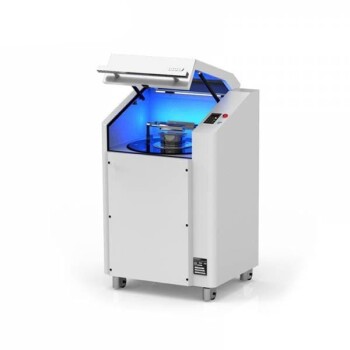
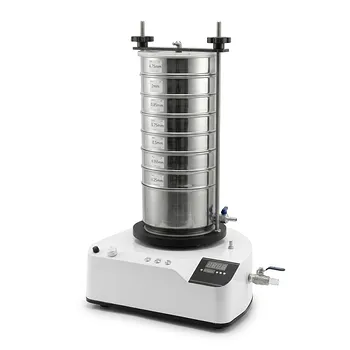
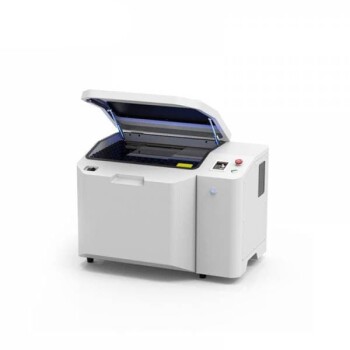
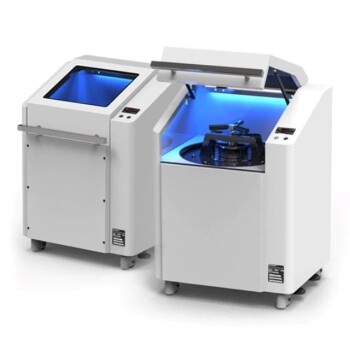
Laboratory crushers and standard sieves are critical tools for standardizing biomass particle size. In the pretreatment of Datura stramonium, the laboratory crusher grinds the raw material into a fine powder, while a 0.425 mm standard sieve acts as a filter to ensure specific particle dimensions. This mechanical preparation is the fundamental step required to prepare the biomass for effective chemical processing.
Core Takeaway The ultimate goal of crushing and sieving is to maximize the reactive surface area of the biomass. By creating a uniform powder, you facilitate superior contact with solvents and catalysts, directly resulting in enhanced mass transfer and consistent thermochemical conversion.
The Mechanics of Preparation
Particle Reduction via Crushing
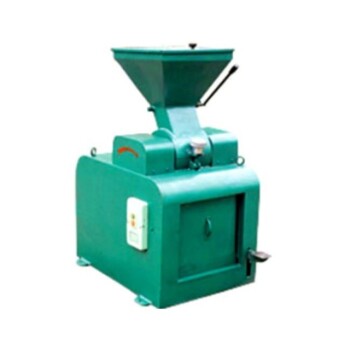
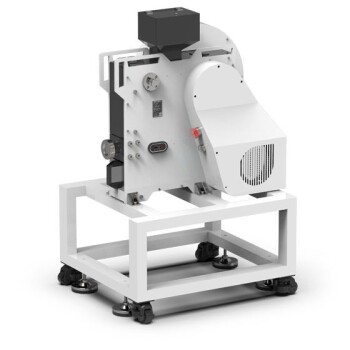
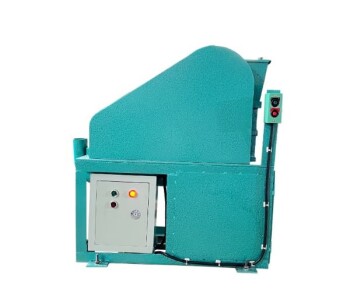
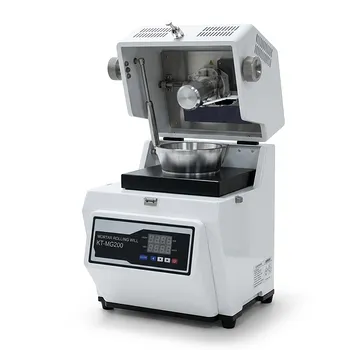
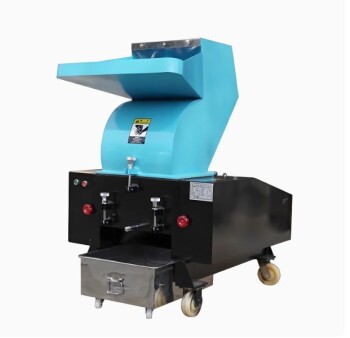
The laboratory crusher serves as the primary reduction mechanism. Its role is to mechanically break down the structural integrity of the Datura stramonium, transforming it from bulk raw material into a fine powder. This initial step is necessary to make the biomass manageable for the reactor.
Precision Grading via Sieving
After crushing, the material is not yet ready for optimal processing; it must be graded. The powder is passed through a 0.425 mm standard sieve. This ensures that only particles of a specific maximum diameter enter the reactor, eliminating oversized chunks that would react too slowly.
Why Particle Size Matters for Liquefaction
Maximizing Surface Area
The primary chemical advantage of this pretreatment is the significant increase in surface area. By reducing the biomass to a fine powder, you expose more of the material's structure to the reaction environment.
Enhancing Chemical Contact
Increased surface area allows for thorough contact between the biomass, the solvents, and the catalysts used in the reactor. This "intimacy" of contact is required to initiate the chemical breakdown of the plant matter.
Improving Mass Transfer Efficiency
Small particles reduce the distance heat and chemicals must travel to penetrate the biomass. This results in high mass transfer efficiency, meaning the reaction proceeds faster and requires less energy to sustain.
Ensuring Uniform Conversion
When particle sizes are consistent (thanks to the sieve), the reaction occurs evenly across the entire batch. This uniformity prevents a scenario where small particles are over-processed and large particles remain under-converted.
Understanding the Trade-offs
Energy Input vs. Yield
While finer particles generally lead to better reaction rates, mechanical crushing is energy-intensive. It is important to balance the cost of grinding against the marginal gains in conversion efficiency.
Potential for Agglomeration
Extremely fine powders can sometimes clump together if moisture control is not maintained. If the powder agglomerates, it negates the benefits of the crushing process by effectively reducing the available surface area again.
Optimizing Your Pretreatment Strategy
To achieve the best results in hydrothermal liquefaction, you must treat mechanical preparation with the same precision as chemical formulation.
- If your primary focus is Reaction Speed: Strictly adhere to the 0.425 mm sieving standard to maximize surface area and ensure rapid mass transfer.
- If your primary focus is Process Reliability: Ensure the crusher is calibrated regularly to prevent inconsistent particle sizes that could lead to uneven thermochemical conversion.
Proper mechanical pretreatment is not just a preliminary step; it is the foundation of a high-yield conversion process.
Summary Table:
| Preparation Step | Tool Used | Objective | Impact on Liquefaction |
|---|---|---|---|
| Primary Reduction | Laboratory Crusher | Break structural integrity into fine powder | Increases manageable surface area |
| Precision Grading | 0.425 mm Standard Sieve | Filter particles to specific maximum diameter | Ensures uniform conversion & rapid reaction |
| Surface Optimization | Mechanical Synergy | Maximize reactive surface-to-volume ratio | Facilitates superior solvent/catalyst contact |
| Mass Transfer | Sized Particles | Minimize chemical/heat travel distance | Higher energy efficiency & faster processing |
Elevate Your Biomass Research with KINTEK Precision
Maximize your thermochemical conversion yields with KINTEK’s industry-leading laboratory equipment. Whether you are refining Datura stramonium or other complex biomass, our high-performance crushing and milling systems and standard sieving equipment provide the particle uniformity essential for superior mass transfer.
From preparing fine powders to processing them in our advanced high-temperature high-pressure reactors and autoclaves, KINTEK offers a comprehensive ecosystem for laboratory excellence. Our portfolio also includes muffle furnaces, rotary furnaces, and hydraulic presses, ensuring your research is backed by durability and precision.
Ready to optimize your pretreatment strategy? Contact KINTEK today to discuss your equipment needs and see how our expertise in laboratory consumables and hardware can drive your next breakthrough.
References
- Salih Genel. Hydrothermal liquefaction of <i>Datura stramonium</i> L.: Influence of temperature and heterogeneous catalysts. DOI: 10.1002/ep.14322
This article is also based on technical information from Kintek Solution Knowledge Base .
Related Products
- Laboratory Sealed Hammer Crusher for Efficient Sample Preparation
- Laboratory Jaw Crusher
- Sealed Jaw Crusher High Efficiency Environmental Protection Safe and Reliable
- Laboratory Grinding Mill Mortar Grinder for Sample Preparation
- Vibrating Disc Mill Small Laboratory Grinding Machine
People Also Ask
- What is the primary function of a laboratory crusher? Optimize Biomass & Coal Co-Gasification Efficiency
- What lab equipment would be use to crush or grind a substance? A Guide to Choosing the Right Tool
- What is the purpose of sample preparation? Ensure Accurate & Reliable Analytical Results
- What kind of material is a hammer mill used for? Process Brittle, Dry, and Crystalline Materials Efficiently
- Why is a hammer mill essential for processing raw materials in garden waste pelletization? Optimize Feedstock Sizing.