To ensure data integrity, the testing assembly must strictly control the path of electrical current. An insulating mold is required to act as a non-conductive barrier around the pellet, forcing the current supplied by the stainless steel punches to travel exclusively in a vertical direction through the sample. Without this insulation, current would leak into the mold walls, creating short circuits that invalidate the resistivity measurement.
By confining the electrical current to a vertical path, the insulating mold eliminates external interference. This ensures the resulting data represents the actual material properties of the composite, rather than artifacts of the testing equipment.
The Physics of the Testing Assembly
To understand the necessity of this configuration, one must look at how current interacts with the testing hardware.
The Role of Stainless Steel Punches
The stainless steel punches act as the primary conductive contacts. They are responsible for introducing the electrical current into the system and applying the necessary pressure to the pellet.
The Function of the Insulating Mold
The mold forms the inner walls of the assembly. Its specific purpose is to block any horizontal movement of electricity, effectively containing the current within the pellet's volume.
Creating a Vertical-Only Channel
By combining conductive punches with non-conductive walls, you create a "vertical-only" conductive channel. This geometry is critical because resistivity formulas rely on a known cross-sectional area and length, which assumes a uniform, directional current flow.
Why Sidewall Isolation is Critical
The primary goal of this setup is to remove variables that distort measurement accuracy.
Eliminating Electrical Interference
If the mold walls were conductive, electricity would follow the path of least resistance—often through the mold itself rather than the resistive pellet. The insulating mold eliminates electrical interference from the sidewalls, preventing this "shunting" effect.
Capturing Internal Distribution
When interference is removed, the resistance measured is a true reflection of the internal distribution of electrode materials and electrolyte layers. It reveals how well the composite components are dispersed within the pellet.
Assessing Interface Quality
This isolation also allows for a precise evaluation of the interface contact quality. It ensures the data reflects the connections between composite particles, rather than the contact between the pellet and the container.
The Risks of Improper Isolation
While the setup seems straightforward, failure to maintain this isolation leads to significant data errors.
False Conductivity Readings
If the mold allows even minor conduction, the pellet will appear more conductive than it actually is. This masks problems with the material's internal structure or electrolyte layering.
Masking Interface Defects
A setup that lacks proper insulation will fail to detect poor contact interfaces within the composite particles. The current bypassing the pellet hides the high resistance caused by poor particle-to-particle bonding.
Ensuring Accurate Material Analysis
To get the most out of your resistivity testing, ensure your equipment configuration matches your analytical goals.
- If your primary focus is material validation: Ensure the mold insulation is intact to guarantee that resistance values reflect the true internal distribution of the electrode materials.
- If your primary focus is process optimization: Use the vertical-only channel to isolate and measure the quality of the interface contact between composite particles.
High-fidelity resistivity data depends entirely on forcing the current to interact with the sample, and only the sample.
Summary Table:
| Component | Material | Primary Function in Resistivity Testing |
|---|---|---|
| Punches | Stainless Steel | Provide conductive contact and apply pressure to the pellet. |
| Mold Walls | Insulating Material | Prevent lateral current leakage and eliminate electrical interference. |
| Current Path | Vertical-Only | Ensures current travels through the sample to match resistivity formulas. |
| Data Integrity | High-Fidelity | Reflects true internal distribution and interface contact quality. |
Elevate Your Battery Research with Precision Engineering
In the demanding field of composite electrode analysis, the integrity of your data depends on the precision of your testing assembly. KINTEK specializes in providing high-performance laboratory solutions designed to eliminate variables and deliver repeatable results.
Whether you are performing material validation or process optimization, our comprehensive range of equipment supports every stage of your workflow:
- Specialized Testing Tools: From high-precision hydraulic pellet presses and custom insulating molds to electrolytic cells and electrodes.
- Advanced Thermal Processing: A full suite of muffle, vacuum, and atmosphere furnaces for material synthesis.
- Sample Preparation: Industry-leading crushing, milling, and sieving systems for perfect composite dispersion.
- Battery Research Essentials: Cooling solutions like ULT freezers, alongside specialized consumables like ceramics and PTFE products.
Don't let equipment artifacts compromise your research. Contact KINTEK today to discover how our high-temperature systems and laboratory consumables can enhance your lab's efficiency and accuracy.
Related Products
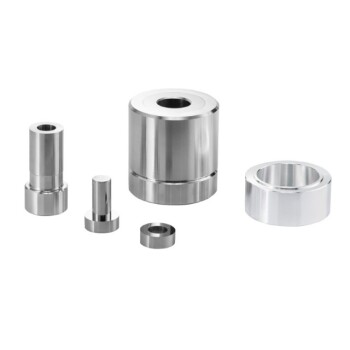
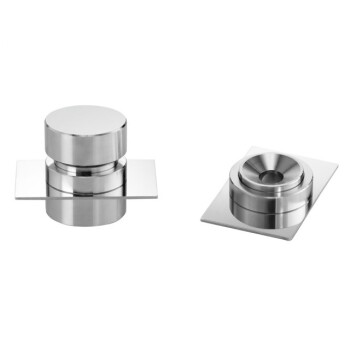
- Ring Press Mold for Lab Applications
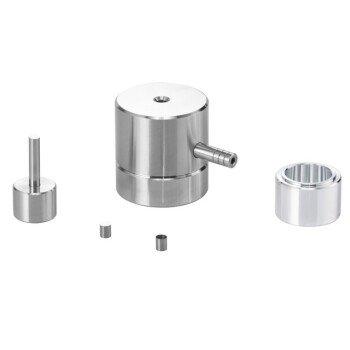
- Cylindrical Press Mold for Lab Applications
- Round Bidirectional Press Mold for Lab
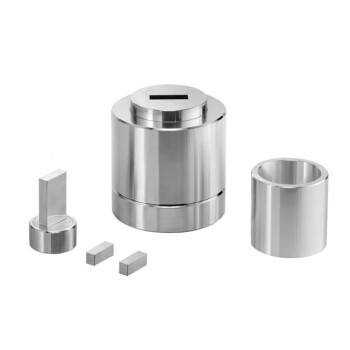
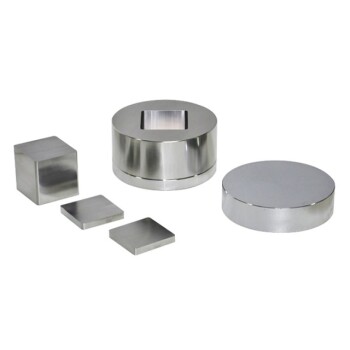
- Assemble Square Lab Press Mold for Laboratory Applications
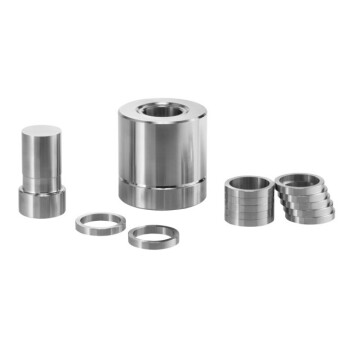
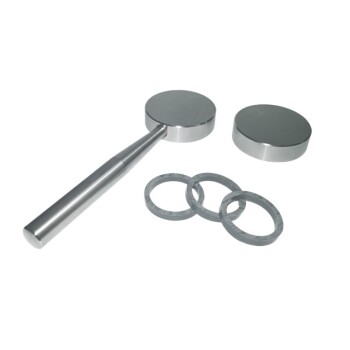
- XRF & KBR steel ring lab Powder Pellet Pressing Mold for FTIR
People Also Ask
- How to use a press mold? Master the Art of Creating Consistent Ceramic Forms
- Why are pressure molds with non-conductive resin inner walls required for battery testing? Ensure Data Accuracy
- What is the press mould method? A Guide to Consistent, Detailed Ceramic Forms
- What is the function of press molds during the preparation of SiCf/Ti-43Al-9V composites? Achieve Structural Precision
- What is a press mold used for? Achieve Repeatable Precision and Efficiency