To ensure accurate XRF analysis, you must control five specific variables in your sample preparation recipe: the particle size of the material, the choice of binder used to hold it together, the sample dilution ratio, the pressure applied by the press, and the final thickness of the resulting pellet. Mastering these factors ensures your samples are mechanically stable and chemically representative.
The goal of optimizing these five factors is to produce a homogenous, durable pellet that provides an "infinite thickness" to the X-ray beam, ensuring that the signal detected represents the sample alone and not the background.
Optimizing the Five Key Variables
1. Particle Size
The foundation of a good pellet is a finely ground powder. You should generally aim for a grain size smaller than 75 µm to ensure the sample is homogeneous.
Large or inconsistent particles create void spaces within the pellet. This leads to surface irregularities that can scatter X-rays unpredictably and compromise analytical precision.
2. Choice of Binder
Many materials, particularly brittle geological samples like sand or rock, will not bind together under pressure alone. You must select a binding agent—such as cellulose, boric acid, or wax—to act as an adhesive.
The binder lubricates the particles, allowing them to flow and compact efficiently within the die. It prevents the pellet from crumbling after it is removed from the press.
3. Sample Dilution Ratio
This variable refers to the ratio of sample powder to binder. A standard starting point is a mixture containing 20% to 30% binder, though this varies based on the material's natural stickiness.
You must balance structural integrity with signal intensity. Adding too much binder makes the pellet stronger but dilutes the concentration of the elements you are trying to measure.
4. Pressing Pressure
The load applied during compaction determines the density of the pellet. Typical pressures range between 15 and 35 tons, but this is highly dependent on the sample type.
Soft samples, such as food products, may only require 2 to 4 tons, while hard mineral ores often require up to 40 tons. The goal is to apply enough force to eliminate voids without crushing the pellet into stress fractures.
5. Pellet Thickness
The final pellet must be thick enough to absorb the primary X-ray beam completely. If the pellet is too thin, the beam may penetrate through the sample to the cup or backing, distorting the results.
Standard diameters are 32 mm or 40 mm, but the height (thickness) is the critical dimension for preventing beam penetration.
Common Pitfalls and Trade-offs
Dilution vs. Detection Limits The most critical trade-off occurs in the dilution ratio. While a higher percentage of binder creates a more robust pellet that is easier to handle, it significantly reduces the intensity of the fluorescent signal. This makes it difficult to detect trace elements with low concentrations.
Over-Pressing vs. Under-Pressing Pressure is not a "more is better" variable. Under-pressing leads to loose, dusting pellets that can contaminate your spectrometer. Conversely, over-pressing can cause "capping," where the top layer of the pellet shears off due to built-up internal stress.
Making the Right Choice for Your Goal
Successful pellet preparation requires adjusting your recipe based on the physical characteristics of your specific material.
- If your primary focus is Hard Geological Materials: Prioritize a robust binder (like wax) and higher pressures (up to 40 tons) to force brittle particles to adhere.
- If your primary focus is Trace Element Detection: Minimize the binder dilution ratio as much as possible to maximize the sample concentration and signal intensity.
- If your primary focus is Soft or Organic Samples: Use significantly lower pressure (2-4 tons) to prevent the sample from deforming or flowing out of the die.
Systematically controlling these five variables allows you to transform raw powder into a reliable, analytical-grade specimen every time.
Summary Table:
| Key Variable | Recommended Target | Purpose & Impact |
|---|---|---|
| Particle Size | < 75 µm | Ensures homogeneity and prevents X-ray scattering. |
| Binder Choice | Cellulose, Wax, or Boric Acid | Acts as an adhesive for structural integrity and lubrication. |
| Dilution Ratio | 20% - 30% Binder | Balances mechanical strength with elemental signal intensity. |
| Pressing Pressure | 15 - 35 Tons (typical) | Eliminates voids; varies from 2 tons (soft) to 40 tons (hard). |
| Pellet Thickness | Infinite Thickness | Prevents beam penetration to ensure only the sample is measured. |
Elevate Your XRF Sample Preparation with KINTEK
Achieving the perfect pellet requires more than just a recipe—it requires precision equipment. KINTEK specializes in high-performance laboratory solutions, providing the hydraulic presses (pellet, hot, isostatic), crushing and milling systems, and sieving equipment necessary to master all five variables of XRF preparation.
Whether you are processing hard geological ores or delicate organic samples, our expertise in high-pressure systems and essential consumables like crucibles and ceramics ensures your lab achieves maximum analytical accuracy.
Ready to optimize your workflow? Contact KINTEK today to find the perfect pressing and milling solution for your research!
Related Products
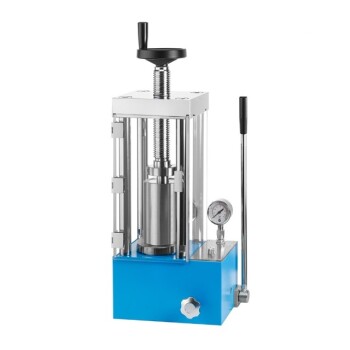
- Automatic Laboratory Hydraulic Pellet Press Machine for Lab Use
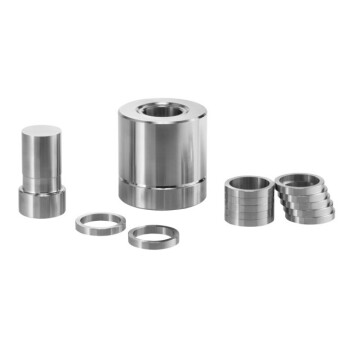
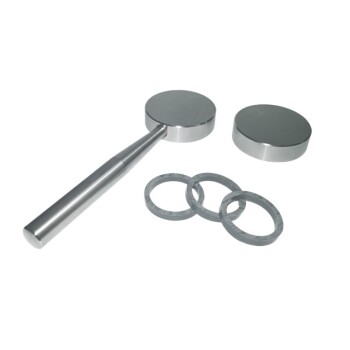
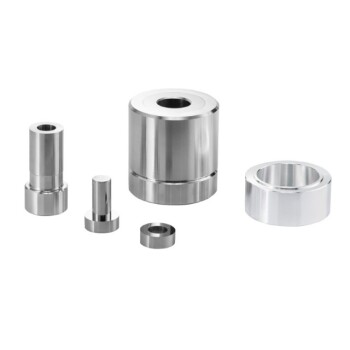
- XRF & KBR steel ring lab Powder Pellet Pressing Mold for FTIR
- Laboratory Hydraulic Press Lab Pellet Press Machine for Glove Box
- Laboratory Manual Hydraulic Pellet Press for Lab Use
- Laboratory Hydraulic Press Lab Pellet Press for Button Battery
People Also Ask
- What is the role of a laboratory hydraulic pellet press and stainless steel molds in the fabrication of RuO2/NbC anodes?
- What role does a laboratory pellet press play in the enhancement of biomass energy products? Optimize Fuel Efficiency
- What is the purpose of using a laboratory pellet press when evaluating the electronic conductivity of carbon powders? Guide
- How does a laboratory hydraulic pellet press contribute to SiCw/2024 aluminum composite preforms? Optimize Densification
- What is the significance of applying 200 MPa of pressure with a laboratory hydraulic pellet press for composite ceramics?