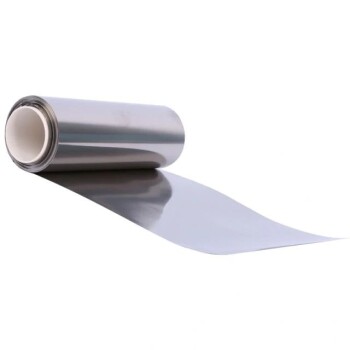
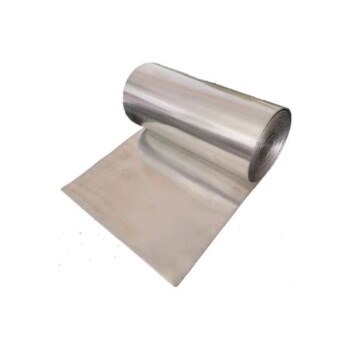
Graphite foil serves as a critical sacrificial interface placed between the powder sample and the graphite mold tooling during Spark Plasma Sintering (SPS). Its immediate function is to physically isolate the sample material from the mold walls, preventing chemical bonding and ensuring the expensive graphite dies are not destroyed during the ejection process.
Core Takeaway High temperatures and pressures naturally cause sintering powders to react with and adhere to containment vessels. Graphite foil acts as a dual-purpose buffer: it prevents the sample from fusing to the mold (saving the tooling) and compensates for microscopic surface irregularities to ensure uniform electrical and mechanical transmission.
The Protective Barrier Function
The most visible role of graphite foil is protection. Without this layer, the SPS process would likely result in catastrophic failure during the removal of the sample.
Preventing Chemical Adhesion
Under the high heat and pressure of SPS, sintering powders become highly reactive. They naturally tend to diffuse into and bond with the graphite mold walls.
Graphite foil creates a chemical barrier. It prevents the powder (such as nickel alloys or ceramics) from reacting directly with the inner walls of the die.
Facilitating De-molding
Removing a sintered sample from a die requires mechanical force. If the sample has adhered to the wall, this force will crack the sample or shatter the mold.
The foil acts as a release agent. Because it prevents adhesion, it allows the sample to be pushed out cleanly, significantly extending the operational life of the high-purity graphite molds.
Contamination Isolation
In high-purity applications, such as processing Zinc Sulfide (ZnS), direct contact with the punch material can introduce impurities.
Foil placed between the punches and the powder isolates the sample. This ensures that the final product maintains its chemical purity by avoiding direct diffusion from the tooling materials.
Optimizing the Sintering Environment
Beyond protection, graphite foil plays a sophisticated role in the physics of the sintering process, specifically regarding electricity and pressure.
Reducing Contact Resistance
Graphite molds and punches have inherent surface roughness on a microscopic level. This roughness creates air gaps that increase electrical resistance.
Graphite foil is flexible and conductive. It fills these microscopic gaps, significantly improving the electrical contact interface between the punch and the sample.
Ensuring Uniform Current Distribution
In SPS, the pulsed electric current is the source of heat. If the contact is poor, "hot spots" will form where the current concentrates.
By smoothing out the contact interface, the foil ensures the current flows evenly across the entire cross-section of the sample. This leads to uniform heating and consistent material properties.
Equalizing Mechanical Pressure
Just as it balances electrical flow, the foil assists in mechanical load transfer.
It acts as a compliant gasket that compensates for minor surface irregularities. This ensures that the high mechanical pressure (often up to 40 MPa) is applied uniformly to the powder, facilitating consistent densification.
Understanding the Trade-offs
While graphite foil is essential, it introduces specific variables that must be managed to ensure success.
Application Precision
The foil must be applied without wrinkles or tears. A wrinkle in the foil creates a localized pressure point and a variance in electrical resistance, which can lead to density gradients or warping in the final sintered sample.
Consumable Costs and Setup
Graphite foil is a single-use consumable. It degrades after a single sintering cycle and must be replaced. This adds a manual step to the assembly process for every single sample, increasing the total cycle time compared to potential reusable coating methods.
Making the Right Choice for Your Goal
To maximize the effectiveness of your SPS runs, consider your specific priorities:
- If your primary focus is Mold Longevity: Ensure the foil fully covers all inner surfaces to completely eliminate contact between reactive metal powders and the die walls.
- If your primary focus is Sample Homogeneity: Prioritize the smoothness of the foil application to guarantee uniform electrical current and pressure distribution.
- If your primary focus is High Purity: Use high-grade foil specifically to isolate the powder from the punch faces to prevent diffusion contamination.
By using graphite foil, you sacrifice a small amount of setup time to guarantee the integrity of both your sample and your tooling.
Summary Table:
| Feature | Role of Graphite Foil in SPS | Benefit to User |
|---|---|---|
| Physical Barrier | Prevents powder from bonding to graphite walls | Extends mold life and eases de-molding |
| Electrical Contact | Fills microscopic gaps between punches and sample | Eliminates hot spots via uniform current flow |
| Pressure Distribution | Acts as a compliant gasket for mechanical load | Ensures consistent sample densification |
| Purity Control | Isolates sample from tooling surfaces | Prevents diffusion and chemical contamination |
Maximize Your Sintering Precision with KINTEK
At KINTEK, we understand that the success of your research depends on both equipment durability and sample integrity. Our high-performance Spark Plasma Sintering (SPS) accessories, including high-purity graphite molds and premium consumables, are designed to withstand extreme temperatures and pressures while ensuring uniform material properties.
Whether you are working with ceramics, nickel alloys, or high-purity materials like ZnS, our comprehensive range of laboratory solutions—from high-temperature furnaces and vacuum systems to hydraulic presses and graphite tooling—provides the reliability you need.
Ready to optimize your lab's efficiency and protect your expensive tooling?
Contact KINTEK experts today for a tailored consultation!
Related Products
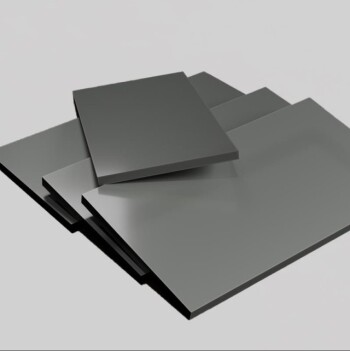
- Carbon Graphite Plate Manufactured by Isostatic Pressing Method
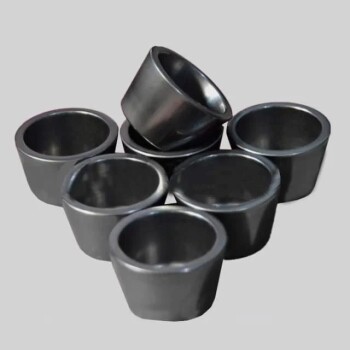
- High Purity Pure Graphite Crucible for Electron Beam Evaporation
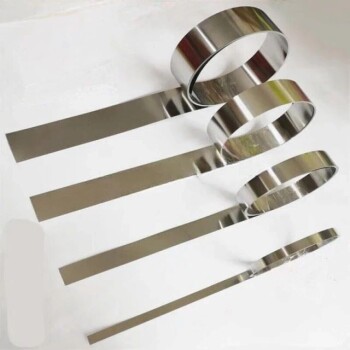
- Battery Lab Equipment 304 Stainless Steel Strip Foil 20um Thick for Battery Test
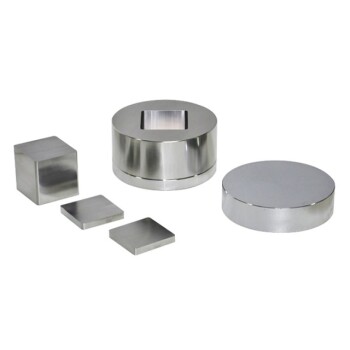
- Square Lab Press Mold for Laboratory Applications
- High Purity Pure Graphite Crucible for Evaporation
People Also Ask
- What is the process of isostatic graphite manufacturing? Achieve Unmatched Material Uniformity and Performance
- What is isostatic graphite? The Ultimate Material for High-Tech and High-Temperature Applications
- What is the density of isostatic graphite? Unlock Superior Performance for Demanding Applications
- How big is the isostatic pressing market? A Deep Dive into the $1.2B+ Advanced Manufacturing Enabler
- Why Use an Isostatic or High-Precision Hydraulic Press for Li/LLZO/Li Batteries? Master Solid-State Interfaces