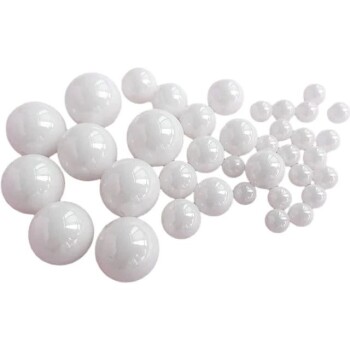
High-density zirconia grinding media are the definitive choice for processing Ruddlesden–Popper perovskite oxide (RPPO) powders due to their superior wear resistance and chemical inertness. Because these electrolytes are extremely sensitive to contamination, using zirconia prevents the introduction of impurities that commonly occur when grinding media degrades during milling.
Core Takeaway The structural integrity of a solid electrolyte determines its performance. Zirconia is recommended not merely for its hardness, but because it guarantees the purity of the precursor powder, ensuring that the final material maintains the high ionic conductivity necessary for efficient electrochemical operation.
The Critical Role of Purity in RPPO Synthesis
The Sensitivity of Perovskite Structures
Ruddlesden–Popper perovskite oxides (RPPO) function as solid electrolytes, meaning their utility relies entirely on the movement of ions through a specific crystal lattice.
These materials are highly sensitive to contamination. Even trace amounts of foreign substances can disrupt the crystal structure or create blocking layers at grain boundaries.
Preserving Ionic Conductivity
The primary goal of using high-purity precursors is to protect the material's electrochemical properties.
If the powder is contaminated during milling, the ionic conductivity of the final electrolyte will be negatively impacted. High-purity processing is the only way to ensure the material performs as intended in a battery system.
Why Zirconia Outperforms Alternatives
Superior Wear Resistance
Milling hard oxide precursors requires significant mechanical force, often over long durations.
Zirconia possesses exceptional hardness, allowing it to withstand high-intensity mechanical impacts without chipping or degrading. Unlike softer materials, it retains its integrity throughout the milling process.
Chemical Inertness
Beyond physical durability, zirconia is chemically stable.
It does not react with the precursor powders, nor does it shed metallic impurities. This contrasts sharply with stainless steel media, which can introduce iron or chromium contaminants that lead to side reactions or short circuits in the final cell.
Eliminating Cross-Contamination
The use of zirconia jars and balls creates a closed, inert environment.
By matching the grinding jar material to the grinding media, you ensure that the entire contact surface is resistant to wear. This holistic approach minimizes the risk of introducing any foreign elements into the RPPO powder.
Understanding the Trade-offs
Mechanical Stress on Equipment
While zirconia is beneficial for the sample, its high density means it is heavier than alternative ceramics.
This weight generates higher impact energy, which is excellent for pulverizing hard oxides but places greater stress on the milling machine. You must ensure your equipment is rated for the weight of high-density zirconia assemblies.
The Cost of Purity
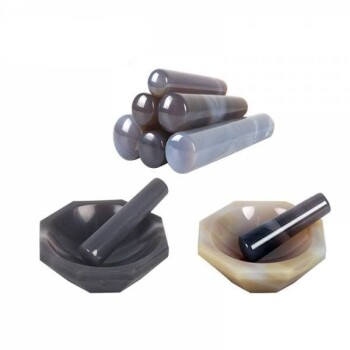
Zirconia media is generally more expensive than standard stainless steel or agate alternatives.
However, this cost is justifiable for solid electrolytes. The expense of a failed batch due to low ionic conductivity or metallic short circuits far outweighs the upfront investment in proper grinding media.
Making the Right Choice for Your Goal
To achieve the best results in your solid electrolyte synthesis, align your equipment choices with your specific performance targets:
- If your primary focus is Maximum Ionic Conductivity: Prioritize zirconia media to strictly eliminate metallic impurities that block ion pathways and degrade performance.
- If your primary focus is Process Stability: Use zirconia jars and balls to withstand the high-energy impact required to pulverize hard oxides without degrading the media itself.
By selecting zirconia, you move from simply grinding powder to engineering a high-performance electrochemical component.
Summary Table:
| Feature | Zirconia Grinding Media | Impact on RPPO Synthesis |
|---|---|---|
| Hardness | Exceptional (Mohs 8.5+) | Withstands high-intensity impacts without chipping or degrading |
| Chemical Inertness | High Stability | Prevents metallic impurities and unwanted side reactions |
| Wear Resistance | Superior | Minimizes contamination from media erosion during long milling |
| Density | High (approx. 6.0 g/cm³) | Provides high energy for pulverizing hard oxide precursors |
| Purity Control | Closed Inert System | Maintains the integrity of the crystal lattice for ionic conductivity |
Elevate Your Solid Electrolyte Research with KINTEK
Precise material synthesis starts with the right tools. At KINTEK, we understand that for Ruddlesden–Popper perovskite oxides, purity is non-negotiable. Our high-density zirconia grinding balls and jars are engineered to eliminate cross-contamination and preserve maximum ionic conductivity in your electrochemical components.
Beyond milling, KINTEK offers a comprehensive suite of laboratory equipment, including:
- Crushing and Milling Systems & Sieving Equipment for precise particle size control.
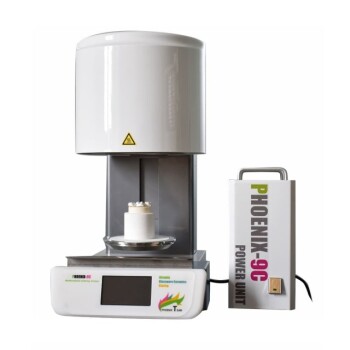
- High-Temperature Furnaces (Muffle, Tube, Vacuum) for expert sintering.
- Hydraulic Presses (Pellet, Hot, Isostatic) for creating dense electrolyte membranes.
- Battery Research Tools, Electrolytic Cells, and High-Pressure Autoclaves.
Don't let impurities compromise your results. Partner with KINTEK for durable, high-performance consumables and equipment tailored to your laboratory's needs. Contact us today to optimize your synthesis process!
Related Products
- Laboratory Jar Ball Mill with Alumina Zirconia Grinding Jar and Balls
- Precision Machined Zirconia Ceramic Ball for Engineering Advanced Fine Ceramics
- Laboratory Jar Mill with Agate Grinding Jar and Balls
- Laboratory Ball Mill Jar Mill with Metal Alloy Grinding Jar and Balls
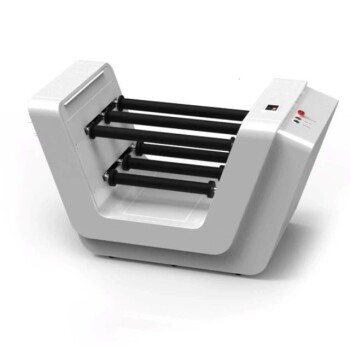
- Laboratory Four-Body Horizontal Jar Mill
People Also Ask
- What are the primary functions of using a ball mill for BZCY72 powder? Achieve High Purity and Enhanced Sintering
- In what way does a laboratory ball mill affect material properties when modifying PHBV/pulp fiber composites?
- Why is a laboratory ball mill required for ultra-fine fly ash? Unlock Nano-Scale Adsorption Power
- What is the function of a laboratory ball mill in the preparation of AMMCs? Optimize Dispersion & Grain Refinement
- What is the function of a laboratory ball mill in the pretreatment of waste tire char (WTC)? Optimize Material Reactivity