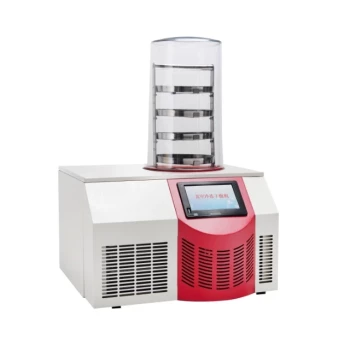
Vacuum drying is a critical stabilization step that serves as the bridge between powder preparation and high-temperature consolidation. By subjecting the graphite mold and its powder contents to negative pressure and low heat (typically around 60°C), you effectively strip away volatile solvents like anhydrous ethanol before the material enters the sintering furnace.
The primary function of this step is to eliminate volatile solvents and trapped moisture that would otherwise vaporize explosively during high-temperature sintering, directly causing structural cracking, internal porosity, and chemical contamination in the final composite.
Preserving Structural Integrity
Preventing Destructive Expansion
When powder mixtures are prepared, solvents like anhydrous ethanol are often used. If these solvents remain within the green body during the high-temperature sintering phase, they will vaporize rapidly.
This rapid phase change creates internal gas pressure that exceeds the strength of the compacted powder. The result is structural failure, manifesting as cracks or the collapse of the sample inside the mold.
Eliminating Internal Porosity
Even if the gas expansion does not crack the sample, trapped vapors create voids between particles.
Vacuum drying ensures these volatiles are removed while the structure is still porous and open. This prevents the formation of permanent pores, ensuring the final material achieves maximum theoretical density.
Ensuring Chemical Purity
Avoiding Elemental Contamination
Residual solvents are not chemically inert; they are sources of carbon and oxygen.
If ethanol residues decompose during sintering, they introduce unwanted carbon or oxygen atoms into the matrix. This contamination can degrade the material's properties, particularly in sensitive composites like diamond/aluminum or conductive polymers.
Preventing Oxidation
Moisture adsorbed by raw materials acts as an oxidizing agent when heated.
By removing this moisture in a vacuum environment, you protect metallic powders (like Aluminum-Silicon) and polymer additives from oxidation. This preserves the interface bonding quality and the electrochemical activity of the materials.
The Role of Low-Temperature Vacuum
Lowering Solvents' Boiling Points
The vacuum environment significantly lowers the boiling point of solvents and moisture.
This allows for the rapid and complete removal of stubborn residues like methanol, hydrochloric acid, or water at gentle temperatures (e.g., 60°C to 120°C).
Protecting Thermal Sensitivity
Processing at these lower temperatures is essential for materials that degrade easily.
It allows you to dry conductive polymers or other sensitive additives without triggering thermal degradation, preserving their doping states and performance capabilities for the final application.
Understanding the Trade-offs
Process Time vs. Defect Risk
Vacuum drying adds a time-intensive step to the manufacturing cycle, often requiring several hours to complete. Skipping or shortening this step to save time is a common error that leads to inconsistent yield rates and "unexplainable" component failures during sintering.
Temperature Management
While vacuum lowers boiling points, setting the drying oven temperature too high can prematurely react certain dispersants or binders. It is critical to balance negative pressure with a temperature high enough to volatize solvents but low enough to maintain the chemical stability of the green body additives.
Making the Right Choice for Your Goal
To ensure the success of your hot-pressing sintering process, align your drying parameters with your specific material risks:
- If your primary focus is Maximum Density: Prioritize longer drying times under high vacuum to ensure every trace of gas-forming solvent is removed to prevent porosity.
- If your primary focus is Chemical Purity: Ensure the drying temperature is sufficient (e.g., 60°C–120°C) to fully volatize solvents like ethanol and remove adsorbed moisture to prevent oxidation.
A rigorous vacuum drying protocol is the cheapest insurance policy against catastrophic sintering failures.
Summary Table:
| Potential Issue | Cause Without Vacuum Drying | Impact on Final Material |
|---|---|---|
| Structural Cracking | Rapid vaporization of solvents (e.g., ethanol) | Internal gas pressure causes sample collapse |
| Internal Porosity | Trapped vapors creating voids | Reduced material density and strength |
| Chemical Impurity | Solvent decomposition (Carbon/Oxygen) | Degraded material properties and contamination |
| Oxidation | Adsorbed moisture reacting at high heat | Poor interface bonding and loss of activity |
| Thermal Damage | Excessive heat without vacuum | Degradation of sensitive polymers or additives |
Maximize Sintering Success with KINTEK Expertise
Don't let residual moisture or solvents compromise your high-performance materials. KINTEK specializes in advanced laboratory solutions designed for precision and reliability. Whether you require high-temperature furnaces, vacuum drying ovens, or specialized crushing and milling systems, we provide the tools necessary to ensure your research achieves maximum theoretical density and purity.
From high-temperature high-pressure reactors to pellet and isostatic hydraulic presses, KINTEK supports every stage of your material synthesis. Our comprehensive range of consumables, including PTFE products, ceramics, and crucibles, ensures your lab is fully equipped for excellence.
Ready to optimize your sintering yield? Contact KINTEK today to discover how our high-precision equipment can enhance your lab's efficiency and results.
Related Products
- 56L Vertical Laboratory Vacuum Drying Oven
- 23L Laboratory Vacuum Drying Oven
- Laboratory Scientific Electric Heating Blast Drying Oven
- Benchtop Laboratory Vacuum Freeze Dryer
- Dental Porcelain Zirconia Sintering Ceramic Vacuum Press Furnace
People Also Ask
- Why is a laboratory vacuum drying oven recommended for rice straw residues? Protect Your Biomass Integrity
- What role does a laboratory vacuum drying oven play in the preparation of modified multi-walled carbon nanotubes?
- What is the importance of using a laboratory vacuum drying oven? Preserving Slow-Release Microcapsule Integrity
- Why is a Laboratory Vacuum Drying Oven recommended for PBAT microspheres? Protect Sensitive Polymer Integrity
- What role does a laboratory vacuum drying oven play in processing nanoparticle powder samples? Protect Sample Integrity