Ti-6Al-4V ELI screws must undergo pressure steam sterilization to ensure the total elimination of microorganisms within the coating’s micropores. This process is essential because the bioactive hydroxyapatite (HA) coating, designed to promote bone growth, can inadvertently harbor bacteria that lead to site infection. Failure to sterilize these implants compromises patient safety and invalidates the results of osseointegration studies.
Core Takeaway: Pressure steam sterilization is a non-negotiable prerequisite for bioactive implants; it cleanses the intricate micropores of the screw coating to prevent infection and ensure that subsequent bone-to-implant healing can be accurately measured.
The Necessity of Deep-Structure Decontamination
Penetrating the Micropore Architecture
Ti-6Al-4V ELI screws often feature specialized coatings like hydroxyapatite (HA) to improve biological performance. These coatings are not perfectly smooth; they contain micropores that can trap microscopic pathogens during manufacturing or handling.
Standard chemical wipes or surface washes are insufficient for these porous structures. High-pressure steam is required to penetrate these tiny voids and achieve complete microbial neutralization.
Protecting the Bioactive Interface
The "bioactivity" of a screw coating means it is designed to interact actively with living tissue. Unfortunately, the same properties that make the coating attractive to bone cells also make it a fertile ground for bacterial colonization.
Sterilization ensures that the implant interface is a "blank slate" for cellular attachment. This allows the body’s natural osseointegration process to begin without competing with a pre-existing bacterial load.
Ensuring Data Integrity and Clinical Safety
Preventing Post-Implantation Infection
In both clinical settings and animal experiments, the primary risk of failure is infection at the implantation site. An infected site triggers an inflammatory response that can lead to implant rejection or bone loss.
Using an autoclave provides a rigorous physical sterilization method that is more reliable than chemical methods for medical-grade alloys. It provides the high-level assurance needed for invasive surgical procedures.
Validating Osseointegration Results
For researchers, the goal of using Ti-6Al-4V ELI screws is often to evaluate how well the metal bonds with bone. If an infection occurs due to poor sterilization, it becomes impossible to determine if a failure was caused by the material properties or simply by the bacteria.
A sterile environment is the only way to obtain accurate data. By removing the variable of infection, researchers can isolate and confirm the true effectiveness of the screw's coating and design.
Understanding the Trade-offs and Limitations
Thermal Stress and Coating Stability
While pressure steam is highly effective, the combination of high temperature and moisture can theoretically affect the crystalline structure of some delicate coatings. It is vital to ensure the specific HA coating on the Ti-6Al-4V ELI screw is rated for standard autoclave cycles.
The Risk of Improper Drying
If the sterilization cycle does not include a sufficient drying phase, residual moisture may remain in the micropores. This moisture can potentially lead to localized oxidation or act as a transport medium for contaminants if the sterile packaging is compromised after the cycle.
How to Apply This to Your Project
Recommendations for Implementation
Effective sterilization is the foundation of any successful orthopedic or dental implantation. Your approach should vary slightly based on your specific operational environment.
- If your primary focus is experimental accuracy: Utilize a validated autoclave cycle specifically designed for porous loads to ensure no air pockets remain in the screw threads or coatings.
- If your primary focus is clinical patient safety: Ensure the sterilization parameters meet the ISO or local regulatory standards for surgical implants to guarantee a "Sterility Assurance Level" (SAL) of 10^-6.
- If your primary focus is coating longevity: Verify with the manufacturer that the specific hydroxyapatite application method used on your screws can withstand repeated thermal cycling without delamination.
Rigorous pressure steam sterilization transforms a potentially hazardous bio-material into a safe, effective tool for permanent bone integration.
Summary Table:
| Feature | Importance for Ti-6Al-4V ELI Screws | Key Benefit |
|---|---|---|
| Deep Penetration | Reaches into HA coating micropores | Total elimination of hidden pathogens |
| Bio-Interface Safety | Prevents bacterial colonization | Promotes faster, cleaner bone bonding |
| Data Validation | Isolates material performance from infection | Ensures accurate research & clinical results |
| Reliability | Provides Sterility Assurance Level (SAL) 10⁻⁶ | Minimizes risk of implant rejection |
Secure Your Research and Clinical Success with KINTEK
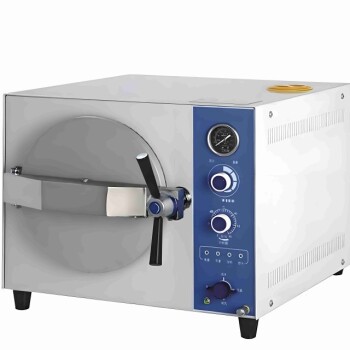
Precision sterilization is the foundation of successful implantation and material validation. KINTEK provides industry-leading pressure steam sterilizers and autoclaves designed to penetrate the complex micropores of Ti-6Al-4V ELI screws, ensuring a sterile environment for optimal osseointegration.
Beyond sterilization, we offer a comprehensive suite of laboratory solutions, including:
- High-Temperature Furnaces & Reactors: For advanced material synthesis and coating stability testing.
- Crushing, Milling & Sieving Systems: To prepare high-purity dental and orthopedic materials.
- Precision Hydraulic Presses: For pelletizing and material compaction.
Don’t compromise your data or patient safety with subpar equipment. Contact KINTEK today to discover how our specialized laboratory tools can enhance your manufacturing and research workflows.
References
- Ilhamdi, M. Tauhid. Effect of Bilayer Nano-Micro Hydroxyapatite on the Surface Characteristics of Implanted Ti-6Al-4V ELI. DOI: 10.15282/ijame.20.3.2023.19.0833
This article is also based on technical information from Kintek Solution Knowledge Base .
Related Products
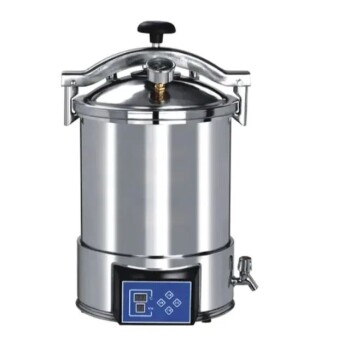
- Portable High Pressure Laboratory Autoclave Steam Sterilizer for Lab Use
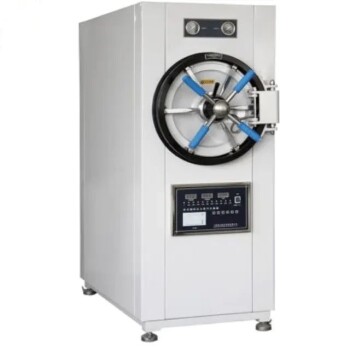
- Laboratory Horizontal Autoclave Steam Sterilizer Lab Microcomputer Sterilizer
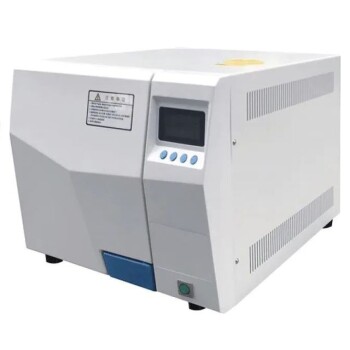
- Desktop Fast High Pressure Laboratory Autoclave Sterilizer 16L 24L for Lab Use
- Portable Digital Display Automatic Laboratory Sterilizer Lab Autoclave for Sterilization Pressure
- Desktop Fast Laboratory Autoclave Sterilizer 35L 50L 90L for Lab Use
People Also Ask
- Why is a laboratory high-pressure autoclave sterilizer necessary? Ensure Accuracy in Antibacterial Research
- What is the role of a laboratory high-pressure autoclave in the conversion of furfural to piperidine? Optimize Yields
- What are the two types of autoclave used in the laboratory? Gravity vs. Pre-Vacuum Explained
- What precautions should be taken during autoclave in laboratory? A Complete Safety Guide to Prevent Burns and Explosions
- What extreme conditions does a laboratory autoclave simulate? Testing Wear Resistance of Nuclear Fuel Cladding